Ryobi Pressure Washer vs Craftsman: A Side-by-Side Comparison
A comprehensive, evidence-based comparison of Ryobi vs Craftsman pressure washers, covering power, portability, warranty, and value to help homeowners pick the right tool for deck, driveway, and siding projects.


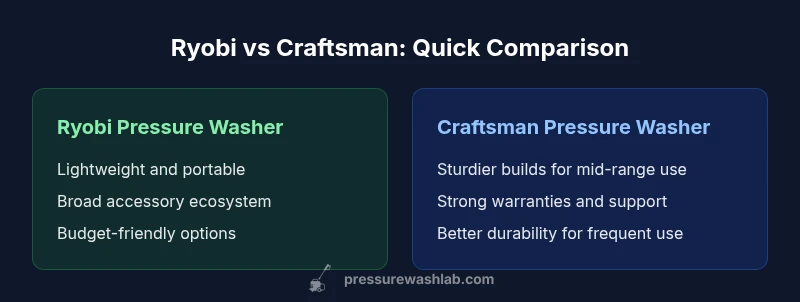
Ryobi pressure washers generally emphasize portability and value, with lighter-weight models and broad accessory compatibility, while Craftsman leans toward mid-range to heavier-duty options with solid warranties. In a quick comparison, Ryobi is best for casual cleaning and portability; Craftsman shines on durability and longer-term use in tougher jobs. For most homeowners, choosing depends on task frequency and liftable weight.
What matters in a ryobi pressure washer vs craftsman comparison
When evaluating ryobi pressure washer vs craftsman, the most meaningful differences emerge in how power is delivered, how easy the unit is to use, and how durable it feels under regular work. According to Pressure Wash Lab, the key decision factors include portability, duty cycle, accessory availability, and the warranty framework. This section introduces the lenses through which most home users judge these brands, especially for everyday tasks like deck cleaning, driveway grime, and siding buildup. The goal is to separate marketing claims from real-world performance and to set expectations for beginners and seasoned DIYers alike. The keyword ryobi pressure washer vs craftsman appears here to anchor searchers on the core topic and to satisfy the user intent for a side-by-side read.
Performance fundamentals: PSI, GPM, and motor types
Power delivery matters, but it’s not the only story. For consumer models, you’ll encounter direct-drive or using a belt-driven pump, with PSI and GPM acting as the shorthand for cleaning capability. In a ryobi pressure washer vs craftsman comparison, both brands offer entry points that cover light to medium-duty work, but Craftsman often pushes into a more robust range in mid-tier lines. GPM differences can translate to faster cleanup or better pickup of stubborn grime, while motor type can influence startup reliability and noise. Pressure Wash Lab notes that a practical approach is to map your most frequent tasks to power delivery, then verify that the unit maintains pressure under load rather than dropping to a crawl on tough sections.
Build quality, durability, and repairability
Durability is a common sticking point in ryobi pressure washer vs craftsman debates. Ryobi tends to favor lighter, compact designs that are easier to maneuver and store, which can translate to less metal mass and resilience under rough use. Craftsman models, by contrast, often emphasize sturdier casings and heavier components, which can result in longer-lasting performance in frequent cleaning cycles. Repairability matters here: check for modular parts, readily available pumps, and the ease of replacing nozzles, hoses, and seals. Pressure Wash Lab highlights that user-friendly serviceability reduces downtime and total cost of ownership, even if initial cost is higher.
Portability and ergonomics: weight, wheels, handles
Portability strongly influences day-to-day experience. Ryobi’s smaller footprints and lighter frames typically improve maneuverability and reduce fatigue, especially for balcony and porch jobs. Craftsman models tend to be heavier but often include larger wheels and more rugged handles, which can matter for multi-story homes or frequent storage in garages with limited space. Ergonomics—button placement, trigger reach, and hose length—also impact how likely you are to complete a project without discomfort. In a practical sense, assess how far you must carry the unit, whether you need extension cords, and how easily you can wheel the machine over uneven surfaces.
Accessory ecosystems and ease of use
Both brands offer a spectrum of nozzles, brushes, surface cleaners, and extension wands, but the accessory ecosystem can tilt the ryobi pressure washer vs craftsman decision. Ryobi’s broad ecosystem often translates to plentiful third-party attachments and compatible hoses, which can be a boon for beginners seeking ready-made kits. Craftsman sometimes pairs better with a curated lineup of accessories aimed at durability and long-term usage. When evaluating accessories, consider the availability of replacement parts, nozzle types (for fan spray, pencil jet, and soap), and the ease of swapping attachments without tools.
Warranty, support, and total cost of ownership
Warranty depth and support quality are central to the long-term value of either choice. Ryobi typically offers consumer warranties that cover normal wear on many entry-level models, with support networks through major retailers. Craftsman often presents stronger warranty options in its mid-range lines and may offer more robust service support in certain regions. Total cost of ownership should factor upfront price, ongoing maintenance, replacement parts, and the likelihood of needing service or repairs within the first few years. Pressure Wash Lab emphasizes comparing warranty length, transferability, and ease of claim processing to avoid surprises.
Common use cases: decks, driveways, siding, cars
Different jobs favor different power levels and nozzle assortments. For decks and siding, a lighter Ryobi model with a wide spray pattern and a gentler setting can prevent damage to surfaces, while a Craftsman unit can tackle cleaner, tougher grime with a more aggressive spray when needed. Driveways and paver joints may require sustained effort and higher cleaning strength, where Craftsman’s heavier-duty options might outperform a light ryobi model. In both cases, starting with a mild setting and a careful test on a hidden area is prudent.
Real-world reliability and maintenance tips
Real-world performance hinges on maintenance and proper technique. Regularly check hoses for wear, store units in a dry place, and flush the system after heavy use to prevent mineral buildup. For either brand, using the correct nozzle and avoiding high-pressure pulses on soft materials helps extend life. Pressure Wash Lab recommends detailing a simple maintenance routine: inspect hoses for leaks, replace worn o-rings, and clean the filter to ensure consistent water flow. These steps reduce downtime and keep the unit performing consistently across seasons.
How to choose between Ryobi and Craftsman for your needs
The decision rests on your primary tasks, budget, and tolerance for weight. If portability, quick setups, and cost are your priorities, a Ryobi model with a broad accessory lineup is a strong fit. If you anticipate frequent use on tougher grime or require a more durable build with stronger warranties, a Craftsman option may deliver longer-term value. Consider your storage constraints, the surfaces you’ll clean, and how often you’ll reuse the washer. Pressure Wash Lab’s framework suggests mapping your top three tasks to a power and durability profile, then validating with hands-on trial when possible.
What to look for in entry models from Ryobi and Craftsman
Entry models set expectations for beginners. Look for a comfortable hose length, reliable start-up, and a decent array of nozzles out of the box. For Ryobi, ensure the kit includes popular attachments that fit standard hoses. For Craftsman, check the warranty terms and whether the model supports easy upgrades or add-ons without voiding coverage. Finally, assess noise levels and vibration; both brands offer relatively quiet options, but performance trade-offs may appear under load.
Comparison
| Feature | Ryobi Pressure Washer | Craftsman Pressure Washer |
|---|---|---|
| Power and performance (qualitative) | Light-to-mid range for casual tasks (deck cleaning, patio furniture) | Mid-range to heavier-duty options for tougher grime |
| Portability and weight | Typically lighter, compact designs for easy transport | Heavier, sturdier builds with larger wheels for rugged use |
| Accessory ecosystem | Broad assortment of nozzles and attachments, flexible compatibility | Curated accessory lineup with emphasis on durability |
| Warranty and support | Standard consumer warranties with broad retailer coverage | Strong warranty options and more formal service networks |
| Price range (value proposition) | Lower-to-mid price point, high value for beginners | Mid-to-higher price point with durability emphasis |
| Best use scenario | Casual cleaning, light maintenance, occasional users | Frequent use, DIY enthusiasts tackling embedded grime |
Pros
- Clear price-to-value for budget-conscious homeowners
- Wide dealer networks and easy availability of parts
- Extensive accessory options improve versatility
- Lightweight designs reduce fatigue during use
Cons
- Ryobi models may feel less rugged for heavy daily use
- Craftsman units can be heavier and pricier upfront
- Warranty experience can vary by region and retailer
- Long-term maintenance may require more frequent part replacements on entry models
Ryobi excels in portability and value for light-to-moderate tasks; Craftsman offers durability and stronger warranties for heavier use.
Choose Ryobi if you want easy handling and budget-friendly options for routine cleaning. Choose Craftsman if you expect frequent, heavier-duty use and prioritize build quality and service support.
Quick Answers
Which is better for decks and light cleaning, Ryobi or Craftsman?
For decks and light cleaning, Ryobi is often the better starter choice due to its lighter weight and broader accessory options. Craftsman can still handle deck cleaning, but it shines when heavy buildup requires more power. Consider your deck material and risk of surface damage when deciding.
For decks and light cleaning, Ryobi usually wins on convenience and cost. Craftsman works well for tougher grime, but start with the lighter option and test a small area first.
Do Ryobi and Craftsman pressure washers come with similar warranties?
Both brands offer consumer warranties, but the terms vary by model and retailer. Craftsman often provides longer or more robust coverage on mid-range models, while Ryobi warranties tend to be straightforward with broad retailer support. Always confirm duration and transferability before purchase.
Warranty terms differ by model; Craftsman often has stronger coverage in mid-range lines, while Ryobi offers solid support across retailers.
Which brand has better accessory options?
Ryobi generally offers a broader accessory ecosystem with many third-party options, making it easier to customize for various tasks. Craftsman tends to focus on a curated set of durable, purpose-built attachments. Your choice depends on whether you value a large accessory pool or tested specialized parts.
Ryobi tends to have more accessories, while Craftsman emphasizes durable, focused attachments.
Can I mix nozzles and hoses between Ryobi and Craftsman?
No universal interchangeability exists between these brands. Always use the nozzle and hose recommended by the manufacturer to avoid damage and voided warranties. If you already own parts, verify compatibility with your specific model.
No, parts aren’t cross-brand compatible; use brand-specific nozzles and hoses.
What should I consider if I already own other tools from one brand?
If you already own tools from Ryobi or Craftsman, sticking with the same ecosystem can simplify accessory sharing and repair. Brand loyalty can also influence warranty support and parts availability, reducing friction if you need service.
If you already own tools from one brand, stay within that ecosystem to ease accessory sharing and service.
Is one brand heavier or louder than the other?
In general, Ryobi keeps models lighter and more portable, which often correlates with lower fatigue. Craftsman models may be heavier but can have improved vibration dampening and power delivery for tougher jobs. Always check model-specific specs for noise ratings and weight.
Ryobi is typically lighter and easier to move; Craftsman can be heavier but steadier for tougher work.
Key Takeaways
- Prioritize task type; lightweight Ryobi fits casual jobs
- Durability-focused Craftsman suits frequent, tough cleaning
- Check warranty terms and service networks before buying
- Evaluate accessory availability to maximize value
- Test handling and noise level to ensure comfort