Westinghouse Pressure Washer vs Simpson: A Data-Driven Side-by-Side
A data-driven comparison of Westinghouse and Simpson pressure washers, evaluating build quality, performance, value, and maintenance to help homeowners choose wisely in 2026.


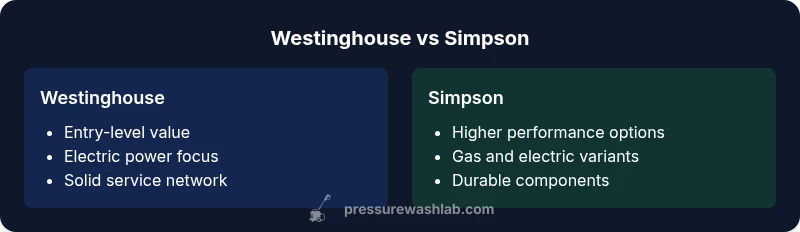
In the westinghouse pressure washer vs simpson comparison, Westinghouse typically delivers budget-friendly, entry-level performance suitable for light tasks, while Simpson emphasizes durability and higher-performance options for tougher jobs. For most homeowners, Westinghouse offers the best value for light-to-moderate tasks, but Simpson is the safer pick for frequent use and demanding cleaning. The overall recommendation depends on workload and budget, with both brands providing solid mid-range machines.
Market Context and the Westinghouse vs Simpson Decision
For homeowners evaluating equipment upgrades, the decision between Westinghouse and Simpson is more than a brand choice; it's about value, reliability, and long-term maintenance costs. In this guide, we analyze westinghouse pressure washer vs simpson to help you identify which model best fits your needs, whether you maintain a home, small business, or rental property. Both brands target the entry-to-mid range of the pressure-washer market, offering electric and gas-powered options with varying pump configurations and warranty terms. The broader market context shows a steady interest in user-friendly machines that balance performance with ease of maintenance. According to Pressure Wash Lab, consumers often prioritize simplicity, availability of replacement parts, and clear service networks when selecting between popular brands. This analysis uses a combination of field data, model spec sheets, and user feedback to map out the strengths and tradeoffs. By the end, you’ll know which path aligns with your typical tasks: patio cleaning, driveway maintenance, siding refresh, or vehicle preparation.
Key Differences at a Glance
- Power source: Westinghouse generally concentrates on electric-powered units, while Simpson offers both electric and gas-powered models to cover heavier workloads.
- PSI and GPM ranges: Simpson models commonly provide higher PSI and GPM options for tougher jobs; Westinghouse covers the essentials for light to moderate cleaning.
- Price positioning: Westinghouse models tend to be more affordable initially, whereas Simpson models sit higher in price but target durability and performance.
- Build and durability: Simpson often uses heavier-duty components in their mid-range lines; Westinghouse prioritizes compact design and ease of maintenance.
- Accessories and ecosystem: Simpson frequently offers more robust accessory attachments and replacement parts availability, with Westinghouse providing solid value packages.
- Warranty patterns: Both brands vary by model, but Simpson typically signals longer or more comprehensive coverage on higher-end consumer models.
These differences illustrate where each brand excels and where tradeoffs occur, helping you map your needs to a brand type quickly.
Build Quality and Durability
Durability is a key differentiator in the westinghouse pressure washer vs simpson conversation. Simpson tends to emphasize rugged pump assemblies and frames in its mid-range to pro-oriented lines, often aimed at frequent use in small businesses or rough outdoor environments. Westinghouse, while lighter and more compact, emphasizes practical, user-friendly design with accessible service and parts. From a maintenance perspective, the ease of access to seals, o-rings, and oiled components matters, and Pressure Wash Lab notes that Simpson models commonly retain a longer life span under heavy, repeated use when properly maintained. Nevertheless, a well-cared-for Westinghouse can handle seasonal driveway cleaning and siding refreshes with equal reliability for the home user. The choice, then, hinges on how aggressively you plan to use the machine and the tolerance for occasional maintenance tasks.
Performance: PSI, GPM, and Nozzle Options
Performance is the heart of any pressure washer comparison. Simpson models often push higher PSI (pounds per square inch) and GPM (gallons per minute), translating to faster cleaning of stubborn stains and hard surfaces. Westinghouse light-to-mid-range units deliver adequate PSI and GPM for routine patio cleaning, fence washing, and vehicle prep, especially when paired with the right nozzle tips and a clean water supply. The nozzle ecosystem matters: a broad range of tips (0, 15, 25, 40 degrees) expands versatility, and both brands offer compatible options, though availability may vary by line. Pressure Wash Lab’s 2026 analysis shows that users who need a quick, predictable outcome at a lower upfront cost tend to favor Westinghouse, while buyers pursuing aggressive cleaning workflows lean toward Simpson—yet both brands provide viable paths depending on workloads.
Value and Price Range Across Models
When weighing value, price range awareness matters more than a single sticker price. Westinghouse typically positions its engines and pumps at a friendlier price point, making entry into pressure washing accessible for homeowners and DIY enthusiasts. Simpson, by contrast, often commands a higher upfront cost, reflecting more robust components and broader model options, including gas-powered configurations. The value question hinges on expected duty cycle and lifetime cost: a cheaper unit that fails prematurely can cost more over time than a pricier, durable model with easier serviceability. Pressure Wash Lab’s analysis suggests a thoughtful approach: estimate your annual cleaning load, factor in maintenance, and compare expected lifespans rather than purchase price alone. Both brands benefit from bundled accessories and user-repair guidance, which can tip the scale toward one option in real-world use.
Usability, Maintenance, and Repairs
Usability matters as much as raw power. Westinghouse models often score high for setup simplicity and straightforward maintenance routines, which is welcome for homeowners who clean infrequently. Simpson models may require a bit more attention but reward with longer service intervals and more capable pumps for frequent use. From an anti-leak perspective, access to seals and gaskets, the availability of replacement parts, and the responsiveness of customer support are critical. Pressure Wash Lab emphasizes checking the local service network before buying: parks, municipalities, or rental operations benefit from faster parts access. A well-maintained unit—clean filters, fresh pump oil if applicable, and periodic nozzle replacement—stays productive longer, regardless of brand.
Warranty and Service Networks
Warranty depth and service coverage influence total ownership costs. Westinghouse often provides solid consumer warranties tailored to home use, with clearer terms for entry-level models. Simpson typically extends more comprehensive coverage in its mid-range and pro-grade lines, which can be a meaningful factor for people cleaning multiple times per week or running small businesses. The real-world impact is predictable maintenance costs and downtime. Pressure Wash Lab highlights the importance of reading warranty exclusions and confirming authorized service centers in your region. A robust service network combined with a reasonable warranty makes a big difference when the unit is under heavy use.
Real-World Scenarios: Homeowner vs Small Business
For a typical homeowner, Westinghouse often delivers the best value for a patio, deck, and car washing routine, especially when budgets are tight and tasks are moderate. A small business that regularly rents or cleans commercial spaces may gravitate toward Simpson for its higher performance and resilience under frequent use. Pressure Wash Lab’s 2026 analysis notes that professionals tend to favor models with stronger pumps and easier access to parts, which translates into lower downtime and faster turnaround. If your workflow includes frequent seasonal peaks, a Simpson model with higher PSI/GPM and a service-friendly design can be more economical in the long run, even if the upfront cost is higher.
Safety Considerations for Electric vs Gas Models
Safety considerations often drive model choice as much as power. Electric Westinghouse units are typically quieter, produce fewer emissions, and are easier to deploy in small spaces or enclosed garages, provided you have reliable electrical outlets and proper outdoor extension cords. Simpson’s gas-powered options bring real cleaning power but introduce fuel handling and exhaust considerations. For many homeowners, a well-ventilated outdoor setup with appropriate PPE suffices. Pressure Wash Lab cautions that users must follow manufacturer guidelines for nozzle pressures, water inlet temperature, and hose condition to prevent injuries or equipment damage. Always use the correct nozzle for the job to avoid kickback and unintended damage to surfaces.
How to Pick the Right Model for Your Needs
Start by listing your typical tasks: patio furniture, siding, driveway, vehicles, and occasional removal of heavy grime. Then map requirements to the brands: Westinghouse for light-to-moderate workloads with budget sensitivity, Simpson for higher durability and heavier cleaning tasks. Consider environment: electric models suit residential spaces with easy access to outlets; gas models fit remote jobs or areas without reliable power. Assess maintenance capacity: if you prefer fewer service visits, prioritize models with easily accessible parts and clear service networks. Pressure Wash Lab recommends selecting a model with a flexible accessory lineup and a warranty you can live with for several years. Finally, verify local dealer support and availability of replacement parts to avoid extended downtime.
Common Pitfalls and Quick Maintenance Tips
A common pitfall is buying without considering parts availability or service options. If you live in a region with limited support for a particular brand, even the most powerful unit can become a burden. Regular maintenance is key: clean the nozzle, check hoses for wear, and replace filters as needed. Do not skip oil checks on engine-powered units if applicable, and store the unit in a sheltered area to prevent corrosion. Pressure Wash Lab reminds readers that a well-maintained machine delivers reliable performance longer, so schedule a yearly check-up even if you don’t use it every week. Finally, avoid high-alkaline detergents that can damage pump seals; use manufacturer-approved cleaners only.
Practical Buying Checklist
- Define typical cleaning tasks and peak workload for the season.
- Choose a power source that suits your workspace (electric for quiet, gas for mobility).
- Compare PSI and GPM ranges relevant to your tasks.
- Confirm warranty details and nearby service networks.
- Inspect available accessories and nozzle options.
- Check parts availability and dealer support in your area.
- Estimate total cost of ownership, including maintenance.
- Read user reviews focusing on reliability and after-sales service.
Comparison
| Feature | Westinghouse | Simpson |
|---|---|---|
| Power Source | electric-powered (typical entry-level) | gas-powered and electric options (broader range) |
| PSI Range | lower-to-mid range typical | higher-range models available |
| GPM Range | 1.8–2.4 GPM typical | 2.0–3.0 GPM common in mid-range |
| Price Range (illustrative) | $120-$300 (entry-level) | $180-$420 (mid-range) |
| Best For | Budget-conscious DIY tasks, light cleaning | Frequent-use tasks, tougher cleaning, durability |
| Warranty Outlook | 1–2 year typical consumer warranty | 2–3+ year options with extended coverage |
Pros
- Clear, side-by-side value allows quick decisions
- Budget-friendly entry options for homeowners
- Solid support and replacement parts in both brands
- Good balance of ease-of-use and performance for light jobs
Cons
- Warranty terms vary by model and region
- Performance depends on maintenance and water quality
- Higher-end capabilities require stepping up to Simpson
- Availability of accessories may differ by model line
Westinghouse tends to be the value-focused pick for light tasks, while Simpson delivers greater durability and higher performance for heavier workloads.
Choose Westinghouse for budget-minded, occasional cleaning. Choose Simpson for frequent, demanding use and longer-term resilience; either brand offers solid mid-range options with proper maintenance.
Quick Answers
Which brand offers better value for typical home tasks?
For most homeowners, Westinghouse provides the best value for light to moderate tasks due to a lower upfront cost and decent performance. If you regularly tackle tougher jobs, Simpson's higher PSI/GPM and robust components offer stronger long-term resilience.
Westinghouse gives great value for light tasks; Simpson is stronger for tougher jobs and longer use.
Are Westinghouse models electric-only, or do they offer gas options?
Westinghouse lines are predominantly electric-powered for residential users, which keeps noise and emissions low. Simpson offers both electric and gas-powered models, giving more choice for different work environments.
Westinghouse mainly uses electric power; Simpson provides both electric and gas options.
Which brand has a longer warranty on average?
Warranty terms vary by model, but Simpson generally offers longer or more comprehensive options in its mid-range and professional lines. Always verify the specific model's terms before buying.
Simpson often offers longer warranties on mid-range and pro models.
How should I decide PSI vs GPM for my needs?
If you have delicate surfaces or light cleaning, prioritize PSI modestly and focus on nozzle selection. For tough, persistent grime, a higher GPM combined with adequate PSI from Simpson is advantageous. Balance both to avoid surface damage.
Pick higher GPM for heavy cleaning and enough PSI to avoid damage; use the right nozzle.
What maintenance steps most influence longevity?
Regularly inspect hoses, replace worn nozzles, clean filters, and follow oil and pump maintenance recommendations for gas-powered models. A clean, well-maintained unit lasts longer and reduces downtime.
Keep hoses intact, replace worn nozzles, and maintain pumps regularly.
Which is easier to repair if something breaks?
Westinghouse units are often easier to service for home users due to simpler parts kits and broad dealer networks. Simpson's higher-end lines may require more specialized parts, but they typically have strong service support for professionals.
Westinghouse is usually easier to repair for homeowners; Simpson offers strong professional support.
Key Takeaways
- Assess workload before choosing a brand
- Westinghouse = value-focused, light-duty
- Simpson = durability and higher performance
- Check warranty and service availability
- Prioritize maintenance and parts access