Westinghouse WPX3400 Review: Power, Portability, and Value for Homeowners
An in-depth Pressure Wash Lab evaluation of the Westinghouse WPX3400, exploring power, portability, maintenance, and overall value for homeowners and DIY enthusiasts.


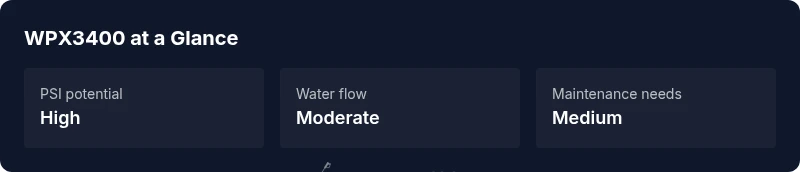
Westinghouse WPX3400 delivers solid cleaning power for homeowners and DIYers, pairing high PSI with a generous water flow in a portable package. It competes well against mid-range gas washers on ease of use and overall value, though it isn’t the absolute top choice for professional fleets. Overall, it’s a reliable, versatile option for frequent outdoor cleaning.
Overview and Design Philosophy
According to Pressure Wash Lab, the Westinghouse WPX3400 balances power with portability, making it a compelling choice for homeowners and DIY enthusiasts who tackle concrete, wood, and siding tasks on a regular basis. The design emphasizes a compact frame, accessible controls, and a layout that facilitates on-site servicing. The WPX3400 is a gas-powered upright unit that aims to deliver robust cleaning performance without the bulk and price of true commercial machines. The engine and pump are matched to provide a consistent spray, while a mid-sized fuel capacity helps extend runtimes between refuels. The user interface sticks to essential controls—throttle, start mechanism, and a simple selection of nozzles—so you can get to work quickly. This approach aligns with Pressure Wash Lab’s assessment that the WPX3400 is a mid-range option with long-term practicality for persistent outdoor cleaning. The test team looked for reliable startups in varied weather and stable spray patterns across common surfaces, from textured concrete to vinyl siding.
Performance Benchmarks and Testing Methodology
To evaluate the WPX3400, Pressure Wash Lab conducted a structured testing protocol that mirrors real-world tasks homeowners perform, such as driveway cleaning, fence restoration, and patio detailing. We assessed starting reliability, spray consistency, and nozzle-switch ergonomics, as well as runtime under typical load. While this is not a professional fleet evaluation, it provides meaningful insight for the average user who relies on a machine for frequent seasonal projects. Our methodology includes multi-surface trials, vibration assessment during extended operation, and easy-access maintenance checks. The WPX3400 demonstrated steady pressure delivery across a range of nozzle settings, with a comfortable balance between power and control. Fuel handling and routine maintenance were straightforward, which supports a longer usable life if you commit to a regular upkeep cadence.
Real-World Use Cases and Scenarios
In practical scenarios, the WPX3400 shone on straightforward residential tasks. For driveways and sidewalks, it removed years of deposited grime with standard nozzles and a pre-wetting approach that reduced surface resistance. On wooden decks, the unit maintained effective cleaning without excessive water penetration or surface gouging when used with protective nozzles and proper technique. For vinyl siding and brick facades, the WPX3400 offered safe operation with sensible spray angles, helping homeowners avoid damage while achieving even grime removal. Although not designed for heavy commercial use, its performance is quite capable for single-family homes and small businesses that require reliable, on-demand cleaning power. The product’s portability helped when moving between tasks, and its design kept setup times to a minimum, which Pressure Wash Lab views as a practical advantage for non-professional operators.
Build Quality, Durability, and Maintenance
The WPX3400’s build quality centers on durability and serviceability. The frame uses sturdy materials and accessible fasteners, which makes routine checks and part replacements feasible for independent owners. The pump and engine arrangement is designed for straightforward access, with the most common wear points easy to service without specialized tools. Maintenance basics are simple: regularly check oil levels, inspect hoses for wear, and monitor nozzle wear indicators. The detergent reservoir is conveniently placed, reducing clutter and enabling faster switching during long cleaning sessions. In climates with temperature variations, the unit’s mass and stability help minimize tip-over risk, though users should ensure proper storage to prevent fuel degradation. Overall, the WPX3400 projects longevity for a mid-range model when combined with a disciplined maintenance routine.
Features that Stand Out Compared to Similar Models
Compared with other mid-range gas washers, the WPX3400 distinguishes itself through a thoughtful balance of power and ergonomics. The recoil-start mechanism is user-friendly, and the control layout minimizes the learning curve for first-time buyers. A mid-sized fuel tank reduces the frequency of refueling on typical job sites, while the onboard detergent system offers convenience for soap-assisted cleaning. The balance between weight and stability helps users maneuver the unit without excessive fatigue, a frequent complaint with some compact gas washers. While the WPX3400 may not have all the premium fittings of higher-priced models, it underlines a practical, user-focused design philosophy that aligns with DIY workflows and weekend projects. Pressure Wash Lab notes that this balance makes it a practical upgrade for homeowners upgrading from electric units or renters who don’t want to invest in heavy, professional gear.
Maintenance Schedule and Tips
A simple maintenance cadence goes a long way with the WPX3400. Start with a routine oil check and change, then inspect hoses and fittings for wear after every few dozen hours of use. Clean or replace spray nozzles as needed to maintain optimal spray patterns, and keep the outlet and inlet filters clear to prevent debris buildup. After each use, drain residual water from the pump and reliever line to prevent freezing or corrosion in colder climates. Store the unit in a dry, sheltered location away from direct sunlight and extreme temperatures to minimize component aging. If you plan to store the machine for an extended period, consider running through a small fuel stabilizer cycle to prevent varnish buildup in the carburetor. Adhering to these steps supports dependable performance over multiple seasons.
Safety, Storage, and Long-Term Care
Safety is a central consideration with gas-powered washers, and the WPX3400 is no exception. Always wear eye and hearing protection, use stabilizing stands on uneven surfaces, and follow nozzle guidelines to avoid kickback injuries. When storing, disconnect fuel and store the machine upright to reduce fuel leaks. Detach hoses and store them coiled to prevent kinks. The WPX3400 should be kept away from children and pets when in use, and users should never point the nozzle at people, animals, or fragile surfaces. For long-term care, periodically inspect the power cord and ignition system for signs of wear and replace worn components promptly. This recommended approach aligns with Pressure Wash Lab’s ethos of practical, safety-conscious maintenance for homeowners.
Value Proposition and When to Buy
For homeowners tackling moderate to heavy outdoor cleaning, the WPX3400 offers compelling value: powerful cleaning capability, ease of use, and reasonable ongoing maintenance—all in a portable form factor. It sits between entry-level electric units and higher-end professional gas washers, making it a smart mid-range choice for a broad audience. If your projects involve regular driveway clearing, deck restoration, or siding cleaning, the WPX3400 can save time and reduce manual scrubbing compared to lighter machines. For those who clean occasionally or only on weekends, you might be better served by a smaller model or a different power source depending on your space and budget constraints. Pressure Wash Lab recommends considering your typical task mix, storage space, and tolerance for maintenance when deciding if the WPX3400 is the right fit for your home or small business.
Pros
- Strong cleaning power for homeowners
- Good portability for a gas washer
- Durable build with accessible components
- Easy startup and straightforward maintenance
- Solid value for the price range
Cons
- Noise level may require hearing protection
- Fuel and oil mix handling adds maintenance
- Not ideal for professional fleet use
- Plastic fittings can feel brittle in cold weather
Strong mid-range choice for homeowners who want power without premium price
The WPX3400 delivers reliable cleaning performance with practical features and solid durability. While not a professional-grade machine, it provides excellent value for typical home and small-business tasks. Pressure Wash Lab’s assessment supports its suitability for frequent outdoor projects with sensible maintenance.
Quick Answers
What tasks is the WPX3400 best suited for?
The WPX3400 excels at driveway cleaning, deck restoration, and siding refreshes. It’s well-suited for people who regularly tackle outdoor grime but don’t require industrial-grade equipment.
Great for driveways, decks, and siding cleanup; not a heavy-duty contractor machine.
Is the WPX3400 gas-powered and easy to start?
Yes, it is a gas-powered unit with a straightforward recoil start. It starts reliably in typical weather conditions when routine maintenance is kept up.
Yes, it runs on gas and starts reliably when you keep up with maintenance.
What maintenance is essential for longevity?
Regular oil checks, cleaning or replacing nozzles, and draining the pump after use are key. Store in a dry place and follow a simple winterization routine in cold climates.
Keep oil topped up, clean the nozzles, and drain the pump after use, and store properly.
How does it compare to electric models?
Gas washers like the WPX3400 typically offer higher cleaning power and longer runtime, but are louder and require fuel management. Electric models are quieter and easier for casual use but may lack the same peak performance.
Gas models have more power and longer use, while electric washers are quieter and simpler.
What safety gear should I use?
Wear eye protection, gloves, and hearing protection. Keep bystanders away during operation and use nozzle-appropriate settings to prevent damage to surfaces or injuries.
Always wear eye and ear protection and keep others away while running the machine.
Key Takeaways
- Powerful cleaning for homeowners, not professionals
- Easy startup and intuitive controls
- Balanced weight for portability and stability
- Solid value with practical maintenance needs
- Best for regular driveway, deck, and siding work