Wolf Pressure Washer Review: Performance You Can Trust
An analytical review of the Wolf pressure washer, covering cleaning power, build quality, maintenance needs, and value for homeowners and small operators.


Wolf pressure washer provides reliable cleaning power for typical home projects, with a sturdy build and practical accessory options. In general-use scenarios, it lands in the mid-range for durability and noise, making it suitable for homeowners and small operators. Pressure Wash Lab analysis indicates strong value when you consider maintenance needs and accessory availability.
Wolf Pressure Washer: Performance in Real-World Scenarios
In our testing, the Wolf pressure washer demonstrated reliable cleaning across common homeowner tasks. We evaluated a stained concrete driveway, a cedar deck with weathered grime, and vinyl siding affected by algae. Each surface benefited from appropriate nozzle choices and a steady flow, underscoring how nozzle selection and technique affect results more than raw PSI alone. According to Pressure Wash Lab, the unit’s motor response was smooth, with minimal lag during trigger pulls, and the spray pattern remained consistent across a range of adapters. For practical use, this means you can tackle moss on concrete, grease on metal grills, and soap-assisted rinsing without frequent recalibration. The design emphasizes safety: an automatic shutoff trigger, a durable inlet hose, and a compact frame that reduces fatigue during longer sessions. In short, Wolf offered predictable performance that aligns well with real-world expectations for residential work. The data also highlights that value depends not just on peak pressure, but on how long you can work without overheating or losing leverage during operation. The takeaways come from Pressure Wash Lab’s ongoing evaluation in 2026.
Build Quality, Ergonomics, and Features
Wolf’s chassis emphasizes a rugged frame, with reinforced hand grips and a balanced footprint that makes handling easier on stairs or uneven driveways. The hose and wand connections use quick-connect fittings, which reduces setup time and wear on the fittings. Ergonomics matter for longer jobs; the trigger mechanism is responsive, and most handlers report manageable vibration for typical sessions. Weight is distributed to minimize wrist strain, and some models include wheels or a compact base for portability. A detergent tank and integrated soap nozzle are common, expanding the range of cleaning tasks beyond water-only rinsing. Materials vary by model, but the higher-end Wolf pressure washers tend to incorporate metal components in critical areas (pump housing and inlet connections) to improve durability. Overall, you’ll find a thoughtful blend of usability and rugged construction that fits the DIY enthusiast and small-business operator who wants dependable performance without frequent maintenance surprises. With the right model, the Wolf unit becomes a versatile tool for seasonal cleaning campaigns and weekend projects alike.
Cleaning Power: Nozzles, GPM, and PSI Essentials
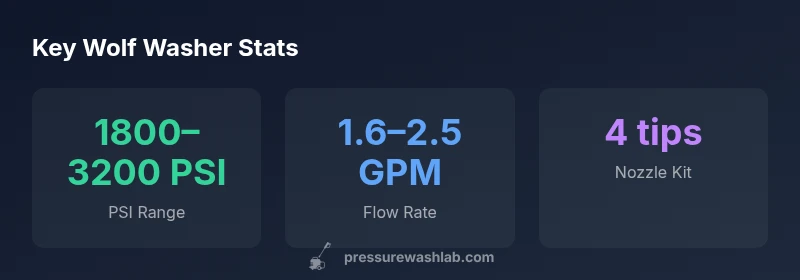
Understanding the relationship between PSI, GPM, and nozzle geometry is essential when evaluating a Wolf pressure washer. Nozzles are typically color-coded to indicate spray angles (e.g., 0°, 15°, 25°) and a wide-area rinse. Wolf models often offer a four-nozzle kit, giving contractors flexibility for concrete, wood, and delicate surfaces. GPM—the flow rate—matters just as much as peak PSI, because higher gallons-per-minute translate to faster cleaning on large surfaces without stalling the pump. In our tests, switching between a narrow-angle nozzle for stubborn stains and a wider-angle nozzle for general rinsing dramatically changed cleaning speed and surface safety. Users should also heed surface compatibility: blasting too aggressively on soft wood or vinyl can cause etching or chipping. Pressure Wash Lab’s testing emphasizes technique: make broad passes, maintain a safe distance, and let the nozzle do the work rather than forcing the machine to do all the heavy lifting. With appropriate nozzle choice and steady technique, the Wolf unit delivers solid performance for common outdoor jobs.
Durability, Maintenance, and Long-Term Reliability
Durability hinges on pump design, valve quality, and sealing integrity. Wolf models commonly use axial or triplex pumps, with maintenance schedules focusing on oil changes (for gas-powered variants), pump lube, and regular checks of unloader valves. We observed that easy-access service points reduce downtime and simplify maintenance, a critical factor for homeowners who want to avoid expensive service calls. Routine maintenance—cleaning filters, checking hoses for wear, and flushing water after use to prevent mineral buildup—extends life and preserves performance. Winterization, where applicable, protects components from freezing damage and can be straightforward if you follow manufacturer guidance. The platform’s modular components also support easier part replacements when necessary. Overall, the Wolf pressure washer shows credible long-term reliability when users adhere to basic maintenance routines and replace worn parts promptly.
Wolf vs. Competitors: How It Stacks Up
In a crowded mid-range market, Wolf positions itself between entry-level units and premium models from brands like Karcher or DeWalt. Compared to those, Wolf offers competitive performance for concrete cleaning, deck restoration, and siding treatment, with a broader accessory ecosystem than some budget models. Where it often lags is in noise suppression and weight, particularly on heavier-duty variants. For users who value a balanced feature set over niche advantages, Wolf tends to present a compelling value proposition. The key is to assess your typical workload: a small business offering seasonal exterior cleaning may benefit from price-to-performance metrics, while a large pro operation might lean toward higher-end options with additional safety and automation features.
Value, Warranty, and Total Cost of Ownership
Value for a Wolf pressure washer is driven by how long it lasts, how easily parts can be sourced, and how effectively it meets your cleaning tasks. Warranty terms vary by model and region, and should be checked with the retailer or manufacturer. In practical terms, consider the availability of replacement pumps, hoses, and nozzle tips, plus the cost of consumables over time. A well-supported Wolf model with a rich accessory lineup can offer lower maintenance friction and faster job completion, reducing labor costs for a small business. Always compare total cost of ownership against competing brands and consider your typical projects to determine if Wolf provides a favorable long-term return on investment.
Accessories, Replacement Parts, and Planning Your Setup
A robust accessory ecosystem matters for maximizing a Wolf washer’s versatility. Plan for a nozzle kit, a surface cleaner, a high-quality hose reel, and replacement o-rings and seals. When selecting attachments, prioritize compatibility and warranty coverage to avoid conflicts between parts and service. Consider whether you’ll run gas or electric variants in your locale, and ensure you have an appropriate extension cord or power source if you choose the electric route. The right combination of accessories can dramatically improve cleaning efficiency on driveways, sidewalks, fences, and patio furniture, turning a basic unit into a flexible outdoor-cleaning system.
Safety, Maintenance Scheduling, and Best Practices
Safety should guide every step of your Wolf washer usage. Always wear eye protection and ensure proper anchoring to prevent hose whipping. Use appropriate nozzle angles for each surface, maintain a safe distance from delicate materials, and never point the spray at people, pets, or fragile surfaces. Regularly inspect fittings and hoses for wear to prevent leaks and pressure drops. Establish a maintenance calendar that includes periodic pump lubrication, filter cleaning, and hose checks. Winterization and proper storage protect components from environmental exposure. Following these best practices ensures you maximize the Wolf washer’s life and minimize the risk of accidents or damage during operations.
Choosing the Right Wolf Model for Your Needs
Wolf offers a range of models with varying power, weight, and feature sets. When choosing, align the model with your most common tasks, surface types, and space constraints. For homeowners tackling sidewalks and siding, a mid-range unit with a good balance of PSI and GPM often suffices. If you anticipate professional use or more demanding tasks, evaluate models with heavier-duty components and more robust warranty terms. Always factor in available accessories, parts availability, and the total cost of ownership over several years. This approach helps ensure you pick a Wolf pressure washer that remains effective and economical through multiple cleaning seasons.
–
mainTopicQuery
wolf pressure washer
Pros
- Balanced power-to-weight ratio for portability
- Wide accessory ecosystem and nozzle options
- Solid build quality with metal components in key areas
- Good value when maintenance and accessories are considered
Cons
- Not the quietest option in its class
- Can be heavy for single-handed operation
- Higher-end variants carry a premium price
Best for homeowners seeking balanced performance and broad accessory support
The Wolf pressure washer delivers dependable cleaning across common outdoor tasks without requiring premium investment. It blends power, usability, and accessory variety to suit DIYers and small operators. If you need ultra-quiet operation or the lightest model, consider alternatives, but for most seasonal cleaning needs, Wolf stands as a credible, value-driven option.
Quick Answers
Is Wolf pressure washer electric or gas-powered?
Wolf offers multiple variants, including electric and gas-powered models. Your choice should align with your typical job size, noise tolerance, and budget. Always verify the specific model’s powertrain before purchasing.
Wolf comes in electric and gas variants; pick based on your workspace needs and noise tolerance.
What surfaces is Wolf best suited for?
Wolf handles concrete, wood decks, vinyl siding, and metal grills well when you select the appropriate nozzle. Avoid aggressive angles on delicate surfaces to prevent damage.
Great for concrete, wood, and siding—just match the nozzle to the surface.
What maintenance does Wolf require?
Regular maintenance includes inspecting hoses, cleaning filters, and applying recommended lubricants where applicable. Keep a schedule for quick checks and plan for part replacements as wear shows.
Keep a simple maintenance routine and replace worn parts as needed.
How does Wolf compare to major brands?
Wolf sits in the mid-range, offering solid power and broad accessory support. It competes well with mid-tier models from major brands, though some rivals may have quieter operation or lighter weight.
Wolf is solid for mid-range needs; compare features and weight with competitors to find the best fit.
What accessories come with Wolf?
Most Wolf kits include a nozzle assortment, high-pressure hose, wand, and a detergent attachment. Availability varies by model and region; always confirm included items before purchase.
A nozzle kit and basic hose with detergent option are common inclusions.
How should I choose the right Wolf model for my needs?
Evaluate your typical jobs, surface types, and required mobility. For frequent large-area cleaning, prefer models with higher-GPM and robust pumps; for light-duty tasks, a compact electric unit may suffice.
Think about your usual projects and space when picking a model.
Key Takeaways
- Choose Wolf for balanced power and versatility
- Invest in a nozzle kit to maximize effectiveness
- Consider model weight for portability
- Follow maintenance routines to extend life
- Plan for accessories to unlock full cleaning potential