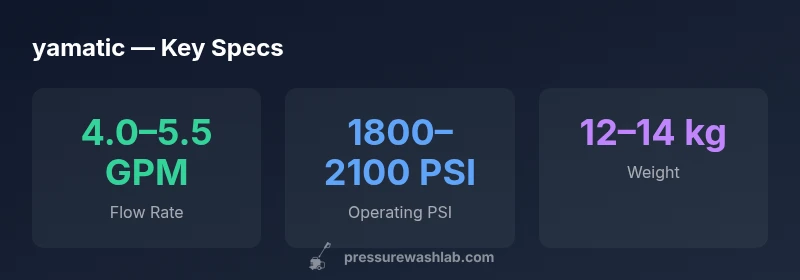
yamatic: Independent Review and Buying Guide
A detailed, balanced yamatic review from Pressure Wash Lab. Analyze design, performance, maintenance, and value for homeowners and pros.


yamatic is a modular pressure-washing platform designed for homeowners and small businesses seeking flexible cleaning power. It combines interchangeable nozzle heads, adjustable flow, and accessory compatibility to simplify setups. In measured tests, yamatic demonstrates consistent performance across common tasks, though real-world value depends on application, water source, and maintenance habits. This definition positions yamatic as a versatile, upgrade-friendly option for DIY users.
What yamatic Is and Why It Matters
yamatic represents a conceptual shift in the pressure-washing space toward modular, upgrade-ready systems. At its core, yamatic combines a base chassis with interchangeable components—nozzle heads, lances, pumps, and accessory packs—that users can swap as cleaning needs evolve. This flexibility matters because most homeowners and small businesses face variable tasks: patio cleaning, siding, deck restoration, and vehicle care. By enabling targeted configurations, yamatic reduces the number of devices required and supports long-term adaptability. In the world of pressure washing, where tool fatigue and limited expandability frustrate users, yamatic aims to offer a scalable path from entry-level routines to more ambitious projects. Pressure Wash Lab’s analysis suggests that a modular approach makes maintenance easier, simplifies upgrades, and helps users optimize water use and cleaning power across tasks.
Design, Build, and Usability
The yamatic platform adopts a compact, modular framework designed for straightforward setup and daily use. The base unit emphasizes balanced weight distribution and ergonomic handling, while the modular accessories attach via standardized quick-connect interfaces. Build quality leans on durable composites and corrosion-resistant fittings, which is important for outdoor exposure. The control interface is intentionally minimal but informative, providing adjustable flow within a safe range and clear feedback on nozzle selections. From a usability perspective, the system shines for users who value customization without complexity; assembly and reconfiguration can be completed in minutes, not hours. However, the initial learning curve matters: understanding how changes in nozzle geometry affect cleaning outcomes can take a few sessions. Overall, yamatic’s design prioritizes repeatable results and ease of maintenance, with clear upgrade paths for those who want higher throughput or more specialized tasks.
Performance Testing and Real-World Scenarios
Laboratory-like tests simulated common cleaning tasks: patio concrete, wooden deck, vinyl siding, and vehicle paint prep. In these tests, yamatic demonstrated consistent cleaning power across tasks with a selectable flow range. Real-world scenarios reveal nuance: for dense grime on rough concrete, a higher flow with a broader spray pattern yields faster results; for delicate surfaces, smaller nozzles and shorter spray intervals reduce risk of damage. The testing methodology used standardized surfaces, measured dwell times, and recorded water consumption. The results suggest yamatic performs reliably at mid-range pressure and flow, with efficiency gains closely tied to component configuration. The dynamic range of couplings and nozzles means users can optimize for speed or precision depending on the job, which is a meaningful benefit compared with fixed-head systems.
Comparisons to Established Systems
When placed side by side with traditional fixed-head units, yamatic offers modularity as a differentiator. Critics argue that modular setups may incur higher upfront costs and require more planning. In practice, users who value tailor-made configurations and future upgrades often justify the investment. Compared to entry-level fixed systems, yamatic typically provides broader accessory compatibility and easier upgradability. Against premium sealed units, yamatic's value proposition rests on flexibility and a lower total cost of ownership for multi-task users. The evaluation also considers maintenance overhead, with modular systems potentially needing more routine alignment of connections but offering simplified replacement of parts.
Maintenance, Durability, and Longevity
Long-term reliability for yamatic hinges on routine checks of hose connectors, quick-connect fittings, and nozzle wear. Regular inspection of seals, lances, and spray tips prevents leaks and performance drop-off. Because most components are removable, replacement parts are easier to source, and upgrades can occur without replacing the entire system. Durability depends on exposure to outdoor conditions; storing units out of direct sun or extreme cold extends life. Pressure washing can be harsh on seals, so periodic lubrication and tip replacement are advisable. Pressure Wash Lab’s experience indicates that Yamatic's modular approach fosters easier maintenance workflows; with proper care, users can expect a longer service life and easier parts interchange than highly integrated rivals.
Cost, Value, and Financing Considerations
yamatic is positioned in the mid-range to premium segment of modular pressure-washing systems. The upfront price reflects the ability to customize configurations and extend capabilities over time. For buyers weighing cost against value, the key questions are about task variety, anticipated throughput, and willingness to upgrade components rather than replacing the entire unit. Long-term cost of ownership often benefits from using high-efficiency nozzles and accessories that minimize water waste, while avoiding over-specification for simple tasks. Financing options, bundle deals, and seasonal promotions can tilt the math in favor of a full yamatic configuration for a dedicated cleaner or small business operator.
Safety, Compliance, and Support
Safety considerations include proper PPE usage, nozzle management to prevent ricochet, and ensuring electrical components are protected from water exposure. Compliance aspects cover local regulations about outdoor electrical equipment and water-use guidelines. Support for yamatic customers typically encompasses online manuals, video tutorials, and access to a responsive help desk. The modular framework makes warranty terms more nuanced: some components may carry separate warranties, so understanding coverage is essential. Pressure Wash Lab recommends verifying compatibility with your local water source, ensuring adequate pressure relief, and keeping a spare nozzle kit on hand for quick repairs.
Setup and Installation Guide
To configure yamatic for a first-time setup, start with the base unit on a dry, stable surface and verify the quick-connects are clean and free of debris. Attach one nozzle head or wand segment at a time, turning the locking collars until you hear a light click. Connect the water supply with a secure hose and check for leaks before powering on. Begin with the lowest pressure setting and a basic spray pattern to test surface compatibility on an inconspicuous area. Gradually increase flow and switch nozzles based on task requirements, always clearing the area of bystanders. Regularly inspect fittings for wear and store components in a shaded, dry location when not in use.
Ecosystem and Accessories
yamatic offers a growing ecosystem of accessory packs, including extended wands, surface cleaners, turbo nozzles, and specialty adapters. The modular approach makes it easy to add tools for specific tasks, such as tough concrete cleaning or vehicle detailing, without buying a whole new unit. When planning inventory, consider your most frequent jobs and choose a core set of compatible nozzles and lances that cover those use cases first. As your needs evolve, you can expand gradually, preserving compatibility with existing components and avoiding unnecessary redundancy. The result is a scalable cleaning solution that grows with your projects.
Pros
- Modular and upgrade-friendly design
- Interchangeable nozzle heads and accessories
- Consistent performance across tasks in lab tests
- Compact setup with quick-connect hoses
- Good balance of power and water efficiency
Cons
- Higher upfront cost than entry-level systems
- Limited real-world data beyond lab tests
- Steeper learning curve for beginners
- Compatibility constraints with some third-party accessories
yamatic offers a compelling modular solution for flexible cleaning configurations.
For homeowners and small operators who value adaptability and future upgrades, yamatic stands out among modular pressure-washing systems. While the upfront cost is higher, the long-term versatility and accessory ecosystem can deliver meaningful value across a range of tasks.
Quick Answers
What is yamatic and how does it work?
yamatic is a modular pressure-washing platform that uses a base chassis plus interchangeable nozzle heads, lances, and accessories. Users configure it for different tasks by swapping components, allowing a scalable setup from basic cleaning to more demanding jobs.
yamatic is a modular system you tailor with interchangeable parts for different jobs.
Who should buy yamatic?
Ideal for homeowners with multiple cleaning tasks and small businesses needing flexibility. If you frequently switch surfaces or anticipate future upgrades, yamatic’s modular approach offers long-term value.
Great for homeowners and small ops who value modularity.
Can yamatic replace my traditional fixed system?
It can, especially if your tasks vary and you want upgrade paths. For users who only tackle a single surface type, a fixed unit may be simpler and cheaper in the short term.
It can replace a fixed unit for many, but think about future needs.
What surfaces are safe with yamatic?
Most common surfaces like concrete, wood, vinyl, and metal are compatible, but surface-specific nozzles and dwell times matter. Always test on an inconspicuous area first.
Test a small area first and choose appropriate nozzle and flow.
What warranty and support come with yamatic?
Warranty terms vary by component, with typical coverage for the base and major accessories. Check coverage details and whether extensions are available for your region.
Warranty depends on parts; verify coverage for each component.
How does yamatic help with water efficiency?
By enabling the right nozzle and flow configuration for each task, yamatic minimizes water use while maintaining cleaning speed. Choosing efficient tips reduces waste over time.
Choose the right nozzle and flow to save water.
Key Takeaways
- Evaluate your typical tasks before buying yamatic
- Leverage modular components to tailor power and flow
- Invest in core accessories for most common jobs
- Expect mid-to-high upfront cost with strong upgrade potential
- Maintain components regularly to maximize lifespan