Can You Clean Concrete Without a Pressure Washer? A Practical DIY Guide
Discover practical, chemical-free strategies to clean concrete without a pressure washer. Step-by-step methods, stain removal tips, and maintenance guidance for driveways, sidewalks, and patios.


Can you clean concrete without a pressure washer? Yes. By scrubbing with stiff brushes, using safe cleaning solutions, and rinsing thoroughly, you can restore concrete surfaces without power tools. This guide covers prep, methods for stains, and maintenance for driveways, sidewalks, and patios.
Why Cleaning Concrete Without a Pressure Washer Is Feasible\n\nConcrete is durable, but dirt, stains, and mildew can dull its appearance. The short answer to can you clean concrete without a pressure washer is yes, with proper technique. According to Pressure Wash Lab, homeowners can achieve effective results using mechanical scrubbing, safe cleaners, and thorough rinsing. This approach minimizes splash, reduces water usage, and lowers the risk of surface damage. In this section we explore why non-pressurized cleaning works, what factors affect results, and how to tailor your plan to your concrete type (poured slab, broom finish, or decorative).
Concrete Surfaces and Common Stains: What to Expect\n\nConcrete surfaces come in many forms, from smooth broom finishes to textured pavers. Each finish behaves differently when cleaned without a pressure washer. Mold and algae thrive in shady, damp corners; oil and grease leave dark stains that are stubborn; mineral deposits create white efflorescence. Understanding these differences helps you choose the right technique. Pressure Wash Lab's experience shows that most homes see great results with routine maintenance, while older or sealed surfaces may require longer treatment windows and repeat scrubbing.
Safe Tools and Cleaners That Deliver Results Without Water-Power\n\nTo clean concrete without a pressure washer, assemble tools that give you leverage and control. Use a stiff-bristled deck brush for heavy scrubbing, a long-handled brush for hard-to-reach areas, a bucket for cleaners, and a garden hose for rinsing. Choose cleaners that are non-bleach, pH-neutral, and safe for concrete. A mild dish soap for everyday grime, baking soda for deodorizing and gentle scrubbing, white vinegar for mineral deposits, and a degreaser for oil stains are all effective options. Always test cleaners on a small, inconspicuous patch first, and wear eye protection and gloves.
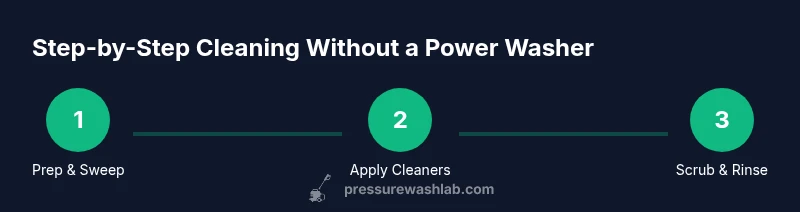
Non-Pressure Cleaning: Step-By-Step Without a Power Washer\n\nWhile this section provides an overview, the following approach emphasizes consistent, safe scrubbing and rinsing. Begin by pre-wetting the surface, then apply a mild cleaner to the area. Scrub in small sections, rinse, and reassess. For persistent stains, switch to a targeted cleaner (baking soda paste, degreaser) and repeat until you see improvement. End with a thorough rinse to remove soap residue, then let the surface dry completely before use or sealing.
Stain-Specific Techniques: Oil, Rust, Mold, and Organic Stains\n\nOil and grease require a degreasing cleaner and longer soaking time. Apply, let sit 10-15 minutes, then scrub and rinse. Rust stains may respond to a rust-removing cleaner or a lemon-and- salt treatment followed by scrubbing. Organic stains like mildew or mold often respond to a vinegar solution or a peroxide-based cleaner. For mineral stains, a baking soda paste and elbow grease can lift deposits without a power washer.
Safety and Aftercare: Protect Yourself and Your Surface\n\nAlways ventilate when using cleaners, wear protective gloves, and protect nearby plants from runoff. After cleaning, assess whether sealing is appropriate; sealing helps prevent future staining but should wait until the surface is completely dry. Non-pressurized cleaning may leave a faint residue if soap is not rinsed away, so take extra time to rinse. Pressure-free cleaning is gentler on concrete but may require more time; plan accordingly.
Common Mistakes to Avoid and How to Fix Them\n\nAvoid using harsh acids on older or decorative finishes, which can etch or discolor concrete. Do not mix cleaners, especially bleach and ammonia, which can create hazardous fumes. Skipping the rinse step lets soap film attract new dirt; re-wet and scrub again if you notice residue. Finally, cleaning in direct sun can dry cleaners too quickly, reducing effectiveness; work in shade whenever possible.
Quick Pre-Clean Checklist: Ready, Set, Clean\n\n- Clear debris and sweep the surface\n- Gather your brushes, bucket, and safe cleaners\n- Test a small area before full application\n- Protect nearby plants and surfaces with plastic or tarps\n- Plan for a thorough rinse and drying time\n\nFollowing this checklist helps ensure you can achieve good results without a pressure washer.
When to Consider Sealing or Power Washing Later\n\nIf stains persist after repeated non-pressurized scrubbing, you might consider a light power wash or a professional cleaning. Sealing a clean, dry surface can prolong results and simplify future maintenance. Remember that sealing should be done only after the surface is completely dry and the concrete is free of soap residues.
Tools & Materials
- Stiff-bristled deck brush(8-12 inch head; synthetic bristles preferred)
- Long-handled scrub brush(For hard-to-reach areas and edges)
- Bucket(For mixing cleaners)
- Mild dish soap(Gentle cleaner for everyday grime)
- Baking soda(Deodorizing scrub and gentle abrasive)
- White vinegar(Mineral deposits and mildew treatment)
- Degreaser (concrete-safe)(For oil stains)
- Plastic spray bottle(Apply cleaners precisely)
- Garden hose(Rinsing; ensure low-to-moderate flow)
- Goggles and gloves(Eye and skin protection)
- Old towels or mats(Protect surfaces and clean-up spills)
- Plastic scraper(For hardened grime)
Steps
Estimated time: 2-3 hours
- 1
Survey the area and plan
Walk the surface to identify stains and note any delicate finishes. Create a plan for sections and cleaning order to minimize rework.
Tip: Take a quick photo of tough stains to track progress. - 2
Sweep and pre-wet
Remove loose dirt with a stiff broom, then mist the surface lightly with water to reduce dust and help cleaners spread evenly.
Tip: Avoid creating puddles; keep the surface damp, not soaking. - 3
Apply cleaner and let sit
Apply a mild solution or vinegar on the area, and let it sit for 5-10 minutes. Do not let cleaners dry on the surface.
Tip: Test a small patch first for color change. - 4
Scrub in sections
Scrub each section with the stiff brush using firm, circular motions. Cover all stained zones with steady pressure.
Tip: Use an 8-12 inch brush for leverage and coverage. - 5
Rinse and re-evaluate
Rinse thoroughly with the garden hose, then inspect for remaining stains. Repeat cleaner application if needed.
Tip: Rinse from top to bottom to avoid dragging dirty water. - 6
Target stubborn stains
For oil, apply degreaser and let it soak 5-15 minutes; for mineral stains, make a baking soda paste and scrub again.
Tip: Keep runoff away from plants and rinse promptly. - 7
Dry and decide on sealing
Allow the surface to dry completely before sealing or foot traffic. Follow sealer instructions when you choose to protect the surface.
Tip: Wait 24-48 hours in mild weather before sealing.
Quick Answers
Can you clean concrete without a pressure washer?
Yes. Manual scrubbing with brushes and safe cleaners can clean most concrete surfaces; results depend on stain type and surface finish.
Yes, you can clean concrete without a pressure washer by scrubbing and rinsing with safe cleaners.
What cleaners are safe for concrete?
Start with a mild dish soap solution or white vinegar for mineral deposits; for grease, use a degreaser designed for concrete; always test first.
Safe cleaners include mild dish soap, vinegar, and concrete-friendly degreasers.
Will oil stains respond to non-pressurized cleaning?
Oil stains may require a degreaser and longer soaking; some may persist despite multiple treatments.
Oil stains can be stubborn; a degreaser helps, and you may need to repeat steps.
Should I seal after cleaning?
Sealing can protect surfaces and simplify future cleaning, but wait until the surface is completely dry and free of cleaner residue.
Yes, sealing after the surface is dry helps keep it cleaner longer.
How long does it take to clean a typical driveway?
Most driveways take about one to two hours for initial cleaning, depending on stain severity and surface area; plan for longer on larger or more stained surfaces.
Expect around one to two hours for typical driveways, longer if stains are heavy.
Is it safe to clean near plants and landscaping?
Protect nearby plants by diluting cleaners and using barriers to prevent runoff; rinse thoroughly to minimize chemical exposure.
Yes, but be careful and rinse away chemicals to protect plants.
Watch Video
Key Takeaways
- Yes—non-pressurized cleaning works for most concrete.
- Choose safe cleaners and right tools for best results.
- Rinse thoroughly and dry before sealing.
- Repeat treatments for stubborn stains if needed.