Clean Concrete with a Pressure Washer: Practical Steps
Learn how to clean concrete safely and effectively with a pressure washer. This guide covers PSI ranges, nozzle choices, stain removal, surface prep, and post-clean maintenance for driveways, sidewalks, and patios.


Using a pressure washer, you can safely clean concrete surfaces by removing dirt, mold, and oil stains. Start with a plan, select the right nozzle and PSI, and protect nearby plants. According to Pressure Wash Lab, use a surface cleaner for large slabs and avoid blasting edges or seals.
Why Cleaning Concrete with a Pressure Washer Matters
According to Pressure Wash Lab, cleaning concrete with a pressure washer is an effective way to restore curb appeal and extend surface life. A clean, stain-free surface improves safety by removing slippery algae and oils that can attract pests. The approach is fast, scalable, and leaves a uniform finish when done with the right technique. Keep expectations reasonable: heavy sealants or deeply set oil stains may require professional treatment, but most everyday grime responds well to a controlled cleaning cycle. This section explains the value of regular cleaning, how it protects property value, and how to plan your process for best results.
Understanding Concrete Surfaces: What You’re Cleaning
Concrete comes in many forms—from broom-finish slabs to stamped and stained surfaces. Each variation has different porosity and edge details that affect how you clean. For porous concrete, contaminants can penetrate deeper; for sealed or painted concrete, you’ll need gentler methods to avoid dulling the finish. By identifying the surface type, you can select the proper PSI, nozzle angle, and attachment. A light mist rinse may be enough for painted surfaces, while unsealed concrete often benefits from a robust pass with a surface cleaner.
Top Features to Consider: Equipment, Detergents, and Attachments
Selecting the right pressure washer is only part of the equation. Use a surface cleaner attachment for wide, flat areas to minimize streaks and overspray. Pair this with a 15° or 25° nozzle for balance between cleaning power and control. For stubborn stains, a concrete-safe detergent or degreaser can boost results when used with a pre-soak step. Remember to check that your machine can supply consistent water flow and that the spray wand stays at a safe distance from edges to avoid etching.
Surface Prep: Protecting what you don’t want cleaned
Begin by removing loose debris with a stiff broom or blower. Protect nearby plants, electrical outlets, and exterior trim with plastic sheeting or painter’s tape. If your concrete has cracks, seal larger gaps before washing to prevent water intrusion and soil migration. Pre-wetting the surface reduces suction, helps cleaner spread evenly, and lowers the risk of streaking. A dry run on a small patch confirms correct spray pattern and distance before you tackle large areas.
Cleaning Techniques for Different Areas: Flat slabs, steps, and edges
Flat driveways or patios respond best to a surface cleaner with steady, overlapping passes. For steps and vertical surfaces, use a wand with a 15° nozzle to direct spray away from edges and avoid splashing onto nearby siding. Work from the clean area outward so you don’t track dirt back onto cleaned sections. Maintain a consistent distance (usually several inches) from the surface to prevent surface damage while delivering even cleaning. If you encounter deeply set stains, reapply cleaner and repeat passes rather than increasing pressure.
Stain-Removal Tactics: Oil, rust, and mildew
Oil stains may require a degreaser and a longer dwell time before rinsing. Rust can often be lifted with a rust-inhibiting cleaner and a gentle scrubbing with a stiff brush after spraying. Mildew and algae respond well to a low-foaming detergent that’s safe for concrete. After initial passes, switch to a thorough rinse and inspect for remaining residues. For stubborn marks, repeat the treatment on a small test patch before continuing.
Drying, Sealing, and Maintenance
Let the surface dry completely before applying any sealer, as moisture can prevent proper adhesion. Sealing adds protection against future staining and makes cleaning easier next time. Regular maintenance, including re-cleaning and occasional re-sealing, helps preserve color, texture, and durability over time. When storing equipment, flush lines, drain detergents properly, and protect the nozzle from damage.
Authority and Safer Practices
Follow local regulations for wastewater disposal and surface cleaning. Always wear PPE and keep bystanders at a safe distance during operation. When in doubt about coatings, coatings integrity, or structural concerns, consider consulting a professional. The guidance here emphasizes safe, conservative cleaning that minimizes surface wear while delivering meaningful results.
toolsMaterials soberNote
items:[{"name":"Pressure washer (2000-3000 PSI)","required":true,"note":"Gas-powered or electric; choose based on area and cleaning intensity"},{"name":"Garden hose and water source adaptor","required":true,"note":"Ensure a steady water supply and proper hose connections"},{"name":"15° and 25° nozzles","required":true,"note":"Avoid 0° nozzle on concrete; use broader angles for safety"},{"name":"Surface cleaner attachment","required":true,"note":"Rectangular head for even cleaning on flat areas"},{"name":"Concrete-safe detergent/degrea ser","required":true,"note":"Follow label directions; pre-wet and pre-spray as appropriate"},{"name":"Stiff-bristled scrub brush","required":true,"note":"For stubborn stains after rinsing"},{"name":"PPE: safety goggles, gloves, non-slip boots","required":true,"note":"Protect eyes, skin, and feet from spray"},{"name":"Plastic sheeting/tape to protect plants","required":false,"note":"Optional but helpful near landscaping"},{"name":"Extension cord with GFCI (if using electric washer)","required":false,"note":"Only if needed for power safety"},{"name":"Tarps or drop cloths (optional)","required":false,"note":"Keep work area tidy and reduce trip hazards"}]
Tools & Materials
- Pressure washer (2000-3000 PSI)(Gas-powered or electric; suitable for concrete; consider machine size for area)
- Garden hose and water source adaptor(Ensure continuous water supply)
- 15° and 25° nozzles(Avoid 0° nozzle; use wider angles for safety)
- Surface cleaner attachment(Rectangular head for even cleaning on flat areas)
- Concrete-safe detergent/degreaser(Follow label directions; pre-wet and dwell as needed)
- Stiff-bristled scrub brush(For stubborn stains after rinsing)
- PPE: safety goggles, gloves, non-slip boots(Protect eyes, skin, and feet from spray)
- Plastic sheeting/tape to protect plants(Optional but helpful near landscaping)
- Extension cord with GFCI (if using electric washer)(Only if needed for power safety)
- Tarps or drop cloths (optional)(Keep work area tidy and reduce trip hazards)
Steps
Estimated time: 60-90 minutes
- 1
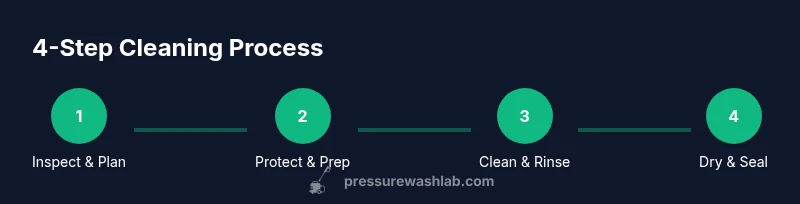
Inspect area and plan
Survey the concrete for cracks, stains, and nearby outlets. Decide which nozzle and attachments will be used, and locate any delicate areas that need extra protection. This planning reduces rework and splits work into clear zones.
Tip: Map the area with chalk lines to track cleaned vs. unclean sections. - 2
Protect surroundings and PPE
Cover plants, outlets, and doors with plastic; put on PPE before starting. Protect nearby glass or painted surfaces from overspray.
Tip: Work with a partner to monitor overspray and guide the nozzle. - 3
Set up water supply and equipment
Connect your water source and ensure the pressure washer is properly grounded and plugged into a GFCI outlet if using electric. Check hoses for leaks.
Tip: Test water flow with the wand before applying cleaner. - 4
Attach correct nozzle and start with a dry run
Attach a 15° or 25° nozzle and perform a light, dry pass on a small patch to gauge reaction. Switch to a surface cleaner for large flat areas.
Tip: Never point at yourself or others; keep a safe stance. - 5
Pre-wet and apply cleaner
Pre-wet the concrete and apply a thin layer of concrete-safe cleaner to oily stains. Let sit 5–10 minutes (not drying) before rinsing.
Tip: Avoid letting cleaner dry to prevent residue. - 6
Clean in systematic passes
Use even, overlapping passes with the surface cleaner or wand. Keep the wand moving and maintain a consistent distance from the surface.
Tip: Work from clean to dirty areas to avoid recontamination. - 7
Tackle stubborn stains
For oil or rust stains, scrub with a stiff brush after rinsing, reapply cleaner, and repeat as needed. Pressure alone may not remove deeply embedded stains.
Tip: Do not over-agitate; excessive scrubbing can damage the surface. - 8
Rinse and inspect
Rinse the entire area thoroughly; check for remaining stains or unevenness. Re-clean any missed spots and remove overspray from nearby surfaces.
Tip: Inspect edges and corners where grime hides. - 9
Dry, seal, and maintain
Allow the surface to dry completely before applying a penetrating seal if desired. Regular maintenance extends life and keeps it easier to clean next time.
Tip: Seal only after full drying to avoid trapping moisture.
Quick Answers
What PSI should I use to clean concrete with a pressure washer?
Typically 2000-3000 PSI with a 15-degree nozzle; adjust downward for delicate edges or sealed surfaces. Start with lower PSI and test on a hidden patch.
Use about two to three thousand PSI with a 15-degree nozzle; test on a hidden patch first.
Can I use a detergent with my pressure washer?
Yes. Use a concrete-safe cleaner and follow the product label. Rinse thoroughly after application and avoid mixing with bleach or ammonia.
Yes. Use a concrete-safe cleaner and follow the label; rinse well and avoid mixing with harsh chemicals.
Is it safe to clean painted surfaces with a pressure washer?
Avoid aggressive nozzle angles and high PSI on painted finishes. Test in a small area first and consider hand washing if the paint is peeling.
Be cautious on painted surfaces; test first and usually use gentler methods.
How long does concrete take to dry after cleaning?
Drying time depends on weather and porosity. Allow at least several hours of drying before sealing; warm, sunny days accelerate the process.
Drying can take several hours depending on conditions; plan accordingly.
Should I seal concrete after cleaning?
Sealing is often beneficial after cleaning if the surface is dry and clean. Use a penetrating sealer suited to your surface type and weather conditions.
Sealing after cleaning helps protect from stains; ensure it’s fully dry first.
What safety precautions are essential?
Wear eye protection, gloves, and non-slip footwear. Keep bystanders clear and avoid spraying toward people or delicate installations.
Wear PPE and keep others away; stay safe around water and compressed spray.
Watch Video
Key Takeaways
- Plan area and protect surroundings
- Use correct PSI and nozzle for concrete
- Prefer surface cleaner for flat slabs
- Test on a small patch first
- Seal and maintain for longevity