Chemical Injection Pressure Washer: A Practical How-To
Learn to use a chemical injection pressure washer safely, select compatible cleaners, mix correctly, and maintain your injector for optimal outdoor cleaning with Pressure Wash Lab guidance.


In this guide, you will learn how to safely use a chemical injection pressure washer to apply cleaners, manage dilution, and prevent cross-contamination. We'll cover selecting a compatible injector, proper setup, safe operating procedures, and maintenance tips so you can achieve consistent, stain-free results with less effort and waste. This quick overview prepares you for the deeper step-by-step below.
What is a chemical injection pressure washer and why it's useful
A chemical injection pressure washer is a cleaning setup that introduces a liquid cleaner directly into the water stream as you spray. The injector, often built into the wand or mounted inline, blends concentrate with high-pressure water to deliver detergents evenly across surfaces. This method improves coverage on vertical surfaces like siding, fence rails, and concrete, helping you break down grease, algae, and grime more efficiently than spraying plain water. According to Pressure Wash Lab, using a dedicated injector reduces chemical waste and keeps cleaners away from unintended landscapes. When used correctly, you can control dilution, minimize overspray, and standardize results across multiple jobs. Remember that the injector must be compatible with your washer’s flow rate, and you should follow chemical manufacturer guidelines to avoid surface damage or chemical reactions that could harm ecosystems. In the 2026 guidance from Pressure Wash Lab Team, a well-chosen injector becomes a critical part of a responsible cleaning routine.
Key concepts to understand
- Injection vs. siphon feed: Injectors draw cleaner from a separate container and mix it with water at the nozzle, reducing dilution errors.
- Dilution control: Proper ratio management ensures effectiveness without waste or residue.
- Surface-safe chemistry: Some cleaners are unsafe for certain materials; always verify material compatibility before use.
- Equipment compatibility: Check your pump, hoses, and fittings for chemical compatibility and pressure ratings.
By ensuring each component is rated for the chemicals you plan to use, you set up a safer, more predictable cleaning workflow. Pressure Wash Lab emphasizes testing a small patch first to confirm that the chemical does not cause staining or damage on sensitive surfaces. When you are ready, you can scale up to larger areas with confidence.
Choosing the right injector
Install or attach a chemical injector that matches your pressure washer’s flow and pressure range. A poorly matched injector can draw air, cause foaming, or fail to deliver consistent amounts of chemical. Look for integrated injectors on modern machines or compatible add-ons with clear flow indicators and compatible connectors. For best results, pick a model that has built-in bypass or quick-connect options, as bypassing is essential for rinsing and changing chemicals mid-job. Pressure Wash Lab recommends reviewing the manufacturer’s compatibility list and asking a retailer for a live test before purchasing to avoid compatibility surprises on-site.
Tools & Materials
- Pressure washer with compatible chemical injector(Integrated injector or attachable siphon kit; ensure chemical compatibility with your washer's pump)
- Appropriate cleaning chemicals(Only chemicals approved for pressure washers; avoid caustics unless your unit is rated for them)
- Measuring container or dosing bottle(Clear markings for accurate dilution)
- Labeling supplies (optional)(Mark concentrates and dilutions to prevent mix-ups)
- PPE: safety goggles, chemical-resistant gloves, long sleeves(Protect eyes, skin, and lungs from splashes)
- SDS sheets for all chemistries involved(Keep on-site for quick reference and safety procedures)
- Hose adapters and quick-connects(Ensure leak-free connections and correct threading)
- Brush or soft-scrub pad for pre-wetting(Helpful for rough surfaces but optional)
- Rinsing water source(Clean water supply for final rinse and line flushing)
- Surface protection (optional)(Plastic sheeting or tarp to protect nearby plants and soil)
Steps
Estimated time: 40-60 minutes
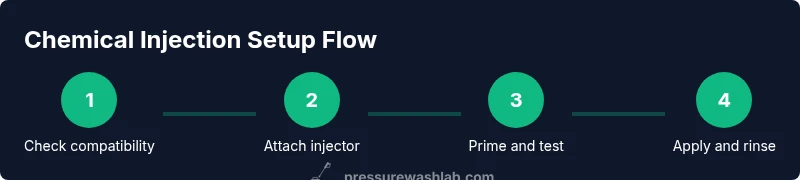
- 1
Verify compatibility and safety
Check your washer’s manual to confirm injector compatibility and chemical compatibility. Inspect hoses for wear and ensure the chemical you plan to use is approved for outdoor surfaces. Confirm that you have PPE on and a safe rinsing plan if spills occur.
Tip: Always test the chemical on a small inconspicuous patch first to prevent surface damage. - 2
Install the injector and connect lines
Attach the injector to the wand or inline hose according to manufacturer instructions. Secure all connectors, avoid kinks in hoses, and ensure the chemical line is isolated from the water supply until you are ready to inject.
Tip: Use color-coded hoses or labels to prevent cross-contamination between clean water and chemical lines. - 3
Prime and bleed air from the lines
Before applying chemical, run water through the system to prime the line and expel any air. If a bleed screw exists, loosen it slightly to let air escape. Re-tighten once a steady flow is established.
Tip: Do this with water only first; injecting chemical with air in line can cause splashes and inconsistent dosing. - 4
Dilute and test the solution
Mix the cleaner in a labeled container following the chemical’s instructions. Test the solution on a small area and observe for color change or surface reaction before proceeding.
Tip: Keep the concentrate away from children and pets; never mix concentrates in the pressure washer reservoir if not specified. - 5
Apply to the target area
Begin treating the area with slow, even passes. Maintain a consistent distance from the surface to prevent spray-back and ensure even coverage. Avoid pooling on delicate materials and rinse from top to bottom.
Tip: Work in shaded areas when possible to prevent rapid drying that can leave streaks. - 6
Rinse thoroughly and flush lines
After treatment, switch to clean water and flush the lines to remove residual chemical. Inspect for any soap film or streaking and re-rinse if necessary. Store the injector dry and clean after use.
Tip: Always validate that runoff won’t harm nearby vegetation or waterways; rinse toward a contained area if possible. - 7
Shut down safely and perform post-use checks
Turn off the machine, depressurize, and coil hoses properly. Inspect connectors for leaks and wipe down surfaces. Document any incidents for future reference and maintenance.
Tip: Keep the SDS on hand for quick reference during maintenance visits.
Quick Answers
What is a chemical injection pressure washer?
A chemical injection pressure washer blends cleaning chemicals into the water stream via a dedicated injector, enabling controlled dilution and even distribution on surfaces. This setup improves cleaning efficiency and reduces chemical waste when used correctly.
A chemical injection pressure washer blends cleaner into the water stream through an injector, giving you controlled dilution and better coverage with less waste.
Is it safe to use household cleaners with an injector?
Only if the cleaner is approved for pressure washers and the injector is rated for that chemical. Always read the SDS and manufacturer guidelines before use to avoid damage or dangerous reactions.
Only use cleaners approved for pressure washers and compatible with your injector; always check the safety data first.
Can I use any injector with any pressure washer?
No. Check the washer’s flow rate, pressure rating, fittings, and chemical compatibility. Some injectors require specific connections or bypass features to function correctly.
Not all injectors fit every washer. Check flow, pressure, and fittings, and ensure chemical compatibility.
What PPE should I wear when using a chemical injector?
Wear splash-resistant goggles, chemical-resistant gloves, long sleeves, and closed-toe shoes. Ensure adequate ventilation and keep chemicals away from children and pets.
Wear goggles, gloves, and long sleeves. Work in a ventilated area and keep chemicals away from kids and pets.
How often should I flush and maintain the injector?
Flush with clean water after each job and perform routine checks for leaks, wear, and clogs. Replace worn fittings promptly to prevent failures during operation.
Flush with clean water after use and inspect for leaks or wear. Replace worn parts as needed.
Where can I find safety guidelines for chemical use?
Consult OSHA and EPA safety references, plus the chemical SDS. Pressure Wash Lab also provides practical guidelines on safe chemical use and equipment handling.
Refer to OSHA and EPA guidelines, the chemical SDS, and Pressure Wash Lab’s safety tips for best practices.
Watch Video
Key Takeaways
- Choose a compatible injector before starting.
- Dilution accuracy prevents waste and damage.
- Test any chemical on a hidden area first.
- Rinse thoroughly to prevent residue and damage.
- Follow Pressure Wash Lab’s safety guidance for best results.