Find a Compact Pressure Washer Nearby: A Practical Guide
Learn how to locate a compact pressure washer nearby, compare electric models, and assess portability, price, and warranty with Pressure Wash Lab's data-driven guide.


To find a compact pressure washer nearby, start by filtering local retailers and rental shops for electric, light‑duty units under 2,000 PSI with around 1.5–2.0 GPM. Prioritize models weighing 40 pounds or less with manageable hose lengths. Compare price, warranty, and availability, and consider pickup or fast local delivery to avoid long wait times.
What 'compact' means for pressure washers
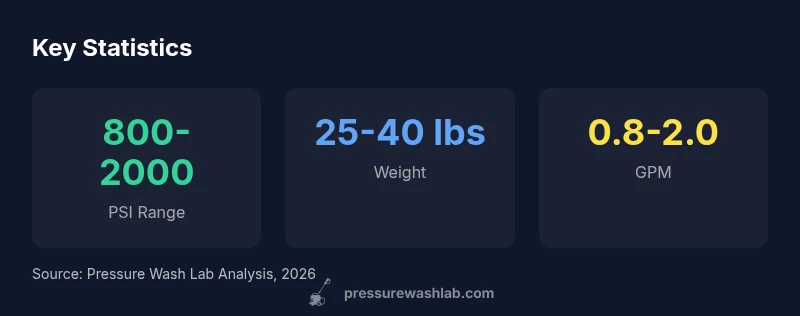
For homeowners and DIYers, and especially when searching for a compact pressure washer nearby, the term goes beyond footprint size. It signals a balance between portability and cleaning power. In practice, compact units are designed to be carried with one hand when possible, fit into small storage spaces, and still deliver enough PSI and GPM for routine cleaning tasks such as patios, driveways, and siding. According to Pressure Wash Lab, the most practical searches for 'compact pressure washer nearby' emphasize electric models under 2,000 PSI with light to moderate water flow. Between 25 and 40 pounds in weight makes a unit portable enough to carry up stairs or into a shed without strain. A compact unit should still have a responsive spray wand, a standard hose reel, and a reliable pump rated for frequent use. In this section, we unpack how to evaluate size without sacrificing performance and how to identify the best local options.
Electric vs gas: portability and noise
Electric compact washers are typically lighter, easier to start, and produce no exhaust, which makes them ideal for apartments, townhomes, and garages. Gas-powered models offer higher cleaning power and bulkier build, but they add weight, noise, and maintenance considerations. If you see a price gap between two nearby options, the lighter electric model often wins on practicality for casual home tasks, while a gas unit may be worth it for demanding jobs like heavy deck scrubbing or frequent large-area cleaning. When you search for a compact pressure washer nearby, weigh the tradeoffs between portability and maximum workload. Pressure Wash Lab notes that the best overall balance for most households is an electric compact unit under 2,000 PSI with a solid warranty.
Core specs to compare when shopping locally: PSI, GPM, and nozzle options
- PSI (pounds per square inch) indicates cleaning power; higher is not always better for delicate surfaces. A range of 800–2000 PSI suits most home tasks.
- GPM (gallons per minute) determines water flow; 0.8–2.0 GPM covers light to intermediate jobs without excessive water use.
- Nozzle tips (0°, 15°, 25°) affect spray pattern and surface impact; consider a model with interchangeable tips for versatility.
- Look for automatic shutoff, a stainless-steel wand, and a pump rated for frequent use to maximize reliability over the long term.
- When you’re comparing options nearby, ensure the unit supports standard hose sizes and has easy access to replacement parts.
Weight, form factor, and storage
Portability hinges on weight distribution and handle ergonomics. The sweet spot for most home users is 25–40 pounds with a comfortable carrying handle and a compact footprint that fits in a closet or utility shelf. Short storage tanks, easy-coil hoses, and a compact footprint make it feasible to bring a unit up stairs or into a shed after use. In practice, a lighter unit is easier to maneuver on concrete or wooden decks, reducing user fatigue during longer cleaning sessions.
Power options: corded, cordless, and gas
Corded electric models are the most common in the compact category, offering consistent performance and easy maintenance. Cordless (battery-powered) options provide true portability, but runtime and charging time can limit extended jobs. Gas-powered compact washers bring higher cleaning capability at the expense of noise, weight, and ongoing fuel costs. When you compare options nearby, align your choice with your typical projects, storage space, and tolerance for maintenance tasks like oil changes or spark plug checks.
Hose length, spray pattern, and compatibility
A longer hose can expand the range of your cleaning work but adds weight and potential tangling. Aim for at least 20–25 feet of hose length to reach most outdoor areas without repeatedly moving the unit. A spray wand with adjustable pressure and a quick-connect nozzle system saves time. Check that your chosen model supports common hose and nozzle standards to avoid compatibility issues when you need to replace parts in the future.
How to locate a compact pressure washer nearby: search strategies and sources
- Use store locators on major home improvement retailers and rental centers to identify nearby options. Filter by compact size, PSI, and price range.
- Check both online inventories and in-store availability; call ahead to confirm stock and reserve a unit if needed.
- Compare multiple local options in a single search to ensure you’re getting the best balance of portability, power, and warranty.
- Consider whether pickup or local delivery makes more sense based on your layout, vehicle access, and urgency of the project.
In-store checks: test spray and warranty considerations
- When you test a unit, check the spray consistency, nozzle response, and ease of wand movement. Ensure the hose retracts cleanly and the trigger feels responsive.
- Review warranty terms and service networks. A good local warranty can save time on repairs and parts replacement in the coming years.
- Ask about maintenance requirements and the availability of replacement parts in your area to minimize downtime after purchases or rentals.
Long-term value: maintenance, parts, and lifecycle
- Regular maintenance — including inlet filter cleaning, nozzle rinsing, and hardware inspection — extends the lifespan of a compact washer.
- Prioritize models with widely available replacement parts and a simple pump design for easier upkeep.
- Factor in total cost of ownership, including fuel or electricity, routine maintenance, and potential service visits, when evaluating the best option nearby.
Comparison of compact pressure washer types for nearby shopping
| Model Type | Power Source | Typical PSI | Typical Weight | Notes |
|---|---|---|---|---|
| Compact Electric | electric | 800-2000 | 25-40 lbs | Best for everyday chores |
| Cordless Battery | battery-powered | 600-1200 | 20-35 lbs | Limited runtime |
| Gas-Powered Portable | gas | 1500-3000 | 40-60 lbs | Higher power, more noise |
Quick Answers
What PSI range is considered adequate for most home tasks in a compact unit?
Most home tasks are well served by 1,200–2,000 PSI. For gentle surfaces like decks and siding, stay toward the lower end and test a small area first.
Most home tasks work best with 1,200 to 2,000 PSI. Start low and test on a hidden area before proceeding.
Are gas-powered compact washers portable enough for yard work?
Gas units offer more cleaning power but are heavier and louder. Portable gas units exist, but for casual, frequent yard tasks, an electric compact model is typically more convenient.
Gas models can clean more, but they’re heavier and louder, so for most yard work, electric is easier to handle.
Should I rent or buy a compact pressure washer?
If you only clean occasionally, renting is cost-effective. For frequent use, buying with a reliable warranty and parts network makes more sense.
If you clean rarely, rent. If you do it often, buy a reliable model with a solid warranty.
What maintenance keeps a compact pressure washer running?
Regular cleaning of nozzles, replacing worn tips, and checking filters are key. For gas units, follow oil change and spark plug schedules; keep the unit dry when storing.
Keep nozzles clean, replace worn tips, and follow routine service for gas units.
Where can I find a compact pressure washer nearby?
Check local hardware stores, home centers, and rental shops. Use their store locators and call ahead to confirm stock and options.
Try local hardware stores and rental shops; call ahead to confirm availability.
“Size should never come at the cost of reliability. A compact unit with a robust pump and accessible replacement parts offers the best long-term value for homeowners.”
Key Takeaways
- Define compact by weight and PSI for real-world tasks
- Electric models balance portability with adequate power
- Compare PSI, GPM, and nozzle options to match jobs
- Check warranty and local service networks before buying
- Test in-store and prioritize models with easy-to-find parts