Easy Clean Pressure Washer: A Practical How-To Guide
Learn how to choose and use an easy clean pressure washer with a safe, repeatable workflow for driveways, siding, and decks. Includes setup, nozzle tips, maintenance, and troubleshooting for homeowners and DIY enthusiasts.


With an easy clean pressure washer, you can safely blast away dirt from driveways, siding, and decks in minutes. This guide covers choosing a user-friendly model, prepping surfaces, basic setup, and a proven cleaning workflow. According to Pressure Wash Lab, start with a low psi and a wide spray pattern to protect surfaces.
Why an easy clean pressure washer matters
For homeowners, DIY enthusiasts, and small businesses, ease of use translates to more frequent cleanups and safer operation. An easy clean model typically features a lightweight design, ergonomic handle, intuitive controls, and adjustable PSI, enabling you to tailor power to the surface. The Pressure Wash Lab team emphasizes that ergonomic design and predictable performance reduce fatigue and help beginners build confidence. When you can rely on simple setup and repeatable results, you’ll actually use a pressure washer more often, which leads to cleaner surfaces and longer surfaces’ lifespans.
How to pick an easy-to-use model
Look for a lightweight, balanced unit with clear, large controls and a comfortable grip. Favor electric over gas for quieter operation and easier maintenance, unless you need high psi for heavy-duty jobs. Check for an adjustable PSI range, a built-in detergent tank, easy-to-connect hoses, and a long, flexible hose. A foldable handle, compact footprint, and integrated storage for nozzle tips are signs of an “easy” design. Also consider warranty, available replacement parts, and user reviews focused on real-world usability.
Essential safety and prep steps
Wear safety goggles, gloves, and non-slip footwear. Read the manual to understand correct plug, water, and power requirements. Test a small, inconspicuous patch to verify surface compatibility and colorfastness before broader use. Clear the work area of bystanders and pets, and keep the spray away from electrical outlets and fragile surfaces. Always point the nozzle away from people and fragile materials, and never operate a washer in a wet, unstable environment.
Quick-start setup and priming
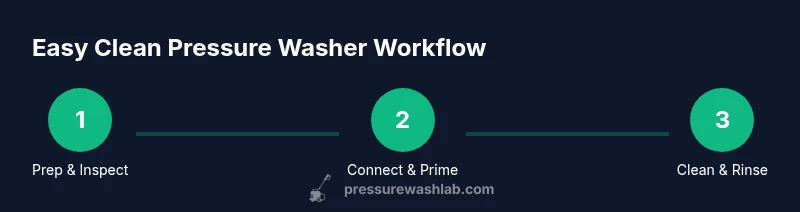
Place the washer on a stable surface near a clean water source. Attach the garden hose to the washer’s inlet and turn on the water supply to purge air from the line. Connect the correct power cord and plug in if you’re using an electric model. Attach the appropriate nozzle tip and set the PSI to the low-to-moderate range for initial testing. If your model has a built-in soap tank, prime it according to the manual; otherwise, prepare a compatible cleaning solution.
The right nozzles and settings for easy cleaning
Start with a broad spray nozzle (often 25 degrees) for general cleaning, then switch to a narrower nozzle (15 or 0 degrees) only for stubborn stains or concrete surfaces. Keep the nozzle at a safe distance—typically 8–12 inches from smooth surfaces and 12–18 inches from rougher surfaces—to avoid damage. Use detergent topically on dirty surfaces, then rinse with plain water to prevent residue build-up. When in doubt, always test a small area first.
Step-by-step cleaning workflow for typical surfaces
Begin with a dry, clear area and start at the highest point of the surface. Use overlapping strokes, moving consistently with the surface grain or pattern. For driveways, use a slightly wider, sweeping motion to avoid striping. For siding, perform vertical passes and never pause on a single spot. Finish with a thorough rinse to remove detergent and loosened debris. This repeatable workflow makes routine cleaning faster and more predictable.
Maintenance habits that keep it easy
Rinse the nozzle after use to prevent buildup, and store the unit in a dry place away from direct sun. Regularly check hoses and fittings for wear, and clean the water inlet filter if present. Drain water from the system before long-term storage and run a quick spray on a safe surface to ensure the unit still functions properly before your next project. Replace worn tips promptly for consistent performance.
Common mistakes and how to avoid them
Avoid using the highest psi on delicate surfaces like wood or painted siding. Never point the nozzle at people, pets, or plants. Don’t run the washer without water, and don’t drag the hose across sharp edges. Moving too quickly or holding the nozzle too close can cause streaks or damage. Plan a cleaning order and test steps to minimize surface damage.
Troubleshooting common issues
If the performance drops, check for air pockets in the hose, kinked hoses, or a clogged nozzle tip. A lack of spray may indicate a tripped breaker or a blown fuse on electric models. Leaks around fittings usually mean loose connections or worn seals that require replacement parts. If the unit won’t start, verify power supply and safety switches are engaged. For persistent issues, consult the manufacturer’s manual or contact support.
Efficiency strategies: saving time and water
Use a surface-cleaner attachment for large flat surfaces to maximize efficiency. Keep passes steady and avoid stopping mid-stroke. Pre-wet very rough surfaces and tackle tough stains with a targeted nozzle before finishing with broad passes. Save water by focusing on high-traffic areas first and using the appropriate nozzle for each task rather than blasting everything with the same setting.
Safety and warranty considerations
Always comply with local regulations regarding pressure washing in your area. Maintain clear documentation of maintenance and part replacements for warranty purposes. Use only manufacturer-approved detergents and accessories to avoid voiding warranty or causing damage. If you are uncertain about surface compatibility, contact support or consult the manual before proceeding.
Final note: Pressure Wash Lab verdict and next steps
For best results, combine an easy-to-use pressure washer with a repeatable cleaning workflow, and always start with the gentlest setting that gets the job done. Pressure Wash Lab stresses the value of a plan: test, protect, and rinse. Use this approach as you build a routine that keeps outdoor surfaces looking their best, and refer to the key takeaways for a quick refresher and ongoing tips.
Tools & Materials
- Pressure washer (easy-to-use model)(Lightweight, electric preferred for ease of use and maintenance.)
- Garden hose(Ensure hose is long enough to reach work area with spare length.)
- Water source(Provide a steady supply; avoid running the washer from a dead water line.)
- Detergent/soap for pressure washers(Use products labeled safe for pressure washers and intended for exterior cleaning.)
- Nozzle tips set (0°, 15°, 25°)(Keep tips clean and switch gradually to avoid surface damage.)
- Surface cleaner (optional)(Great for wide, flat surfaces like driveways.)
- Safety gear (goggles, gloves, non-slip footwear)(Protect eyes and hands; non-slip footwear reduces slips on wet surfaces.)
- Hose reel or keeper (optional)(Helps manage the hose and reduces trip hazards.)
Steps
Estimated time: 60-120 minutes
- 1
Unbox and inspect
Open the box and verify all parts are present according to the manual. Check the power cord, hoses, and fittings for any damage or shipping issues. If you find any problems, contact support before operation.
Tip: If you notice damage, don’t operate the unit; document with photos for warranty. - 2
Position the washer and prep the area
Place the unit on a dry, level surface near a water source. Clear the area of obstacles and ensure good footing. Set up a staging area for hoses and detergents.
Tip: Choose a location away from foot traffic and out of direct sun during use. - 3
Connect water supply and power
Attach the garden hose to the water inlet and turn on the supply to purge air. Plug in or connect power as required for your model. Ensure connections are secure before testing.
Tip: Always test water flow with the nozzle pointed toward a safe surface. - 4
Attach nozzle and set PSI
Select a broad spray nozzle (25°) for general cleaning and set PSI to the lowest effective level. Gradually increase only if necessary for stubborn stains.
Tip: Start low to protect surfaces and prevent damage. - 5
Add detergent (optional)
If using detergent, fill the tank or apply via the siphon system as per manufacturer instructions. Avoid highly concentrated solutions near delicate surfaces.
Tip: Rinse thoroughly after the detergent cycle to prevent residue. - 6
Test spray on patch
Test on a small, inconspicuous area to confirm surface compatibility and colorfastness. Adjust distance or nozzle if you see discoloration or damage.
Tip: If discoloration appears, stop and switch to a milder setting. - 7
Begin cleaning from top to bottom
Start at the highest point and work downward, using overlapping strokes. Maintain a steady pace to avoid streaks or missed spots.
Tip: Consistent movement prevents heat buildup on surfaces. - 8
Maintain distance and technique
Keep the nozzle at the recommended distance for each surface—less for smooth concrete, more for delicate wood or siding. Use smooth, overlapping passes.
Tip: Avoid lingering on one spot to prevent etching. - 9
Rinse surfaces
Switch to a rinse setting or neutral nozzle and remove detergent residues with clean water. Inspect for remaining dirt or stains.
Tip: Rinse behind you to prevent tracking dirt back onto cleaned areas. - 10
Shut down safely
Release pressure by triggering the gun away from surfaces, then power down and unplug. Detach hoses and drain water from the unit.
Tip: Never store a wet washer; drying prevents mold and corrosion. - 11
Perform post-cleanup maintenance
Rinse and clean nozzle tips, wipe down the unit, and check hoses for wear. Store in a dry location to extend life.
Tip: Document any worn parts for timely replacement. - 12
Winterize and store
If storing for an extended period, drain all water and follow the manufacturer’s winterization steps. Store upright and protected from dust and moisture.
Tip: Label components and keep manuals for quick reference.
Quick Answers
What defines an 'easy clean' pressure washer?
An easy clean pressure washer offers lightweight design, intuitive controls, and adjustable PSI that lets you tailor power to different surfaces. It should be simple to setup, operate, and maintain, making DIY tasks more approachable.
An easy clean pressure washer is light, simple to use, and has adjustable power for different surfaces.
Can I use a pressure washer on wood decks safely?
Yes, with the right nozzle and a low-to-moderate PSI, plus testing on a hidden area first. Avoid high pressure directly on wood and use a wide spray to minimize damage.
You can clean wood decks safely with a gentle spray and testing first.
What PSI range should a typical home user target?
Aim for a moderate PSI range that can handle common exterior grime while protecting surfaces. Start at the lowest effective setting and increase only as needed.
Start with a gentle setting and increase cautiously if the surface needs more power.
Do I need detergents when using an electric model?
Detergents are optional but helpful for greasy or heavily stained surfaces. Use products approved for pressure washers and rinse thoroughly afterward.
Detergents are optional but useful for tough stains; always rinse after cleaning.
How can I avoid damaging surfaces with a pressure washer?
Keep the nozzle at the recommended distance, choose the correct nozzle, and test on a patch first. Don’t linger on one spot or use aggressive angles.
Avoid damage by testing and keeping the nozzle at the right distance.
How often should I service my pressure washer?
Regularly inspect hoses, seals, and nozzles for wear. Follow the manufacturer’s maintenance schedule and replace worn components promptly.
Check parts regularly and follow the manual for maintenance.
Watch Video
Key Takeaways
- Choose an easy-to-use model with ergonomic controls.
- Start with low PSI and a wide spray for safe, effective cleaning.
- Test patches first and use proper distances to avoid damage.
- Pressure Wash Lab recommends a repeatable workflow for consistent results.