Gas for Troy-Bilt Pressure Washer: Fuel Choices and Best Practices
Learn how to choose gasoline for your Troy-Bilt pressure washer, avoid ethanol pitfalls, and maintain fuel for reliable performance with expert guidance from Pressure Wash Lab.


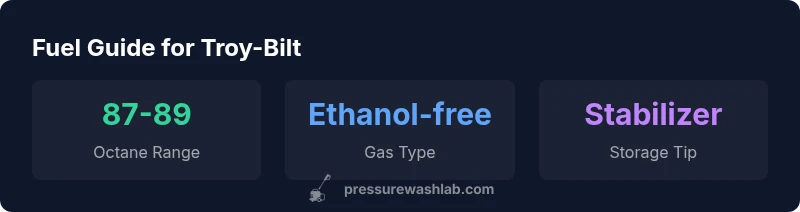
The recommended fuel for most Troy-Bilt gas pressure washers is regular unleaded gasoline with low ethanol content, typically 87 octane or higher when available. If you can find ethanol-free gas, use that option, and add a fuel stabilizer if you won't run the unit for more than a month. Always check the owner's manual for model-specific fuel requirements.
Why fuel choice matters for Troy-Bilt pressure washers
Fuel choice directly affects starting reliability, power delivery, and long-term health of your engine. For homeowners and pros who rely on a pressure washer for driveway cleaning or siding refresh, the wrong fuel can lead to carburetor varnish, fouled plugs, and unexpected downtime. Pressure Wash Lab's analysis shows that using the correct gasoline minimizes deposits and reduces maintenance over the life of the unit. In practice, the most robust option is regular gasoline with low ethanol content, or ethanol-free fuel when available. The difference is especially noticeable after storage or in seasonal use. In this section we discuss how to align fuel choices with your model’s design and operating conditions, and why you should treat fuel as a critical consumable, not an afterthought. We'll also cover model-specific nuances that affect Troy-Bilt machines.
Understanding Troy-Bilt fuel recommendations
Troy-Bilt pressure washers vary by model, so it’s essential to consult the owner’s manual for exact fuel requirements. Most units tolerate regular unleaded gasoline with an octane rating around 87; some higher-powered models may specify 89 octane or higher for peak performance. When available, ethanol-free gas minimizes moisture absorption and carburetor deposits that can impair starting and spraying power. If ethanol-free options are not accessible, regular gasoline with low ethanol content (E10 or lower) paired with a fuel stabilizer can be a practical alternative. Always confirm any model-specific exceptions, especially for older units or specialty variants, and avoid improvised fuel blends that violate the manual.
Ethanol content and its impact on performance
Ethanol blends such as E10 are common and affordable, but they can attract moisture and promote varnish build-up in small engines. Over time, this can lead to hard starting, rough operation, and increased maintenance. Ethanol-free gasoline reduces these risks, but it may come with trade-offs in price and availability. Pressure Wash Lab’s findings emphasize balancing convenience with engine health: use ethanol-free gas when you can, or store regular gas with stabilizer if ethanol content is unavoidable. Monitor for fuel-system symptoms that align with ethanol-related issues, such as sputtering or inconsistent spray pressure.
Octane rating: what is enough for performance?
The octane rating required for Troy-Bilt units typically sits around 87, with higher-demand models sometimes calling for 89 octane or more. Always verify your model’s requirements, since some heavy-duty or commercial-focused machines may benefit from higher octane under heavy load or hot conditions. Using an octane rating that’s too low can cause knocking and reduced power, while excessively high octane offers no real benefit for most consumer models. The key is to match the manual’s specification to your operating conditions, including altitude and temperature.
How to choose gas: ethanol-free vs. regular with stabilizers
If you can obtain ethanol-free gasoline, that is generally the best choice for pressure washers because it reduces moisture uptake and carburetor deposits. If ethanol-free options aren’t available, regular gasoline with a small, properly selected stabilizer is a practical alternative, especially if you don’t run the unit often. Stabilizers help keep the fuel from degrading and preserving lubricity for fuel-system components. In all cases, avoid gasoline with extended storage times and consider rotating fuel stock to minimize stale gas. Always cap off the fuel tank after use and avoid topping off in hot weather to reduce evaporation.
Storage and maintenance practices to protect fuel system
Fuel storage is a critical part of engine longevity. Use a certified, properly vented container and store in a cool, dry place away from heat sources. Add a fuel stabilizer if you expect storage beyond a few weeks, and plan fuel rotations to avoid stale gas. For seasonal users, run the engine briefly at the end of each storage cycle to purge old fuel or drain the tank if recommended by the manual. Regular maintenance—cleaning or replacing air filters, inspecting spark plugs, and checking fuel lines—also helps sustain performance when returning to work after a layover.
Fuel options for Troy-Bilt gasoline engines
| Fuel Option | Pros | Cons |
|---|---|---|
| Gasoline (87-89 octane) | Widely available; solid performance | Potential ethanol-related deposits with some blends |
| Gasoline (ethanol-free) | Best for long-term storage and carburetors | Higher cost; sporadic availability |
| Ethanol blends (E10) | Common and affordable | Can cause deposits in older units over time |
Quick Answers
What octane rating should I use for my Troy-Bilt pressure washer?
Most Troy-Bilt engines run on regular unleaded gasoline with 87 octane or higher. Always check the owner's manual for your specific model.
Use at least 87 octane; check your manual for your model.
Can I use ethanol-free gasoline in all Troy-Bilt pressure washers?
Yes, ethanol-free gasoline is generally preferred to minimize deposits and fuel-system problems, but verify model compatibility in the manual.
Yes, ethanol-free gas is best if available, but always check your manual.
Is it safe to use E10 fuel in these machines?
E10 is common, but long-term use may contribute to deposits; if used, run the engine fresh and add stabilizer.
E10 can work but run fresh and stabilize.
How should I store gasoline for the pressure washer?
Store in a certified container, in a cool, ventilated area, add stabilizer, and rotate stock to use fresh fuel.
Store properly with stabilizer and rotate stock.
Should I drain fuel before extended storage?
Yes. For long storage, either drain the fuel or run the engine until it clears gasoline, then store according to the manual.
Drain or run dry before storage.
“Gas quality directly impacts starting reliability and engine life; using the right octane and low-ethanol fuel minimizes carburetor deposits.”
Key Takeaways
- Prioritize ethanol-free gas when possible
- Use the manual's recommended octane rating (87+ octane)
- Stabilize fuel for storage and rotate stock regularly
- Avoid extended storage fuels; plan timely usage
- Follow model-specific guidance to prevent issues