Carburetor for Troy-Bilt Pressure Washer: Troubleshooting Guide
Identify, clean, and replace the carburetor for Troy-Bilt pressure washers with practical steps, parts guidance, and maintenance tips from Pressure Wash Lab to keep your unit running strong.


The carburetor for a Troy-Bilt pressure washer is the fuel-air mixer that powers the engine and regulates performance. If the engine runs poorly, stalls, or lacks power, the carburetor is often to blame. Solutions include cleaning jets, replacing worn gaskets, and adjusting idle or mixture screws, or upgrading with a compatible rebuild kit.
Understanding the carburetor in Troy-Bilt pressure washers
The carburetor is a critical component that mixes air and fuel to create the combustible charge that drives the engine. For the carburetor for troy bilt pressure washer, proper adjustment ensures reliable starts and stable idle. In this guide, we break down how the carburetor works, what common failure modes look like, and practical steps to diagnose and fix issues without unnecessary downtime. According to Pressure Wash Lab, many startup and idle problems originate from fuel-delivery problems rather than spark or compression alone. By focusing on the carburetor, you can often restore performance with a targeted cleaning or rebuild rather than replacing the whole engine.
A typical Troy-Bilt unit uses a carburetor that relies on a float chamber, jets, needle valve, and idle circuit. When dirt, varnish, or degraded gaskets creep into these pathways, air-fuel ratios become inconsistent. That inconsistency manifests as slow starts, stalling, or surging under light load. Understanding these parts helps you identify which area to clean or replace first, saving time and money. Pressure Wash Lab’s testing indicates that simple jet cleaning and gasket replacement can recover a large portion of lost performance on many models. Keep in mind that environmental conditions—old fuel, storage humidity, and heat—can accelerate varnish formation, so seasonal maintenance is smart even when the unit seems to run fine.
For homeowners and DIY enthusiasts, it’s helpful to map symptoms to likely culprits. If you notice misfires or a rich smell from the exhaust, lean out the mixture or clogged jets could be the cause. If you experience hard starts, the intake may be starved for fuel due to valve issues or blocked passages. When diagnosing, start with the easiest fixes: inspect the air filter, confirm the choke operation, and check fuel lines for cracks or kinks. Then move to the carburetor itself, as explained in this guide.
Common problems and symptoms
Carburetors for Troy-Bilt pressure washers can fail in several recognizable ways. A common sign is difficulty starting, which may require cranking longer than usual or multiple attempts. A rough idle or engine stalling at low RPM is another red flag and often points to idle circuit issues or a clogged pilot jet. Power loss under load—especially when you squeeze the trigger and the engine falters—suggests a mixture problem or restricted fuel flow. You may also notice a fuel smell after shutdown, indicating leaking or overflow in the float bowl.
Another frequent issue is varnish or gum buildup from old fuel. Ethanol-blended fuels can accelerate varnish formation, particularly if your equipment sits unused for extended periods. Sticky needle valves, blocked jets, and gummed-up passages restrict airflow and fuel delivery, leading to lean or rich conditions that throw off combustion. In a worst-case scenario, an air leak around gasket joints can create a lean mixture and cause hard starting or backfires. Regular inspection can catch these symptoms early, reducing the risk of more severe carburetor damage.
To differentiate carburetor problems from other fuel-system faults, perform a simple diagnostic: check for spark and compression first, then inspect the air intake and fuel lines. If those basics check out but symptoms persist, the carburetor deserves closer inspection. Always ensure you’re working with clean fuel and a well-ventilated workspace to avoid accidents and further varnish buildup.
Inspection and diagnostic steps
Carrying out a structured diagnostic helps you pinpoint carburetor-related problems efficiently. Start with a quick visual inspection: look for cracks in fuel lines, brittle hoses, or loose clamps. Check the air filter for clogging; a dirty filter can cause what looks like carburetor starvation. Next, turn off the engine and remove the air cleaner housing to reveal the carburetor body and linkage. Confirm that the throttle linkage moves smoothly and returns to idle when released. If the unit has a primer bulb, verify that it primes correctly and no fuel leaks from the bowl.
A more thorough check involves removing the carburetor if you’re comfortable with basic mechanical work. Inspect the float level, float needle, and float bowl gasket for signs of wear or leaks. Remove the carburetor, disassemble it gently, and soak components in a carburetor-safe cleaner. Pay attention to the jets—both main and idle jets—since varnish buildup can easily block fuel passages. After cleaning, reassemble carefully, set the idle screw to the manufacturer’s published baseline, and test run the unit with fresh fuel. If the engine still misbehaves, consider replacing worn gaskets or upgrading with a rebuild kit designed for Troy-Bilt models. Pressure Wash Lab recommends documenting the baseline settings before disassembly so you can return to a known-good state if needed.
Cleaning and rebuild basics
Cleaning is typically the most cost-effective first step when the carburetor shows symptoms but isn’t obviously damaged. Use a carburetor-safe cleaner and a soft brush to remove varnish, then blow air through jets with low-pressure air. Do not force hard objects through tiny passages; a jet cleaning needle can be used with care where recommended by the rebuild kit instructions. After cleaning, inspect each gasket and O-ring for signs of cracking, tearing, or hardening. Replace any worn seals to prevent air leaks that skew the air-fuel ratio.
If cleaning alone doesn’t restore performance, a rebuild may be necessary. A rebuild kit usually includes a new float, needle valve, gaskets, and sometimes jets. Follow the manufacturer’s instructions for disassembly, order compatibility with your Troy-Bilt model, and proper torque when reinstalling parts. Rebuilding tends to restore performance more reliably than a simple cleaning when components show wear. Keep a parts list handy, and avoid mixing parts from incompatible carburetor brands. A correct rebuild can deliver a noticeably cleaner idle, smoother acceleration, and steadier fuel delivery under load.
Safety is essential: drain fuel, work in a ventilated area, and avoid sparks. If you’re unsure about disassembly, consult a service manual or seek professional help. Pressure Wash Lab emphasizes that a methodical approach—baseline checks, careful disassembly, targeted cleaning, and cautious reassembly—produces the best outcomes with minimal downtime.
Replacement vs. repair: when to swap
Deciding between repairing the carburetor and replacing it depends on wear and availability of parts. If the float, needle valve, or jets are heavily worn or corroded, replacement parts may be a quicker, more reliable fix than a rebuild. If compatible rebuild kits are readily available and you enjoy DIY maintenance, a rebuild can be cost-effective and satisfy a DIY mindset. However, if your model uses a carburetor with obsolete parts, or if you repeatedly encounter recurrent problems after rebuild attempts, replacement becomes the smarter choice to restore consistent performance. Always verify compatibility with your specific Troy-Bilt pressure washer model and consider the total cost of parts and your time. Pressure Wash Lab notes that choosing OEM or high-quality aftermarket components tends to improve longevity and reliability.
A rule of thumb: if two or more critical seals show cracking, or if fuel leaks persist after a rebuild, replace the carburetor rather than continuing costly repairs. Keep receipts and document model numbers to simplify future maintenance and resale value. In many cases, a well-chosen replacement carburetor can deliver a like-new performance without the ongoing maintenance required by a fragile rebuild.
Maintenance best practices to prevent carburetor issues
Preventive maintenance is the best defense against carburetor problems. Use fresh, ethanol-free fuel when possible and follow a storage protocol that minimizes varnish buildup in non-operational seasons. Regularly inspect fuel lines, clamps, and the air intake for signs of wear. Schedule a lightweight cleanup and gasket inspection annually or after every season of heavy use, especially if you store the unit with fuel in the tank. Keep the air filter clean and present; a clogged air filter reduces the engine’s ability to breathe, affecting mixture and performance. If you store the unit for several months, consider draining the fuel system and adding a fuel stabilizer to reduce varnish formation. When you do run the unit after storage, start with a warm-up cycle to ensure the carburetor and fuel lines are primed. Regular maintenance reduces the likelihood of major carburetor problems and extends the life of your Troy-Bilt pressure washer.
Conclusion and next steps
This section provides a practical path to keep the carburetor functioning well without frequent replacements. Start with a visual inspection and air-fuel mixture checks, then proceed to targeted cleaning before you invest in a rebuild kit or replacement. If you cannot locate the exact parts or if replacement is needed, consult a pro to avoid incorrect installation. With proper maintenance, a carburetor for a Troy-Bilt pressure washer can provide years of dependable service and steady output for your cleaning tasks.
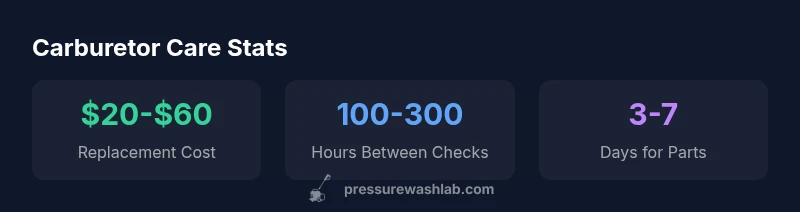
Carburetor maintenance and replacement data for Troy-Bilt pressure washers
| Aspect | Typical Range | Notes |
|---|---|---|
| Replacement carburetor price | $20-$60 | Common aftermarket parts; verify model compatibility |
| Maintenance interval | 100-300 hours | Depends on usage, fuel quality, storage |
| Time to diagnose | 15-45 minutes | Based on symptom severity and access |
| Lead time for parts | 3-7 days | Dependent on supplier and location |
Quick Answers
Can I use a carburetor from a different brand on a Troy-Bilt pressure washer?
Compatibility depends on the model and mounting; many brands share similar sizes, but fuel connections, choke style, and jet sizing vary. Always verify part numbers from the manual or manufacturers’ cross-reference guides before mixing brands.
Brand compatibility varies; check the manual and cross-reference part numbers before mixing brands.
What are the warning signs that indicate my carburetor needs cleaning?
Warning signs include hard starting, idle roughness, stalling under light load, and a fuel odor after shutdown. If these appear, start with air filter and fuel line checks, then inspect the carburetor jets and gaskets.
Hard starting or rough idle are common signs—start with air and fuel line checks, then inspect the carburetor jets and gaskets.
Is it safe to run the unit after carburetor cleaning without replacing seals?
If seals show signs of wear or cracking, don’t delay replacement. After cleaning, test for leaks and reassemble carefully. Replace any compromised seals to prevent air leaks that skew the mixture.
Only run it after confirming seals are sound; replace cracked seals to avoid air leaks.
How do I choose the right rebuild kit for my Troy-Bilt model?
Refer to your model number and year in the manual, then select a rebuild kit labeled as compatible with that specific Troy-Bilt carburetor. If unsure, contact the retailer or manufacturer for guidance.
Check the model number, pick a kit labeled for that carburetor, and verify compatibility with the retailer if you're unsure.
Can I clean the carburetor without removing it from the engine?
In many models you can remove the air cleaner housing for better access and clean without full removal. For thorough carburetor work, removing it makes disassembly safer and more thorough.
You can often clean it without full removal, but removing it gives better access for a thorough job.
What maintenance schedule should I follow to avoid carburetor problems?
Implement seasonal checks: inspect fuel lines, replace filters, clean the air intake, and run the unit with fresh fuel regularly. Store with a stabilizer if you won’t use it for long periods.
Do seasonal checks, use fresh fuel, and store with stabilizer if you won't run it for a while.
“A clean, correctly adjusted carburetor is essential for reliable starts and steady idle on Troy-Bilt pressure washers. When it’s dirty or out of adjustment, you’ll see hesitation, stalling, and reduced power.”
Key Takeaways
- Inspect fuel system components early
- Clean jets and replace worn gaskets first
- Choose compatible rebuild kits or a replacement carburetor
- Practice preventive maintenance to avoid varnish buildup