Guide to Pressure Washer Nozzles
A comprehensive, practical guide to pressure washer nozzles, covering nozzle angles, color codes, surface-specific recommendations, safety practices, and maintenance for homeowners and DIYers.


This guide to pressure washer nozzles helps you choose and use the right nozzle for cleaning power, surface safety, and efficiency. Learn nozzle types (0°, 15°, 25°, 40°), spray patterns, and maintenance. According to Pressure Wash Lab, using the wrong nozzle can damage surfaces or equipment; selecting the right tip saves time and money. Let’s dive in.
Understanding nozzle types and spray patterns
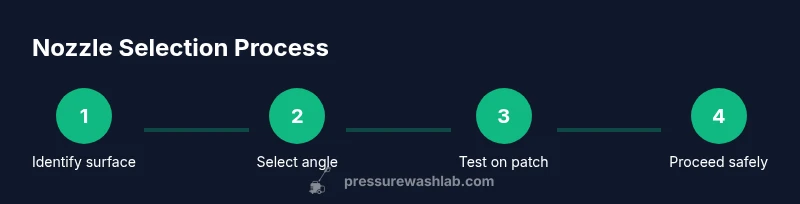
Nozzle selection is the single most impactful decision in a pressure washing project. Manufacturers provide tips that create different spray angles, measured in degrees. The most common angles are 0°, 15°, 25°, and 40°. The 0° nozzle concentrates force into a narrow jet, which is effective for stubborn stains on metal or masonry but can gouge wood or strip paint if misused. The 15° nozzle delivers a powerful yet slightly broader stream, suitable for masonry or stained concrete where precision matters. The 25° nozzle is the workhorse for general cleaning on concrete, brick, siding, and larger flat surfaces; it balances cleaning power with surface safety. The 40° nozzle provides wide coverage with a gentler impact, ideal for rinsing large areas of dirt, mildew, or delicate surfaces. Always start with a wider angle and test on a hidden area before expanding to tougher tasks. Distance matters: as you move closer, the impact increases; stay at a safe distance and sweep in smooth, overlapping motions.
Note: The nozzle’s orifice size and your machine’s PSI/GPM determine the real impact you’ll get at the surface. High PSI with a narrow angle can increase surface wear; lower PSI with a wide angle reduces risk but takes longer. Practice on an inconspicuous patch first to calibrate your approach.
Tools & Materials
- Assorted nozzle tips (0°, 15°, 25°, 40°)(Color-coded tips; ensure your system uses the common quick-connect tips compatible with your wand.)
- Safety gear (eye protection, gloves, closed-toe shoes)(Chemical-resistant gloves if detergents are involved; eye protection mandatory at all times.)
- Pressure washer with adjustable nozzle compatibility(Ensure your unit supports quick-connect nozzle changes and is rated for the intended PSI/GPM.)
- Soft-bristle brush or microfiber cloth(Optional for pre-cleaning delicate surfaces or applying detergent.)
Steps
Estimated time: 20-40 minutes
- 1
Power down and depressurize
Turn off the machine and unplug it. Release built-up pressure by triggering the trigger on the spray wand until water stops and the nozzle is safe to handle. This reduces the risk of accidental sprays and helps you safely change tips.
Tip: Never remove a nozzle under pressure; always depressurize first. - 2
Identify and remove the current nozzle
Check the wand’s tip, twist or pull to remove the old nozzle according to manufacturer instructions. Inspect the connection for wear or damage before attaching a new tip.
Tip: Take a photo of the existing setup before changing tips to reference depth and alignment. - 3
Attach the correct nozzle
Align the new nozzle with the wand’s quick-connect fitting and push until it locks in place. Ensure the tip is firmly seated and oriented correctly to avoid accidental misalignment.
Tip: Color-code the tips and store them in a labeled case for quick access. - 4
Set initial spray angle and distance
Start with a wider angle (40°) and stand several feet away from the surface. Narrow the angle (to 25° or 15°) only after confirming a safe, effective cleaning on test patches.
Tip: A gentler initial approach reduces the risk of etching or gouges. - 5
Test on a small area
Before tackling the full surface, test in a hidden area. Look for chipping, etching, or color bleed; if observed, switch to a wider angle or step back.
Tip: Always verify the surface response with a test spot. - 6
Clean with sweeping motion
Sweep the wand in smooth, overlapping strokes, keeping the nozzle moving to avoid staying in one spot. Maintain a consistent distance, and adjust as needed for stubborn stains.
Tip: Never point the jet at electrical outlets, plants, or windows. - 7
Cool down and store
After cleaning, release pressure, disconnect the nozzle, and rinse the wand. Dry the nozzle tips and store them in a protective case to prevent damage.
Tip: Inspect nozzles for cracks after use; replace damaged tips promptly.
Quick Answers
What are the common nozzle angles and their uses?
The typical angles are 0°, 15°, 25°, and 40°. 0° is for stubborn stains but can damage surfaces; 15° for more concentrated cleaning; 25° for general use; 40° for broad coverage and gentler cleaning. Always start wide and test.
Common nozzle angles include 0°, 15°, 25°, and 40°. Start with a wide angle for safety and test on a small area before moving to tougher stains.
Can I upgrade nozzle tips on all pressure washers?
Most units support quick-connect nozzle tips, but compatibility varies by model. Check your wand, inlet, and recommended PSI/GPM to ensure proper fit and safe operation.
Most units support quick-connect tips, but always check compatibility with your model before upgrading.
How far should I stand from a surface?
Begin several feet away (about 2–3 m) and adjust closer only if the surface requires more power and shows no damage in a test patch. Distance reduces risk of etching and spray drift.
Start a few feet back and only move closer after testing a small area without damage.
Is it safe to use detergents with nozzle tips?
Detergents can be used with compatible nozzles, but avoid choking tips with strong chemicals and rinse fully to prevent residue. Follow detergent manufacturer instructions for dilution and contact time.
Yes, detergents can be used if the nozzle and detergent are compatible; always follow product instructions.
How do I prevent nozzle clogs?
Rinse the nozzle after each use, use clean water for test areas, and avoid feeding debris into the wand. If a nozzle clogs, remove and clean the tip or replace it.
Rinse after use and keep debris out of the nozzle to prevent clogs.
Watch Video
Key Takeaways
- Choose the right nozzle angle for the surface and task.
- Always depressurize before changing nozzle tips.
- Test on a hidden area before full cleaning.
- Protect surfaces with proper distance and sweeping technique.