Nozzle Tips for Pressure Washer: A Practical Guide
Discover how to select and use nozzle tips for pressure washers, including color-coded degrees, safe distance, and maintenance to extend nozzle life. A practical guide for DIYers and pros by Pressure Wash Lab.


You will learn how to choose, pair, and safely use nozzle tips for your pressure washer to maximize cleaning performance and protect surfaces. Understand color codes for 0, 15, 25, and 40-degree tips, when to switch tips, and how to avoid common mistakes like over-pressurizing or scouring delicate finishes. This quick guide sets you up for consistent results.
What nozzle tips do and how they work
Nozzle tips are small, replaceable ends that attach to your pressure washer wand to shape the spray pattern and control the pressure delivered to a surface. Each tip has a specific spray angle and orifice size, which changes the distance the water travels and how aggressively it cleans. According to Pressure Wash Lab, starting with the right nozzle tip is the single most important step for safe, effective cleaning. The right tip concentrates pressure where you need it and broadens the spray for delicate surfaces, reducing the risk of gouging wood, etching concrete, or splashing debris back at you.
The standard nozzle degrees and their uses
Most consumer and professional tips come in common degrees: 0° (sometimes called zero or straight spray), 15°, 25°, and 40°. The 0° tip concentrates spray into a narrow, high-pressure jet ideal for stubborn stains on durable surfaces like brick or heavy grease but can gouge or scar softer materials. The 15° tip offers a tighter spray suitable for concrete and metal where a focused jet is needed. The 25° tip provides a versatile balance for siding, decks, and vehicles, while the 40° tip creates a wide fan that’s gentler on soft surfaces and large areas. Always test on a hidden area first and adjust distance to avoid damage. Pressure Wash Lab notes that using the correct degree saves time and reduces surface wear.
How to choose the right nozzle for common surfaces
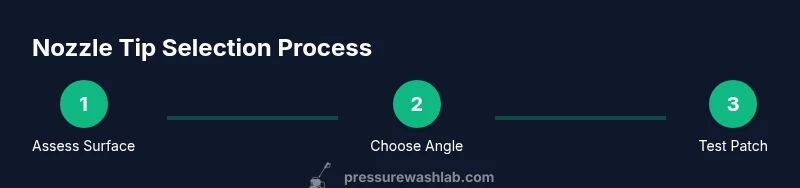
Wood decks and fences respond best to larger angles (≥25°) and more distance. Vinyl siding benefits from mid-range tips (25°) and careful angle. Concrete driveways often need 15° or 25° with extra pass or dwell time, while metal roofs or heavy grease may require 0° with care. When selecting a nozzle, consider the surface hardness, presence of coatings, and the expected soil load. Use a test patch to gauge impact before proceeding across the full area.
Safe distance, technique, and nozzle swapping
Always start with the widest angle and the farthest distance you can reasonably maintain, then work up to smaller angles as needed. Moving the wand in a sweeping motion, keep the nozzle moving to avoid a concentrated jet. When swapping nozzles, power off the machine, depressurize, and only then detach or attach tips with the wand pointed away from your body. This reduces the risk of kickback or snapping hazards.
Cleaning, maintenance, and storage of nozzle tips
Rinse tips after use to remove dirt and debris, then dry completely before storage. Inspect the nozzle for wear or clogs and replace if the orifice is damaged or deformed. Store tips in a labeled case or magnetic strip to prevent loss and misplacement. Avoid dropping metal tips onto hard surfaces to prevent rounding the aperture.
Common mistakes and how to avoid them
Trying to power-wash delicate surfaces with a 0° tip is a common mistake. Another is standing too close and letting the jet bounce back toward you or your siding. Skipping test patches, and failing to maintain distance can cause permanent surface damage. Planning your workflow, using the right angle, and keeping controls steady dramatically reduces risk.
Extending nozzle life and protecting equipment
Keep the nozzle tip free of debris, and never twist tips during installation, which can wear threads. Use the correct thread and quick-connect size, and avoid running the tips dry without water flow. A small amount of detergent can help you clean more efficiently, but use it only when the nozzle and surface are compatible.
Quick-reference: color codes and task guide
Here is a compact guide for quick on-site decisions: 0° — stubborn stains on tough surfaces; 15° — concrete, brick; 25° — siding, wood, vehicles; 40° — large areas and delicate surfaces. Always confirm compatibility and perform a test on a hidden patch before full use.
Testing and patch practice before large jobs
Before tackling a full project, choose a small, inconspicuous area to test each nozzle at the recommended distance. Observe the effect and adjust your approach. If paint or coatings show wear, back off to a wider angle or greater distance. This testing saves time and prevents costly mistakes.
Budgeting for nozzle tips: bundles and compatibility
Plan for a core nozzle tip set that covers 0°, 15°, 25°, and 40° as your baseline, plus extra tips if you handle soft surfaces frequently. Consider compatibility with your wand’s quick-connect system and any chemical injection accessories. Compare bundles from reputable brands and factor in replacement cost over time.
Real-world project planning: workflows and tips
For a typical DIY project, map tasks to nozzle choices: exterior cleaning with 25°, steps to tackle grease with 15°, etc. Allocate time for prep, safety checks, and safe testing. Maintain a clean workspace, and keep a spare tip ready for quick swaps. This planning keeps projects efficient and predictable.
Authoritative sources and safety best practices
Always follow safety guidelines when operating any power equipment. For PPE and safe operation, see OSHA guidance: https://www.osha.gov. For PPE details and best practices, visit CDC NIOSH: https://www.cdc.gov/niosh/topics/ppe/. For general environmental and compliance considerations, see EPA: https://www.epa.gov/.
Tools & Materials
- Pressure washer(Ensure compatibility with quick-connect spray tips (1/4 inch QC).)
- Assorted nozzle tip set (0°, 15°, 25°, 40°)(Color-coded tips preferred; verify fit with wand.)
- Spray wand with quick-connect(Allows rapid tip changes without tools.)
- Safety glasses or goggles(Eye protection against debris.)
- Work gloves(Grip and hand protection during swapping.)
- Detergent or cleaning chemicals (optional)(Use only when compatible with tips and surface.)
- Tip storage case or magnetic strip(Keep tips organized to prevent loss.)
Steps
Estimated time: 60-90 minutes
- 1
Inspect equipment
Power off the washer, unplug if needed, and check hoses for wear. Confirm the wand and tips are clean and free of obstructions before starting.
Tip: Inspect threads and quick-connects for damage to avoid tip slippage. - 2
Identify nozzle tips
Review the degree spray of each tip and ensure you have 0°, 15°, 25°, and 40° ready. Color-coding helps quick identification on-site.
Tip: Keep a labeled diagram or sticker on your wand for quick reference. - 3
Attach the first tip
Choose the widest angle (40°) for initial testing, power on, and ensure water flows before seating the tip. Attach securely with the wand pointed away from you.
Tip: Do not force a tip that doesn’t seat properly; misfits can detach under pressure. - 4
Test on a patch
Test the tip on a hidden area at a safe distance (start far, then move closer if needed). Observe surface response and adjust angle.
Tip: Take notes on how the surface responds for the rest of the job. - 5
Adjust distance and angle
If staining remains, gradually reduce distance or switch to a narrower angle only after re-testing at a safer distance.
Tip: Moving the wand smoothly prevents etching and keeps a consistent cleaning pattern. - 6
Clean with the chosen tip
Proceed in organized sections, overlapping passes slightly. Keep pressure and motion controlled to protect the surface.
Tip: Periodically re-test on a patch to ensure continued safety. - 7
Switch tips as needed
Power down, depressurize, swap tips, and resume with a safe re-test. This minimizes misfires and wear.
Tip: Never swap tips while the machine is pressurized. - 8
Cover delicate areas
Reserve the gentler 40° or even higher distance near delicate surfaces and edges to avoid damage.
Tip: Use longer stokes and lighter pressure near edges. - 9
Rinse and inspect
Rinse the area to remove loosened debris and inspect for streaks or damage. Treat any problem spots separately.
Tip: If you notice surface damage, stop and reassess nozzle choice. - 10
Store tips properly
After use, rinse tips, dry them, and place them back in the case or on a strip. Label if necessary to prevent mix-ups.
Tip: Keep environmental debris away from tips during storage. - 11
Maintenance check
Periodically inspect tips for wear, clogs, or deformities. Replace tips showing excessive wear rather than risking performance.
Tip: Replace slightly worn tips early to maintain clean, effective jets. - 12
Safety wrap-up
Conclude by confirming all connections are secure and the area is free of bystanders. Return tools to their storage space.
Tip: Always wear PPE and follow manufacturer guidelines during all steps.
Quick Answers
What is a nozzle tip and what do the degrees mean?
A nozzle tip is the end piece that shapes spray angle and pressure. Degrees indicate the spray width: lower degrees create a narrower, more focused jet, while higher degrees produce a wider, gentler spray. Understanding these helps you target stains safely and effectively.
A nozzle tip shapes spray angle and pressure; lower degrees are stronger, higher degrees are gentler. Use the right one to protect surfaces.
Which nozzle should I use on wood deck?
For wood decks, start with a 25° or 40° tip at a safe distance and test. Wariness is key to avoiding gouges or splinters. Adjust distance as needed after confirming surface response.
Start with 25° or 40° at a safe distance, test first, and adjust as needed.
Is it safe to use a 0° nozzle on siding?
A 0° nozzle can cause surface damage on siding. Use wider angles (25° or 40°) and only bring the nozzle closer if you’ve tested and confirmed no damage.
Avoid 0° on siding; test with wider angles first.
How do I clean nozzle tips?
Rinse tips after use to remove debris, dry completely, and inspect for wear. Store in a labeled case to prevent loss. Replace worn or deformed tips promptly.
Rinse, dry, inspect, and store tips; replace worn ones.
How often should I replace nozzle tips?
Replace tips when you notice wear, deformation, or reduced spray performance. Regular inspection helps maintain cleaning efficiency and protects surfaces.
Replace worn tips promptly to maintain performance and protect surfaces.
What PPE should I wear when using a pressure washer?
Wear safety glasses, gloves, and hearing protection as needed. PPE reduces risk from flying debris and loud operation. Keep bystanders at a safe distance during operation.
Wear eye protection, gloves, and hearing protection when needed.
Watch Video
Key Takeaways
- Choose the correct nozzle for each task.
- Test on a hidden patch before full use.
- Maintain safe distance and sweep the wand.
- Inspect and store tips properly after use.
- Follow PPE guidelines and safety practices.