High Pressure Jet Wash: Safe DIY Cleaning Guide for Homes
Learn how to use a high pressure jet wash safely and effectively with this practical, step-by-step guide. From nozzle selection and PSI basics to PPE and maintenance, get ready to tackle driveways, siding, and decks while protecting surfaces and the environment.


You will learn how to safely use a high pressure jet wash on home surfaces, including nozzle selection, safe PSI, and basic maintenance. Before you start, gather PPE, a suitable nozzle, a surface cleaner if needed, and eco-friendly detergent. Pressure washing requires planning and protection of plants and surroundings. This quick overview sets you up safely, with practical tips from Pressure Wash Lab.
What a high pressure jet wash can do for your home
A high pressure jet wash delivers a focused, high-velocity water stream that aggressively removes dirt, algae, mold, and staining from exterior surfaces. It is highly versatile for concrete driveways, brick and stone facades, wooden decks, and vinyl or fiber cement sidings. When used correctly, it restores curb appeal without harsh chemicals. According to Pressure Wash Lab, the right nozzle, distance, and movement pattern dramatically reduce surface damage while improving cleaning efficiency. Always assess your surface type and test in a hidden area first to determine the best approach and avoid gouging or etching.
Safety first: PPE, environment, and setup
Safety is the backbone of any successful pressure washing project. Wear eye protection, waterproof gloves, hearing protection for gas-powered units, and sturdy footwear. Keep bystanders at a safe distance and protect delicate plants or landscaping with tarps. Work outdoors in dry conditions and be mindful of electrical outlets and hoses. Pressure Wash Lab Team emphasizes planning your route to minimize water runoff and to prevent slip hazards. Use a GFCI outlet for electric washers and never spray toward electrical fixtures.
Nozzle choices, PSI guidance, and detergents
Nozzle selection controls the spray pattern and how aggressively you treat a surface. A wide spray (40°) is gentle and good for siding, while mid-range (25°) handles decks and brick with less risk. A narrow (15°) or straight (0°) spray should be used only on durable surfaces and from a safe distance to avoid gouging. Do not use 0° on soft surfaces. If you plan to use detergent, ensure it’s biodegradable and compatible with your machine. Pressure Wash Lab notes that detergent can boost cleaning on greasy stains, but always rinse thoroughly.
Test, technique, and trouble spots
Before broad cleaning, test in a discreet area and at a safe distance (a few feet from the surface). Maintain a steady, sweeping motion and avoid stopping spray in one spot. Move slowly to prevent etched lines on wood and water intrusion behind siding. Watch for overspray on plants and windows, and pause if the surface begins to peel or delaminate. Pressure Wash Lab recommends keeping the nozzle perpendicular to the surface and starting far away before slowly narrowing the distance as needed.
Maintenance, care, and storage after the job
Rinse surfaces thoroughly, inspect for missed spots, and let surfaces dry completely before sealing or finishing. Drain and release pressure from the wand, disconnect the hose, and store the nozzle caps to prevent clogs. Clean your machine’s inlet filter and check hoses for wear. Refill with fresh water and detach the detergent line if not used routinely. Keeping a regular maintenance routine extends the life of your pressure washer and ensures consistent results.
Tools & Materials
- Pressure washer (electric or gas)(Choose a unit with at least 1.2–1.8 GPM and adjustable PSI.)
- Nozzle tips (0°, 15°, 25°, 40°)(Keep a 40° for delicate surfaces; 0° requires caution.)
- Extension wand(Helps reach higher surfaces safely.)
- PPE: safety goggles, gloves, hearing protection(Protect eyes, hands, and hearing.)
- Garden hose with adequate water supply(Ensures consistent flow and pressure.)
- Biodegradable detergent (pressure-wash-safe)(Optional for greasy stains; follow label directions.)
- Tarps or plastic sheeting to protect plants(Lay down around plants or delicate shrubs.)
- Soft-bristled scrub brush and stiff brush(For stubborn grime after rinsing.)
Steps
Estimated time: 30-60 minutes
- 1
Prepare your equipment
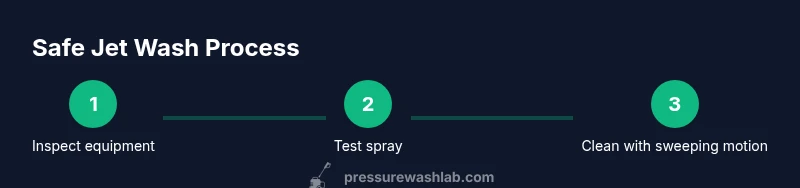
Inspect the washer, select the correct nozzle, and gather PPE. Check hoses for wear and ensure leaks are addressed before you start. This upfront prep prevents accidents and saves time.
Tip: Test your spray on a hidden area to calibrate distance and pressure. - 2
Set up the work area
Clear the area, protect plants with tarps, and mark off bystanders. Ensure electrical safety for electric washers and have a clear route for moving around the surface.
Tip: Keep a safe stance with both feet shoulder-width apart. - 3
Test spray and establish distance
Hold the wand at a safe distance and test on an inconspicuous patch. Start with a wide spray and gradually move closer if needed, never aiming at joints or edges.
Tip: Start far away and reduce distance as you gauge the effect. - 4
Clean with controlled sweeps
Use a smooth, overlapping sweep pattern. Maintain perpendicular alignment to the surface and avoid lingering in one spot to prevent damage.
Tip: Keep the spray moving to avoid etching. - 5
Apply detergent (optional)
If using detergent, apply per label directions and rinse thoroughly with clean water. Detergent can help with greasy stains but can leave residues if not rinsed.
Tip: Rinse from top to bottom to prevent streaks. - 6
Rinse and inspect
Rinse off any remaining cleaner and inspect the surface for missed spots. Re-spray stubborn areas with a gentler setting or wider nozzle as needed.
Tip: Check for water intrusion behind siding or panels. - 7
Shutdown and storage
Depressurize the system, disconnect hoses, and drain residual water. Store nozzles and brushes dry to prevent corrosion and clogs.
Tip: Store in a dry area away from freezing temperatures.
Quick Answers
Is it safe to use a high pressure jet wash on wood decks?
Yes, but use a wide spray and keep the nozzle at a safe distance to prevent gouging. Test on a hidden area first and avoid prolonged exposure on soft wood.
Yes, you can clean wood decks with a pressure washer, but start with a wide spray and test a small area first.
Can I use a pressure washer on vinyl siding?
Yes, with a wide spray and a moderate distance to prevent water intrusion and edge damage. Avoid high-pressure contact on seams.
Yes, use a wide spray and moderate distance on vinyl siding, avoiding seams.
What should I do if water seeps behind siding?
Stop immediately, power down if safe, and inspect for compromised seals or damaged panels. Re-spray from a greater distance or with a gentler nozzle.
If water seeps behind siding, stop and inspect seals; rerun with gentler settings.
Is detergent safe to use with a pressure washer?
Detergents can help with greasy stains if they are biodegradable and compatible with your machine. Always follow label directions and rinse thoroughly.
Detergents can help if biodegradable and compatible; follow directions and rinse well.
What maintenance steps should follow a washing job?
Rinse surfaces, drain residual water, and clean the nozzle and wand. Check hoses for wear and store equipment properly.
After washing, rinse, drain water, clean tools, and store safely.
Can I use a pressure washer indoors?
Most high pressure washers are intended for outdoor use due to water spray and ventilation. If indoors, ensure proper drainage and ventilation, and consider smaller tools for tight spaces.
Generally avoid indoor use; if needed, ensure ventilation and drainage.
Watch Video
Key Takeaways
- Test first to avoid damage
- Choose nozzle and distance based on surface
- Wear PPE and protect surroundings
- Use detergent only when appropriate
- Proper shutdown prevents leaks and damage