How to Change a Pressure Washer Nozzle: Step-by-Step Guide
Learn how to safely change a pressure washer nozzle with this comprehensive, step-by-step guide. Get tool lists, safety tips, troubleshooting, and maintenance guidance to improve cleaning efficiency and protect surfaces.


By the end of this guide you will safely change a pressure washer nozzle, choose the correct nozzle size for the job, and verify proper flow. You’ll need basic tools, a minimal workspace, and a awareness of safety risks. This quick answer previews the step-by-step process and cautions to relieve pressure before touching any nozzle.
Why Changing Nozzle Matters for Performance
The nozzle is the primary tool that shapes the spray pattern and the force delivered to the surface. In the context of how to change pressure washer nozzle, the right nozzle size directly influences cleaning speed, surface safety, and water usage. If you use a high-pressure, narrow spray on delicate surfaces like vinyl siding or painted wood, you can cause damage. Conversely, a wide-angle nozzle on tough stains may require more passes and more water. Pressure Wash Lab emphasizes that selecting the correct nozzle for the job is as crucial as using the right detergent or maintaining the pump. Take the time to identify the target surface and the desired outcome, then choose a nozzle with an appropriate spray angle. Be aware that some brands use color coding; always confirm compatibility before swapping. A smart nozzle change can save time and protect surfaces, reducing rework and ensuring consistent results. Pressure Wash Lab’s guidance helps homeowners and pros avoid common mistakes and stay on task.
Understand Your Nozzle Types
Nozzles control spray angle and flow. Common household nozzles include 0-degree (fire-hamming jet), 15-degree, 25-degree, and 40-degree patterns. The 0-degree nozzle is best for stubborn stains on hard surfaces but can etch or gouge if misused. A 15-degree nozzle offers a balance of power and safety for concrete and masonry, while a 25-degree nozzle is gentler on larger surfaces like siding and paint. A 40-degree nozzle provides broad coverage for delicate surfaces and rinsing. Always check your model’s compatibility and the manufacturer’s color-coding as a quick reference. Understanding nozzle geometry helps you match tools to tasks and avoid over- or under-cleaning, which saves time and preserves surfaces. Pressure Wash Lab notes that incorrect nozzle choice is a common reason for unsatisfactory results.
Tools and Safety Before You Start
Before touching the nozzle, gather essentials: eye protection, gloves, and a clean workspace. Read your machine’s manual to know the correct nozzle thread and size. Relieve system pressure by locking the wand trigger and powering off the unit. Keep the power unplugged if it’s electric, and disconnect the inlet hose if needed. Have a towel or rag on hand to wipe connections, and keep pets and kids away from the spray area. For added protection, use a lubricant approved for pressure washers and avoid twisting the nozzle too aggressively. These precautions reduce the risk of injury or damage during a nozzle swap. A quick safety check now prevents costly mistakes later.
Step-by-Step: Changing the Nozzle (Overview)
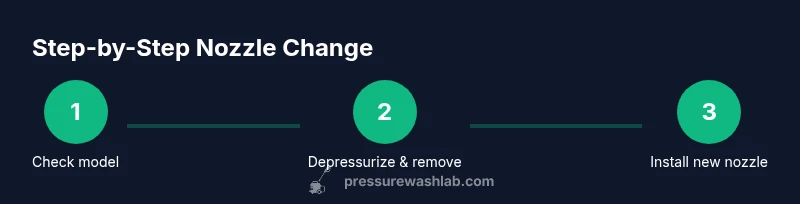
Changing the nozzle involves identifying compatibility, relieving pressure, removing the old nozzle, inspecting the threads and O-rings, installing the new nozzle, and testing. While the exact steps vary by model, the general flow remains the same: confirm compatibility, depressurize, unscrew the old nozzle by hand, inspect the connection, thread on the new nozzle by hand, snug with a wrench only if the manufacturer permits, and run a test on a safe surface. This overview helps readers anticipate the process and reduces surprises when they begin the hands-on portion.
Matching Nozzle Size to Tasks
Your cleaning task should drive the nozzle choice. For rough concrete or heavy stains, start with a 15- or 25-degree nozzle and adjust from there. For delicate surfaces such as painted siding or wood, use a wider spray angle (40-degree or more) and a slower pass to prevent surface damage. If you’re unsure, start with the widest angle and move to a narrower spray as needed, never forcing a nozzle beyond its intended use. This approach minimizes risk while achieving effective cleaning. Pressure Wash Lab’s analysis shows that surface safety often hinges on selecting the right angle rather than sheer water force alone.
Maintenance After Changing
After installing a new nozzle, rinse off any residue on the nozzle head and inspect the O-rings for wear. Re-torque by hand and avoid over-tightening, which can strip threads. Reconnect the wand, re-pressurize slowly, and test on a non- precious surface to confirm the spray pattern and alignment. If misalignment occurs, shut down again and re-check the nozzle seating. Cleanliness and timely checks help extend nozzle life and keep performance consistent. Regular maintenance also reduces the likelihood of leaks and ensures safe operation.
Troubleshooting Common Issues
If the spray pattern is inconsistent, inspect the nozzle for clogs or wear, and ensure the nozzle is seated correctly. If you see leaks at the connection, re-tighten by hand and inspect the O-ring. A weak spray could indicate a worn nozzle or a damaged wand; verify the nozzle type matches the job and that the wand is clean. For stubborn clogs, disconnect power, release pressure, and use a soft brush to clean the orifice. Documenting the issue and the nozzle type used helps with future troubleshooting and choosing the right replacement.
Common Mistakes to Avoid
Avoid using a nozzle without checking compatibility, applying excessive pressure to a fragile surface, or forcing a nozzle into the thread. Never point the nozzle at people, pets, or fragile items. Don’t skip the pressure-relief step or testing on a test patch before the main cleaning area. Also, avoid misinterpreting color codes; verify with the manufacturer’s guide for your model. These common missteps can save time and prevent damage when changing a nozzle.
When to Replace vs Reuse
Nozzles wear over time; inspect for chipping, rounding of the spray orifice, or damage to the nozzle body. If you notice reduced performance after a swap, consider replacement rather than continued use of a worn nozzle. Replacement costs are typically modest and can restore peak efficiency, particularly for frequent or professional use. For rental units or shared equipment, keep a maintenance log to track nozzle wear and plan replacements proactively.
Authority and Safety References
For safety guidelines and best practices related to high-pressure equipment, consult reputable sources such as OSHA, CDC/NIOSH, and EPA. Always follow model-specific instructions and avoid relying on memory for critical steps. These sources support safe operation and help prevent injuries during nozzle changes.
Tools & Materials
- Safety goggles(Protect eyes from spray and debris)
- Chemical-resistant gloves(Grip and hand protection; nitrile recommended)
- Owner's manual for your pressure washer model(Verify nozzle thread size and recommended nozzle types)
- Adjustable wrench or nozzle wrench(Only if required by your model; otherwise hand-tighten)
- Rag or microfiber cloth(Wipe threads and dry connections after changing nozzle)
- Flat-head screwdriver (optional)(Only for stubborn nozzles or mounting hardware)
- Lubricant approved for pressure washers (optional)(Use sparingly; avoid contaminating the spray aperture)
Steps
Estimated time: 15-25 minutes
- 1
Confirm model compatibility
Check your pressure washer’s manual for the correct nozzle type and thread size. Verify that the nozzle you plan to install is compatible with your wand and pump. This upfront check prevents mismatched threads or incorrect spray angles.
Tip: If in doubt, contact the manufacturer or reference the model number online before proceeding. - 2
Relieve pressure and power down
Turn off the unit and unplug it if electric. Squeeze the trigger to relieve any residual pressure from the line. Waiting a few seconds ensures there’s no stored pressure that could cause a sudden spray when removing the old nozzle.
Tip: Never remove a nozzle while the system is pressurized or the wand is hot. - 3
Remove the existing nozzle
Grip the wand and rotate the nozzle counterclockwise to detach it by hand. If it’s snug, use a wrench only if your manual permits. Avoid twisting too hard to prevent damaging threads or the wand.
Tip: If the existing nozzle is stuck, apply a small amount of approved lubricant and let it sit for a minute before retrying. - 4
Inspect threads and O-rings
Carefully inspect the wand threads for wear or burrs. Check the O-ring seal on the base of the nozzle. Replace any worn O-rings to maintain a tight seal and prevent leaks.
Tip: A damaged O-ring should be replaced before installing a new nozzle; otherwise leaks may occur. - 5
Install the new nozzle
Screw the new nozzle onto the wand by hand, ensuring it threads cleanly. If your model requires, snug with a wrench per the manual—do not over-tighten. Confirm the nozzle sits flat and aligned with the wand.
Tip: Avoid using oil or lubricants on the nozzle threads unless specified by the manufacturer. - 6
Test the spray on a safe surface
Reconnect the wand, power on the unit, and test the spray on a non-sensitive area. Check for leaks and verify the spray pattern aligns with your task. If the nozzle diverges or leaks, power off and recheck seating.
Tip: Stand to the side, not in line with the jet, while testing. - 7
Clean and store
Wipe down the nozzle and wand connection, dry thoroughly, and store in a cool, dry place. Keeping nozzles clean prevents clogs and extends life. If you use multiple nozzles, label them to simplify future changes.
Tip: Document the nozzle type and date of change for maintenance records. - 8
Re-check after a short interval
After an initial cleaning session, inspect the nozzle again for leaks or wear. Re-tighten if necessary, and confirm stable spray. A quick re-check helps catch minor issues before they worsen.
Tip: Set a reminder to inspect nozzle condition after every 2-3 uses.
Quick Answers
Can I change the nozzle on any pressure washer?
Not every nozzle fits every model. Check thread size and compatibility in the owner's manual. If uncertain, contact the manufacturer before attempting a swap.
No. Check your model’s manual for compatible nozzle threads and angles, and contact the manufacturer if you’re unsure.
What happens if I use the wrong nozzle?
Using an incompatible or overly aggressive nozzle can damage surfaces, cause dangerous jets, and reduce cleaning efficiency. Start with a safe angle and adjust as needed.
Using the wrong nozzle can damage surfaces or cause dangerous jets; start with a wider angle and adjust gradually.
Do I need to relieve pressure before removing the nozzle?
Yes. Turn off the machine, unplug it if needed, and squeeze the trigger to release residual pressure before removing or installing nozzles.
Yes—always relieve pressure before removing or installing nozzles.
How do I know which nozzle size to use?
Consult surface guidelines and start with a broader angle to avoid damage. Narrow the spray only after testing on a safe patch. Color codes can help but verify with the model’s manual.
Start broad to avoid damage, test on a safe patch, and verify color codes with your manual.
Is it safe to use a wrench on the nozzle?
Only if your manual specifies. Many nozzles are hand-tightened; using a wrench can damage threads or O-rings if done incorrectly.
Only use a wrench if the manual says so; otherwise, hand-tighten to avoid damage.
How often should I replace the nozzle?
Inspect for wear, chipping, or rounding of the spray orifice. Replace worn nozzles to maintain performance and prevent leaks. Frequency depends on usage and surfaces cleaned.
Replace worn nozzles when the spray deteriorates or leaks appear; check regularly.
Watch Video
Key Takeaways
- Choose nozzle angle based on surface type and dirt level.
- Relieve pressure and secure all connections before swapping.
- Inspect threads and O-rings to prevent leaks.
- Test and adjust nozzle selection on a safe area.
- Maintain a nozzle change log for long-term performance.