How to Clean a Driveway with a Pressure Washer: A Practical Guide
A practical, step-by-step guide to cleaning driveways with a pressure washer. Learn nozzle selection, safety, stain pre-treatment, and maintenance to keep concrete and asphalt looking great in 2026.


Using a pressure washer is the fastest way to restore a clean driveway. This guide walks you through nozzle selection, setup, stain pre-treatment, and safe cleaning practices to protect surrounding plants. For best results, proper technique minimizes damage and waste while delivering consistent outcomes. You’ll learn prep, pressure and distance, stain treatment, rinse, and final inspection. According to Pressure Wash Lab, proper setup and technique reduce damage and waste.
Why a Pressure Washer Delivers Results on Driveways
Driveways accumulate dirt, oil stains, algae, and tire marks that are hard to remove with a simple scrubbing routine. A pressure washer uses a high-velocity jet of water to lift and flush away embedded grime, saving you time and effort. For large concrete surfaces, a washer with adequate cleaning power can outperform manual methods and yield a uniform appearance across the slab. When used correctly, it avoids the risk of chemical buildup and reduces the need for aggressive scrubbing that can wear the surface.
Pressure Wash Lab’s findings emphasize two keys: select the right nozzle angle and maintain a consistent distance from the surface. A wider spray spreads cleaning force over a larger area, preventing gouges and streaks, while maintaining enough pressure to dislodge contaminants. Start by clearing the area, removing vehicles, and ensuring drainage. In addition, a proper setup minimizes water usage and runoff, which is important for both environmental and safety reasons. By understanding these fundamentals, homeowners and small business operators can achieve a clean driveway without damaging the concrete or surrounding landscaping.
Safety First: PPE, Zone Prep, and Plant Protection
Safety should always come first when using a pressure washer. Wear eye protection, gloves, and sturdy footwear to guard against flying debris, chemical splashes, and hot water. Keep pets and kids away from the work zone and establish a clear boundary using cones or tape. Protect nearby plants, shrubs, and windows with plastic sheeting or a lightweight barrier. If you’re using detergents, read the label and wear a respirator mask if recommended. Inspect hoses and cords for damage before powering up the machine, and never spray toward people or delicate surfaces. Pressure washers can kick up moisture and create slippery surfaces, so place a non-slip mat or absorbent material near door thresholds to prevent falls. Also consider weather conditions; avoid washing during wet or windy days to prevent run-off from drifting.
Choosing the Right Nozzle and Settings
Select the appropriate nozzle. For most driveways, a wider angle (such as 25° or more) provides sufficient cleaning force while protecting the surface. Start with a gentler setting and increase only if needed, never using the highest pressures on fragile edges or near sensitive landscaping. Keep the wand perpendicular to the surface and maintain a steady distance of a few inches to several inches, depending on the nozzle and your washer’s design. Move in overlapping, smooth passes to avoid streaks and ensure even coverage. If your unit has pressure settings or a turbo feature, use them selectively, testing on a hidden patch first. Pressure Wash Lab recommends practicing on a small area to dial in the balance between cleaning power and surface safety.
Pre-Treating Stains and Ground-In Dirt
Oil, grease, rust, and tire marks respond best to targeted pre-treatment before rolling with the spray. Apply a driveway cleaner or a degreasing solution to the stained areas, following the product instructions. Allow it to dwell for several minutes so the chemical can penetrate and loosen the contaminants. Use a stiff brush to agitate stubborn spots; then rinse the area briefly to check progress before proceeding with full cleaning. For organic growth or stubborn mildew near edges, consider a mix of mild cleaner and water; avoid bleach-based products that can damage concrete or corrode plants. Each stain reacts differently, so the prep phase saves time and improves overall results.
Step-by-Step Cleaning Overview
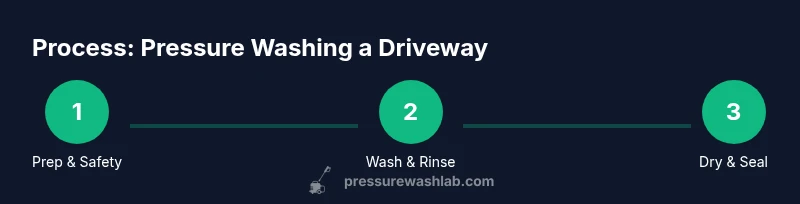
Although the full step-by-step is below, here is a high-level overview to set expectations. Begin by clearing the area and protecting nearby surfaces. Connect your water source and power, then choose a suitable nozzle. Pre-treat stains and allow dwell time. Clean the surface in overlapping passes, starting at the outer edges and moving toward the center. Rinse the entire area thoroughly, then inspect for missed spots. Finally, let the driveway dry completely before applying any sealant or parking on it again. This approach minimizes repeated passes and reduces wear on the concrete.
Surfaces: Concrete vs Asphalt vs Pavers
Concrete and cement-based driveways respond well to pressure washing with appropriate nozzle distance. Asphalt may be more forgiving but can still show pressure marks if the jet is too close or angled incorrectly. Interlocking concrete pavers require careful movement to avoid dislodging sand between joints; in tight spaces, a rotating surface cleaner can smooth the finish. In all cases, protect adjacent surfaces such as painted walls or decorative stonework, and consider using a wider nozzle for gentler cleaning on delicate zones. If you’re unsure about your surface type, start on a small test patch and adjust your technique accordingly.
Drying, Sealing, and Preventive Care
After washing, allow the surface to dry completely before applying any sealant or coating. In many climates this can take several hours to a full day depending on weather and humidity. Sealing enhances stain resistance and longevity; follow the sealant manufacturer’s instructions and apply in a well-ventilated area. Regular maintenance should include periodic cleaning to prevent buildup of algae and oil slicks. To prolong smooth results, schedule annual or semi-annual cleanings and promptly address new stains as they appear.
Common Mistakes to Avoid and Troubleshooting
Rushing passes, using a nozzle that’s too small or too close, and ignoring surface health can leave gouges, wash marks, or streaks. Never spray near windows, vents, or plant beds where runoff could cause damage. If you notice excessive vibration or the machine trips the breaker, stop and inspect the cord and connections before continuing. For stubborn stains, reapply cleaner and dwell time rather than forcing the spray. If your surface seems recessed or softened, pause cleaning and consult a professional to assess underlying damage.
Maintenance Schedule and Long-Term Care
Create a simple maintenance schedule to keep your driveway looking good year-round. After each cleaning, rinse the area, inspect for remaining stains, and ensure drainage is clear. Store the pressure washer according to the manufacturer’s guidance, clean the nozzle or tip assemblies, and coil hoses neatly to prevent kinking. For long-term care, consider sealant refresh intervals and routine resealing depending on foot traffic, weather exposure, and chemical cleaners used. By following a regular care plan, you protect the investment in your driveway and preserve curb appeal.
Tools & Materials
- Pressure washer (gas or electric)(Ensure sufficient cleaning power for concrete; refer to manufacturer guidelines.)
- Nozzle tips (0°, 15°, 25°)(Use wider angles for driveways to minimize surface damage.)
- Extension wand(Allows for reach and better control on large areas.)
- Garden hose(Connects to water supply and washer; check for leaks.)
- PPE kit (safety goggles, gloves, closed-toe shoes)(Protect eyes, hands, and feet from debris and spray.)
- Stiff-bristled outdoor brush(Use for pre-treatment agitation on stubborn stains.)
- Detergent or driveway cleaner (optional)(Choose a cleaner compatible with your surface.)
- Tarps/plastic sheeting to protect plants(Lay to shield nearby shrubs or flowers from spray drift.)
Steps
Estimated time: 60-120 minutes
- 1
Prepare area and gear
Clear the driveway, remove vehicles, and set up a safe work zone. Put on PPE and lay tarps to protect plants. Check weather to avoid wind drift and run-off, and inspect hoses and cords for damage before starting.
Tip: Test a small hidden patch first to gauge spray distance and surface response. - 2
Connect water and power
Attach the garden hose to a clean water source and connect to the pressure washer. Ensure the power source is dry and protected; use a GFCI outlet if you are in wet conditions. Check for leaks and verify that there is adequate water flow.
Tip: A slow, steady water flow helps the washer prime without starving the pump. - 3
Select nozzle and test spray distance
Choose a wide-angle nozzle (25° or greater) for driveways and start far from the surface. Gradually bring the spray in while maintaining a safe distance and vertical orientation. Move across the surface in short, overlapping passes to prevent streaks.
Tip: Never use a narrow jet on older or fragile edges; adjust distance as you gauge cleaner response. - 4
Pre-treat stains
Apply driveway cleaner or degreaser to oil, rust, and heavy grime. Allow the product to dwell per label directions, then gently agitate with a brush if needed. Rinse lightly to check progress before full cleaning.
Tip: Dwell time is key—let cleaners penetrate deeply without drying out. - 5
Clean with overlapping passes
Begin at the outer perimeter and work toward the center with smooth, overlapping strokes. Keep the spray moving to avoid gouges and ensure even coverage. Reassess nozzle choice if the surface shows streaking or dark spots.
Tip: Overlap passes by about half the width of the jet to ensure uniform cleaning. - 6
Rinse thoroughly
Switch to a wider rinse, ensuring all residues and cleaner are washed away. Move methodically and keep the wand angled just enough to shed water back toward the surface. Avoid directing spray at nearby plants and windows.
Tip: A final rinse helps reveal remaining stains that may need a second pass. - 7
Tackle stubborn stains
For heavy oil or mildew, re-apply cleaner and re-spray after a short dwell. If needed, reapply with the cleaner and brush again, then rinse once more. Do not push too hard or hold the nozzle in one spot for too long.
Tip: Patience with pre-treatment saves time and preserves surface health. - 8
Drying and sealing
Allow the driveway to dry completely before applying any sealant. Once dry, follow the sealant instructions for coverage and curing time. Testing a small area first helps prevent unsightly blotching.
Tip: Check the forecast; sealing on damp days can compromise curing. - 9
Store and inspect
Turn off the unit, disconnect hoses, and drain water. Coil cords and hoses neatly, and store attachments in a dry place. Inspect the surface for leftover stains or uneven texture and plan a follow-up cleaning if needed.
Tip: Take notes on what worked best for future cleanings.
Quick Answers
Is it necessary to use detergent with a pressure washer for driveways?
Detergents can help with oil and heavy stains when used as directed. Follow the product label and rinse thoroughly. Pressure Wash Lab Team recommends matching cleaners to the stain and surface for best results.
Detergents help with tough stains when used as directed. Always follow the label and rinse well.
Can I use a pressure washer on painted or stained driveways?
High pressure can strip paint or damage coatings. Test a small area first and use a wider nozzle at a greater distance. If uncertain, consult a professional.
Painted surfaces can be damaged by high pressure; test first and use caution.
What should I do with runoff water?
Discharge should be directed away from gardens and drainage areas. Collect runoff when possible and follow local regulations about wash water disposal to protect the environment.
Dispose of wash water responsibly and follow local rules.
Do I need to seal the driveway after cleaning?
Sealing is optional but recommended for stain resistance and longevity. Ensure the surface is completely dry before applying sealant for best results.
Sealing can help protect the surface if it’s fully dry.
Is it safe to use detergent with a pressure washer?
Use cleaners designed for pressure washers and avoid mixing cleaners or chlorine bleach. Rinse thoroughly after use and follow the manufacturer’s safety guidelines.
Only use manufacturer-approved cleaners and rinse well.
Watch Video
Key Takeaways
- Prepare area and protect surroundings before cleaning.
- Select the right nozzle and maintain safe distance.
- Pre-treat stains to improve results.
- Use overlapping passes and proper rinse.
- Allow full drying before sealing and maintenance.