Best Way to Clean Driveway Without a Pressure Washer
A practical, step-by-step guide from Pressure Wash Lab on cleaning driveways without a pressure washer using safe cleaners, brushes, and proven technique. Learn how to remove dirt, oil, and tire marks effectively while protecting concrete.


You can clean a driveway effectively without a pressure washer by combining smart cleaners, focused scrubbing, and thorough rinsing. This guide delivers a practical, step-by-step approach to remove dirt, oil, and tire marks safely, using common tools and concrete-safe cleaners. Follow the method below to achieve professional-looking results without high-pressure equipment.
Practical approach: why you can clean without a pressure washer
For homeowners wondering the best way to clean driveway without a pressure washer, the answer lies in combining mechanical scrubbing with smart cleaners and careful rinsing. The Pressure Wash Lab team emphasizes that you can achieve impressive results by cleaning in layers: loosen dirt with an appropriate cleaner, scrub thoroughly in sections, and rinse completely to prevent streaks. Start by testing a small area on a muted concrete surface to ensure the cleaner does not discolor or etch the finish. In 2026, well-planned hand cleaning can restore a driveway to a near-new look when you choose the right products and techniques. This approach prioritizes safety, surface compatibility, and minimizing chemical runoff, while delivering professional-looking results.
According to Pressure Wash Lab, success comes from using the right balance of dwell time, brushing power, and rinse water. The goal is a uniform appearance rather than a bright white surface, so avoid aggressive scrubbing that can roughen the concrete. Approach also considers environmental impact and runoff control, which matters for home surfaces adjacent to lawns and landscaping.
Cleaning agents that actually work
The best way to clean driveway without a pressure washer begins with selecting cleaners that are effective on concrete surfaces and safe for nearby plants. Use a mild degreasing cleaner or dish soap for general dirt; for oil stains, an oxygen-based cleaner or sodium percarbonate can help lift the stain without harming the concrete. For porous or very stained driveways, consider a concrete cleaner formulated for cement-based surfaces. Avoid acidic or highly caustic products that can etch or discolor the surface. Always test a small, inconspicuous area first and follow the label's dwell time to maximize effectiveness without damaging the texture. When rinsing, use plenty of water to dilute residues and prevent runoff toward landscaping.
Tools and surface prep
Preparation reduces mess and protects plants and surrounding surfaces. Clear the driveway of vehicles, toys, and leaves. Lay a tarp to catch runoff if possible. Wet the surface lightly to help cleaners spread evenly, then apply cleaners with a spray bottle or bucket. Have a stiff-bristle brush ready for scrubbing and a long-handled brush for hard-to-reach areas. Wear gloves and eye protection, and keep a bucket of clean water for quick dabs if cleaner contacts skin.
Layering strategy for different stains
Tire marks and rust stains respond best to mechanical scrubbing combined with a ready-made concrete cleaner. Oil stains benefit from an initial degreasing step, followed by a time-laded dwell with an oxygen-based cleaner; for old stains, repeat the treatment or apply a poultice made from baking soda and water to draw out grease. For general dirt, a two-pass approach—first wash the surface, then scrub stubborn areas again—helps ensure even color and texture. The key is to avoid letting cleaners dry on the surface, which can cause streaks.
Oil stains and heavy tire marks
Oil and heavy tire marks are the trickiest. Start with a degreasing cleaner or dish soap, apply generously, and scrub with a stiff brush in small circular motions. Let it sit for 5–15 minutes, then scrub again. If the stain persists, sprinkle baking soda and scrub before rinsing. Repeat as needed, but avoid saturating the ground with cleaner, which increases runoff. Always rinse from the highest point toward the lowest to push dirty water away from edges.
Rinse technique and drying
Rinsing matters as much as scrubbing. Use a garden hose with a broad spray or a nozzle setting that provides steady flow; rinse in long, overlapping passes from the top of the driveway down to the street. Check for leftover suds or residue and re-rinse if necessary. Allow the driveway to air-dry completely before walking on it or applying any sealant. If you plan to seal, wait at least 24–48 hours of dry conditions.
Safety, mistakes, and maintenance
Common mistakes include letting cleaners dry on the surface, using a brush that’s too stiff and scouring the concrete, and failing to protect nearby plants. Wear gloves and eye protection during all cleaning steps. Work in shade when possible to extend dwell times without surface drying too quickly. After cleaning, consider sealing or applying a concrete guard to resist future staining and simplify maintenance. Pressure Wash Lab analysis shows that methodical cleaning with the right products and technique often yields results comparable to light-pressure methods, especially when maintenance intervals are kept short.
Tools & Materials
- Stiff-bristle driveway brush(15–20 inch handle for comfortable scrubbing on concrete)
- Long-handled scrubbing brush(For hard-to-reach areas and edges)
- Garden hose with adjustable nozzle(Jet or spray setting; avoid constant high pressure)
- Buckets(At least 2; one for cleaner, one for rinse water)
- Tarp or plastic sheeting(Protect plants and catch runoff)
- Mild degreasing cleaner (dish soap or concrete cleaner)(Test colorfastness first)
- Oxygen bleach or sodium percarbonate (optional)(Use per label directions only)
- Baking soda (sodium bicarbonate)(Great for absorbing fresh grease)
- Safety gloves(Nitrile or rubber)
- Safety goggles(Eye protection during scrubbing and rinsing)
- Spray bottle or applicator(For applying cleaners precisely)
- Old towels/cloths(Wipe edges and absorb drips)
- Putty knife or plastic scraper(Lift caked material if needed)
Steps
Estimated time: 45-75 minutes
- 1
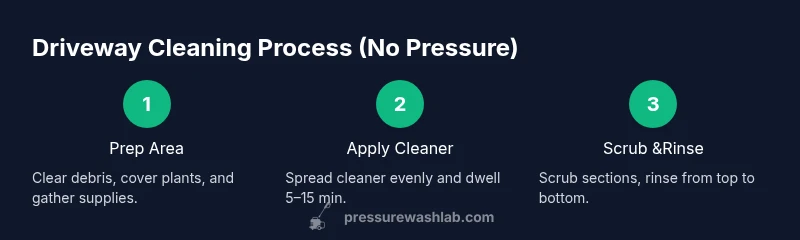
Gather supplies and prep area
Move vehicles and toys away; lay a tarp if available. Gather all cleaners and brushes, and test a small area with cleaner to check for adverse reactions. This reduces guesswork and keeps runoff manageable.
Tip: Test a hidden corner first to confirm no discoloration. - 2
Wet surface and apply cleaner
Lightly wet the driveway to help cleaners spread evenly. Apply a mild degreasing cleaner or dish soap over the surface, focusing on stained zones. Allow a dwell time of 5–15 minutes for Dirt-loosening action.
Tip: Avoid letting cleaners dry on the surface; re-wet as needed. - 3
Scrub in sections
Use a stiff-bristle brush and long strokes or circular motions, working small 5x5 ft sections. Scrub edges and joints where dirt accumulates. Maintain consistent moisture to prevent streaking.
Tip: Work from the cleanest area outward to track progress. - 4
Target stubborn stains
For oil stains, reapply cleaner and scrub. If needed, apply baking soda and scrub again to lift grease. Repeat as necessary, but do not over-saturate the surface.
Tip: Always test stain treatments on a small patch first. - 5
Rinse thoroughly top-to-bottom
Rinse using a broad spray, progressing from the highest part of the driveway down toward the curb. Ensure all cleaner residues are flushed away and avoid running dirty water onto landscaping.
Tip: Pause to inspect for remaining suds and re-rinse if needed. - 6
Dry and inspect
Allow the driveway to air-dry completely. Inspect for any missed spots or residues; re-clean only those areas if required. Consider sealing when dry for enhanced stain resistance.
Tip: Sealing should wait until the surface is completely dry and clean.
Quick Answers
Is it safe to clean concrete driveways without a pressure washer?
Yes. With appropriate cleaners, careful scrubbing, and thorough rinsing, you can clean most driveways safely without a pressure washer. Always test cleaners on a small area first and wear protective gear.
Yes. You can safely clean concrete driveways without a pressure washer by using the right cleaners, scrubbing method, and rinsing. Test a small area first and wear protection.
What cleaners work best for oil stains?
Degreasing cleaners or mild dish soap paired with scrubbing work well for fresh oil. For tougher stains, oxygen-based cleaners or sodium percarbonate can help lift grease without harming the concrete.
Degreasing cleaners or dish soap with scrubbing work well for oil. For stubborn stains, try an oxygen-based cleaner.
How long does cleaning take on a typical driveway?
Most driveways take about 45 to 75 minutes, depending on size and stain severity. Allow extra time for very dirty surfaces or stubborn stains.
Most driveways take around 45 to 75 minutes, depending on size and stains.
Can I rent a pressure washer if I decide to use one?
Yes, you can rent a pressure washer, but ensure you use proper technique and protective gear. If you choose to, follow manufacturer guidelines to avoid surface damage.
Yes, you can rent one, but follow the instructions to avoid damaging the surface.
Should I seal my driveway after cleaning?
Yes, sealing after the surface is completely dry helps resist future stains. Wait at least 24–48 hours of dry conditions before sealing.
Sealing after it dries helps resist future stains. Wait 24–48 hours first.
Watch Video
Key Takeaways
- Plan and prep before scrubbing
- Choose appropriate cleaners for stains
- Scrub in sections for even results
- Rinse thoroughly and let dry before sealing