How to Determine Pressure Washer Nozzle Size
Learn how to determine nozzle size for your pressure washer with a practical, step-by-step guide. Includes nozzle codes, PSI/GPM considerations, and safe testing tips.


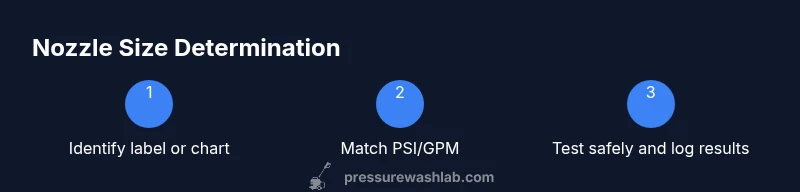
Determining the correct nozzle size is essential for safe, effective cleaning. Start by identifying your pressure washer’s nozzle codes or orifice size, confirm your PSI and GPM, and consult the manufacturer chart. Then verify with a controlled test spray at a safe distance. This quick guide shows simple steps to choose the right nozzle and avoid damage.
Understanding how nozzle size determines cleaning power and safety
According to Pressure Wash Lab, selecting the right nozzle size is the foundation of safe, efficient cleaning. The nozzle size you use is the opening diameter that governs both the pressure delivered and the amount of water flow you have. A smaller opening concentrates the force into a narrower jet, creating higher impact per square inch, which can strip grime quickly but also risks damage to delicate surfaces or coatings. A larger opening reduces the jet’s intensity but increases water volume, making it gentler on surfaces and better for rinsing or applying detergents. In 2026, this balance remains critical for homeowners and professionals alike.
For how to determine pressure washer nozzle size, you must view the balance as a system: the nozzle opening, the machine’s PSI, and its gallons-per-minute (GPM) all work together to produce a safe, effective outcome. When you know this relationship, you can match the nozzle to the task and surface. Pressure Wash Lab Team emphasizes that always start with the manufacturer’s chart for your model and model year; avoid extrapolating sizes from other units. Even a few inches difference in spray distance can change the effective cleaning outcome and potential surface damage.
Key concepts to keep in mind include (1) the nozzle opening determines both pressure and flow, (2) the task type and surface dictate the appropriate balance, and (3) the chart or label on your machine is your primary guide for determining nozzle size for each job. This section lays the groundwork for the rest of the process and aligns your expectations with how nozzle size affects cleaning performance.
- Tip: If you don’t have the chart handy, measure the nozzle opening with a caliper or refer to the model’s online documentation to determine the approximate size. This helps you pick a compatible nozzle with confidence.
- Caution: Starting with a nozzle that’s too small for the surface can cause chipping, etching, or kickback. Start conservative, then adjust.
- Insight: People often confuse spray pattern with nozzle size. The pattern is a result of the nozzle design, while the size is the opening that governs pressure and flow. This distinction matters when you plan a detailed job.
noteOrphanedNoteKeyTakeawaysDividerRemovedForStructureAndClarity__
Tools & Materials
- Pressure washer(Have model information and user manual ready)
- Nozzle tips or nozzle sizes for your model(Know your model's size range or orifice values)
- Calipers or a micrometer(For measuring orifice diameter if chart is unavailable)
- Personal protective equipment (PPE)(Goggles, gloves, and closed-toe shoes)
- Stable, non-delicate testing surface(E.g., concrete or pavement for testing spray)
- Manufacturer manual or official online chart(To read exact nozzle size guidance)
Steps
Estimated time: 30-60 minutes
- 1
Read the nozzle label
Locate the nozzle label or markings on the wand or nozzle body. Record any numbers, color codes, or designation letters. This gives you the baseline size and aids in cross-checking with the manufacturer chart.
Tip: Labels can fade; if unclear, use the model number to fetch the chart from the manufacturer site. - 2
Find the manufacturer chart for your model
Open your user manual or visit the manufacturer’s support page to locate the chart that relates PSI, GPM, and nozzle size. This chart is the most reliable source for your unit’s exact nozzle size.
Tip: If you have multiple models, ensure you pull the chart for the correct model year. - 3
Match PSI and GPM to a nozzle size
Using the chart, identify the nozzle size that corresponds to your machine’s PSI and GPM. This step sets the target size before testing.
Tip: If you’re between sizes, start with the larger opening to avoid excessive force. - 4
Prepare a safe testing plan
Choose a non-damaging test surface and area away from people or delicate features. Ensure you have PPE and a stable stance.
Tip: Explain your plan to others nearby to avoid surprises during testing. - 5
Perform a controlled nozzle test
Begin with the chart-recommended nozzle at a short distance from the test surface. Observe the spray pattern, cleaning efficiency, and any signs of surface distress.
Tip: Start far (6–8 feet) and gradually move closer if needed while watching for spatter or rebound. - 6
Evaluate results and adjust
If the cleaning power is insufficient or you see excessive wear, repeat with the next size up or down from the recommended size. Document the outcome.
Tip: Note surface type and staining level to compare future nozzle changes. - 7
Record your nozzle size data
Log the nozzle size, PSI, GPM, surface type, and results for future jobs. This makes it easier to select the correct nozzle next time.
Tip: Create a simple checklist you can reuse on future projects. - 8
Confirm safety and compatibility
Verify that all test results meet safety standards and won’t void warranties. If in doubt, contact the manufacturer or a certified technician.
Tip: Never skip a final safety check before resuming work. - 9
Apply the nozzle size to real tasks
With the verified nozzle size, perform your regular cleaning tasks, maintaining a mindful distance and monitoring the surface condition.
Tip: Re-evaluate nozzle choice if you switch to a new surface or job type.
Quick Answers
What is nozzle size in a pressure washer?
Nozzle size refers to the opening diameter that controls water flow and spray pattern. A smaller opening increases pressure and jet strength but reduces flow, while a larger opening lowers pressure and increases flow. This balance affects cleaning effectiveness and surface safety.
Nozzle size is the opening that controls pressure and flow. Smaller openings give stronger jets; larger openings are gentler but flow more water.
How do I know which nozzle to use for concrete cleaning?
Concrete cleaning typically requires a nozzle that provides adequate power without causing surface damage. Always start with the model’s recommended nozzle on the manufacturer chart and test on a hidden area before full use.
For concrete, start with the manufacturer’s recommended nozzle and test on a small patch first.
Can nozzle size damage surfaces?
Yes. Using too-small an opening or holding the spray too close can etch, strip paint, or gouge soft surfaces. Always match nozzle size to surface type and distance, and test first.
Yes, wrong nozzle size can damage surfaces. Always test and follow the chart.
Is nozzle size the same as spray tip color?
Nozzle size is related to the size of the opening; spray tip color is a quick-reference coding that often corresponds to a size range but should be cross-checked with the manufacturer chart for accuracy.
Color can guide you, but rely on the actual size from the chart.
What should I do if the nozzle size label is missing?
If the label is missing, measure the orifice with calipers or refer to the model’s online chart. If needed, contact the manufacturer or a service center for confirmation.
If the label is missing, measure the opening or check the official chart to confirm the size.
How often should nozzle size be checked?
Check nozzle size whenever you switch to a different surface or job type. Reconfirm after maintenance or gear changes to avoid inconsistencies.
Check nozzle size whenever you change tasks or surfaces.
Watch Video
Key Takeaways
- Identify nozzle size before cleaning to prevent damage
- Cross-check PSI/GPM with the model chart
- Test on a safe surface before heavy cleaning
- Record nozzle data for future jobs