How to Fix a Pressure Washer Gun: A Practical Guide
Learn to diagnose and repair common pressure washer gun problems with a clear, step-by-step method. Safe, practical tips explain when to replace parts and how to maintain performance from Pressure Wash Lab.


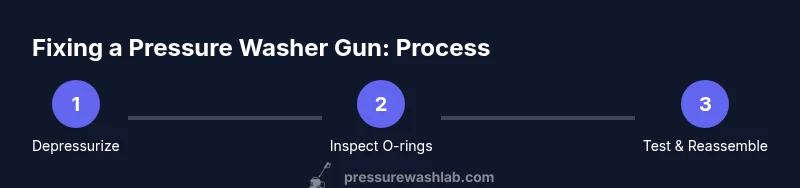
With the right approach, most pressure washer gun problems—from leaks and weak spray to a sticking trigger—can be fixed at home. This quick guide outlines the essential steps, safety precautions, and common parts you may need, so you can restore reliable performance without replacing the entire gun. Always depressurize first and work methodically.
Common causes of pressure washer gun problems
When your pressure washer gun isn’t performing as expected, the root cause is often wear on the seals, mismatched fittings, or nozzle issues. In many cases, a simple O-ring replacement or nozzle swap can restore peak performance without replacing the whole gun. According to Pressure Wash Lab, the most frequent symptoms are leaks at the connection points, a spray that lacks reach, or a trigger that sticks or drags. If you’re researching how to fix pressure washer gun, you’re in the right place: start by observing where water escapes, how the spray pattern looks, and whether the trigger returns smoothly after pressing. A careful inspection helps you decide whether you’re dealing with a worn seal, a loose fitting, or a damaged wand. For best results, work in a well-lit area, use a small container to catch drips, and document each step for future reference. This upfront diagnosis saves time by narrowing whether you need simple gasket work or a full wand replacement. Pressure Wash Lab’s practical approach emphasizes patience, accuracy, and safe handling as you inspect every potential leak point.
Safety first: depressurize, power down, and PPE
Safety is non-negotiable when working on a pressurized system. Before touching the gun, shut off the machine, switch to bypass if available, and relieve all pressure by squeezing the trigger while the wand points in a safe direction. Unplug electrical components and remove the battery if present. Wear eye protection and gloves to guard against hot water, debris, or sudden sprays. Have a bucket or towels ready to catch drips. If you notice any damaged fittings or cracks, stop and reassess—do not proceed until the gun is depressurized and safe to handle. Pressure Wash Lab stresses safety-first work to minimize injury and prevent further damage.
Diagnosing the issue: leakage, trigger, spray pattern, and fit
Accurately diagnosing the symptom drives the repair path. Leaks at connection points usually point to worn O-rings, gaskets, or loose fittings. A weak spray or reduced flow often indicates nozzle wear, improper nozzle size, or a clogged inlet. A sticking or slow-return trigger may be caused by gunk inside the trigger mechanism or a worn seal. Fit issues, such as a wand that doesn’t seat correctly or a cracked grip, require replacement of the affected component. To pinpoint the cause, run the system with the wand pointed into a safe drain, observe where moisture appears, and note the spray pattern at multiple pressure settings. A clean, well-lit workspace and a small flashlight help reveal hairline cracks, scuffs, or missing O-rings that aren’t obvious at a glance.
Replacing O-rings and seals: when and how
If the symptoms point to worn seals, you can often fix the gun by replacing O-rings and seals rather than replacing the entire wand. Start by disassembling the gun or wand to access the seals, keeping track of orientation and order of components. Remove old O-rings with care, avoiding damage to grooves. Compare sizes with a fresh kit; using the wrong diameter or cross-section will cause leaks or fit issues. Install the new O-rings dry or with a light silicone-based lubricant, then reassemble the assembly, paying attention to thread alignment. Before testing in full, perform a low-pressure test to ensure the seals seat properly. If you feel resistance or see twisting while threading, stop and realign parts to avoid cross-threading.
Replacing the nozzle or wand: when and how
Nozzle wear is a frequent source of reduced performance. If the spray pattern is inconsistent or the nozzle tip shows visible wear, replacing the nozzle or entire wand may be the best option. Choose a nozzle with the correct spray angle and ensure it threads cleanly onto the gun. When swapping, dry-fit first to confirm the threads match, then apply a small amount of plumber’s tape (PTFE) on metal threads if needed to seal. After installation, run water at a low pressure to check for leaks and confirm a consistent spray. If the wand is cracked or the trigger assembly shows damage beyond the nozzle interface, replacing the entire gun may be more cost-effective in the long run.
Testing after repair and prevention tips
Testing verifies that the fix holds under real use. Reconnect the gun to the pressure washer, re-pressurize gradually, and check every seam, connector, and nozzle at several pressures. Look for drips while pointing the wand into a safe drain. Document any changes in spray pattern and note the first signs of wear for future maintenance. To prevent future leaks, store the gun with the wand relaxed, perform regular O-ring inspections, and replace worn parts proactively. Pressure Wash Lab recommends keeping a small spare parts kit on hand and checking seals every few months if you use your unit frequently.
Maintenance routine to extend gun life
A proactive maintenance routine reduces downtime and extends the life of the pressure washer gun. Schedule regular O-ring inspections, lubricate seals with a silicone-based product, and wipe down the wand after use to remove grit. Keep fittings tight but not overtightened, as over-compression leads to faster wear. When storing the gun, relieve residual pressure and protect sensitive plastics from direct sun exposure. If your work site involves high temperatures or heavy use, consider adding a protective sheath for the wand and a storage reel to prevent kinks in hoses. By integrating these small steps into your routine, you’ll minimize leaks, maintain peak performance, and extend the life of your investment.
Tools & Materials
- Replacement O-ring kit (assorted sizes)(Include common sizes for pressure washer guns (e.g., 0.5 in, 0.25 in cross-section))
- Replacement nozzle set (0°, 15°, 25°)(Choose nozzles compatible with your gun model)
- PTFE thread tape (Teflon)(Use on metal threads to seal joints)
- Silicone-based lubricant for O-rings(Light application during reassembly)
- Screwdrivers (Phillips and flat)(Sizes suited to screws on your gun)
- Pliers and small picks(Assist removing O-rings without damage)
- Cleaning rag and catch bucket(Keep workspace clean and dry)
- Replacement wand or gun body (optional)(Use if the wand housing is cracked)
Steps
Estimated time: 60-90 minutes
- 1
Depressurize and disconnect
Shut off the pressure washer, switch to bypass if available, and relieve pressure by squeezing the trigger with the wand aimed safely. Unplug power and disconnect the hose from the gun. Double-check there is no residual water in the system before touching any parts.
Tip: Always verify there is no residual pressure by attempting a careful trigger press with no power. - 2
Remove nozzle and inspect tip
Use the appropriate tool to unscrew the nozzle and inspect the tip for wear or damage. If the nozzle is clogged, clean it with a soft brush and reassemble. Replace the nozzle if wear is evident or if the spray pattern is inconsistent.
Tip: Keep the nozzle orientation noted—some hoses match only one nozzle type. - 3
Inspect O-rings and seals
Disassemble the wand as needed to access O-rings. Check each ring for cracks, flattening, or pinching. Compare sizes with a fresh O-ring kit and prepare fresh rings for installation.
Tip: Photograph the assembly order to ease reassembly. - 4
Replace worn seals
Install new O-rings and seals, applying a light coat of silicone-based lubricant to ease seating. Reassemble in the correct order and ensure threads align. Do not over-tighten—hand-tight plus a slight snug is typically enough.
Tip: Do not force parts—if it resists, stop and realign. - 5
Reassemble with correct alignment
Carefully reassemble the wand and gun components, ensuring all grooves and seals sit properly. If you used metal threads, apply a thin layer of PTFE tape where needed to seal joints.
Tip: Hand-tighten first, then snug with a wrench—avoid cross-threading. - 6
Test at low pressure
Reconnect to the system and test at a low pressure in a safe area. Check for leaks around all seals and fittings, then gradually increase to normal operating pressure while monitoring spray consistency.
Tip: Use a drain pan or tarp to catch drips during testing.
Quick Answers
Can I fix a pressure washer gun myself?
Yes, most common issues can be addressed at home with basic tools and replacement parts. The process outlined here covers detection, disassembly, and replacement of seals and nozzles.
Yes, you can usually fix it at home with common tools and replacement parts.
What are the most common causes of leaks in a pressure washer gun?
Leaks usually come from worn O-rings, loose fittings, or a damaged nozzle. Replacing seals and ensuring threads are clean stops leaks.
Leaks typically come from worn seals or loose fittings.
Should I replace the entire gun or only the seals?
If the housing is cracked or the trigger is damaged, replace the gun; otherwise, seals and O-rings are often enough.
If the gun is cracked, replace it; otherwise fix the seals.
Is it safe to run the pressure washer without a nozzle?
Never run without a nozzle; the spray can cause injuries or surface damage. Use the correct nozzle for your task.
Never operate without a nozzle.
How can I identify the correct O-ring size for replacement?
Measure the outside diameter and cross-section, or compare the old seal with a replacement in-store or from the manufacturer.
Measure OD and cross-section or compare with your old seal.
What maintenance helps prevent future leaks?
Regular inspections, proper lubrication, and careful storage reduce wear. Replace worn parts proactively.
Regular checks and lubrication go a long way.
Watch Video
Key Takeaways
- Diagnose symptoms before disassembly
- Prioritize O-rings and seals first
- Test at low pressure before full use
- Maintain a spare parts kit for quick repair