How to Remove Oil Stains from a Driveway with a Pressure Washer
Learn how to remove oil stains from your driveway using a pressure washer. This practical guide covers detergents, nozzle choices, safety tips, and a step-by-step method for effective, long-lasting results.


This guide shows how to remove oil stains from a driveway using a pressure washer. Start with a biodegradable degreaser, choose a low-psi nozzle, and work with slow, overlapping strokes. Pre-wet the area, scrub as needed, and rinse from edge to center. Repeat if stains persist, then allow to dry and consider sealing.
Why oil stains cling to concrete and how pressure washers help
Oil binds to concrete due to the surface porosity and capillary action, allowing it to seep into micro-fissures. A pressure washer provides kinetic energy to loosen oil molecules, while detergents emulsify the oil so it can be washed away. For best results, target the stain center, work outward with steady, overlapping strokes, and avoid directing high-pressure jets at edges or recently poured sections. A 15°–25° nozzle generally balances cleaning power with surface safety. This approach is most effective on fresh or semi-dried stains; older, set-in stains may require longer dwell times with a degreaser and multiple passes. Always start with a test spot to gauge how the concrete responds, and follow the detergent label carefully. Pressure Wash Lab emphasizes that combining a suitable degreaser with mechanical agitation yields the most reliable outcomes.
Prep and safety considerations
Before you begin, clear the area of debris, sweep away loose dust, and protect surrounding plants and grass with plastic sheeting or tarps. Wear eye protection, gloves, and sturdy footwear. Test a small, inconspicuous patch of the driveway to ensure the cleaner won’t discolor or etch the surface, especially on aged or sealed concrete. Read your pressure washer manual to confirm recommended PSI ranges for your model, and never spray near electrical outlets or fragile coatings. If you have pets or children nearby, cordon off the work zone to prevent accidental exposure to cleaners or spray. A calm, methodical approach reduces the risk of splatter and surface damage.
Detergents, degreasers, and additives
Select a detergent or degreaser designed for concrete that is compatible with your machine. Citrus- or solvent-based degreasers often work well on oil, while enzymatic cleaners can help with organic residues that linger after solvent treatment. Never mix household cleaners with automotive degreasers unless the product label explicitly approves it. For stubborn stains, apply the cleaner, then let it dwell for 5–10 minutes to allow emulsification; reapply if the stain shows signs of returning. Always follow dilution instructions and rinse thoroughly to remove residues that could attract new dirt.
Nozzle selection and machine settings
Choose a low-psi nozzle (typically 15°–25°) to provide adequate cleaning power without etching the concrete. Start with the lowest effective PSI and gradually adjust as needed, keeping the wand in steady, sweeping motion. Maintain a safe distance from edges, joints, and decorative elements; if you see discoloration or surface damage, back off the pressure. For large, flat areas, a surface cleaner attachment can deliver even coverage and faster results while reducing the risk of pooling.
Step-by-step workflow overview
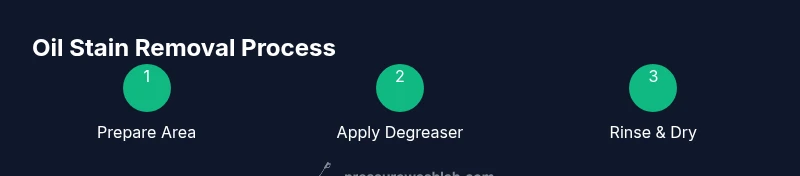
This section provides a high-level workflow to guide your actual step-by-step actions. Begin with area prep and protection, then pre-wet, apply degreaser, agitate the stain, pressure-wash with care, rinse, recheck, and finally allow the surface to dry before sealing if desired. Patience and even coverage yield the best results; rushing can spread oil and create new stains. Throughout the process, monitor the surface response and adjust technique to preserve the integrity of the concrete.
Common mistakes and troubleshooting
Common missteps include using excessive pressure on old or delicate concrete, failing to let cleaners dwell long enough, and skipping a thorough rinse, which can leave residues that attract more dirt. If the stain persists after the first pass, reapply cleaner and extend dwell time before repeating. For extremely stubborn stains, consider a second treatment after 24 hours or consult a professional for solvent-based options. Avoid using acidic cleaners on concrete, as they can damage the surface over time.
Tools & Materials
- Pressure washer (gas or electric)(Ensure it delivers adequate GPM and is safe for concrete cleaning; use cold-water intake and a stable wand)
- Biodegradable degreaser or concrete detergent(Label should indicate concrete safety; avoid acidic cleaners)
- Stiff-bristled scrub brush(Nylon or polypropylene bristles work best for emulsified oil)
- Broom or push broom(For sweeping debris and helping agitation)
- Safety gear (eye protection, gloves, closed-toe shoes)(ANSI-rated eye protection; chemical-resistant gloves)
- Plastic sheeting or tarps(To shield plants and adjacent surfaces from detergent spray)
- Sealant or concrete brightener (optional)(Only apply after surface is completely dry; sealants improve future cleanups)
- Measuring cup or spray bottle (for cleaner dilution)(Follow label directions for proper dilution)
Steps
Estimated time: 60-90 minutes
- 1
Prepare the area
Clear the work area of debris and sweep the driveway. Lay down plastic sheeting to protect nearby plants, and inspect the surface for cracks or loose aggregate. Put on PPE before starting, and test a small patch with cleaner to observe any color change.
Tip: Test a small area first to ensure the cleaner won’t discolor the concrete. - 2
Pre-wet and apply degreaser
Lightly dampen the stain and surrounding area with water. Apply the degreaser evenly over the oil-stained patch, keeping it off doors and windows. Allow the cleaner to dwell for 5–10 minutes to loosen the oil.
Tip: Do not let cleaner dry on the surface; re-wet if needed. - 3
Agitate the stain
Use a stiff brush to scrub the stained zone in circular or back-and-forth motions to help emulsify the oil. Work from the outside of the stain toward the center to avoid spreading.
Tip: A thorough agitation improves emulsification and lift. - 4
Pressure wash with correct settings
Attach a 15°–25° nozzle and start with the lowest effective PSI. Keep the wand moving in steady, overlapping passes, maintaining a safe distance from edges to avoid damage.
Tip: Never linger in one spot; overlapping strokes prevent etching. - 5
Rinse and re-check
Rinse the area thoroughly from edge to center. Inspect for remaining stains; repeat cleaning steps if necessary and allow the surface to dry between passes.
Tip: Check while the surface is still damp to see residual staining more clearly. - 6
Dry and seal (optional)
Allow the driveway to dry completely before applying any sealer. If you choose to seal, follow the product instructions and apply under appropriate weather conditions for best adhesion.
Tip: Sealers require a dry, mold-free surface and proper curing time.
Quick Answers
Can I use household detergents to remove oil stains with a pressure washer?
Household detergents may help lightly, but best results come from a degreaser labeled for concrete. Always follow the product instructions and avoid mixing cleaners.
Household detergents can work for light stains, but a dedicated degreaser designed for concrete usually yields the best results.
Will high pressure damage the concrete?
Yes, very high PSI can etch or crack concrete, especially older or sealed slabs. Start with a low setting and increase only as needed while keeping the wand moving.
Yes, excessive pressure can damage concrete; start low and keep the wand moving.
Is sealing recommended after cleaning?
Sealing after the surface is completely dry helps repel future stains and makes maintenance easier. Follow the sealer’s curing time and weather guidelines.
Yes—sealing after drying is a good idea to prevent future stains.
Can I rent a pressure washer for this job?
Renting works fine if you choose a model with adequate GPM and PSI and you have the right nozzle. Ensure you’re comfortable with operation and safety.
Renting is fine if the machine meets the needed power and safety standards.
What if the stain returns after cleaning?
If oil resurfaces after cleaning, reapply cleaner, re-dwell, and repeat the wash. For very stubborn stains, a second treatment or professional solvent may be needed.
If it comes back, re-treat with cleaner and rewash.
Can I use a steam cleaner instead of a pressure washer?
Steam can help, but it’s usually less effective on heavy oil. A degreaser with a pressure washer is typically more reliable for driveway stains.
Steam alone isn’t ideal for heavy oil; combine degreaser with pressure washing.
Watch Video
Key Takeaways
- Test a small area first to gauge the reaction
- Use the correct nozzle and moderate PSI
- Apply detergent and let it dwell for better emulsification
- Rinse with steady, overlapping passes until stains lift
- Seal the concrete after drying to reduce future staining