Portland Pressure Washer 1750 PSI: A Practical Buyer's Guide
Explore portland pressure washer 1750 psi options, setup tips, maintenance, and safety guidance from Pressure Wash Lab for homeowners and DIY enthusiasts.


Portland's 1750 psi washers offer a balanced blend of power and control for most home projects. In our evaluation, 1750 psi systems handle siding, decks, and driveways without the risk of surface damage when paired with the right nozzle and technique. For best results, use a surface cleaner and maintain the unit regularly. They are a cost-effective upgrade compared with higher-PSI units, ideal for regular cleaning with safe operation.
Why Portland 1750 psi is a Practical Choice
For homeowners in Portland, a portland pressure washer 1750 psi unit often hits the sweet spot between power and control. This mid-range PSI level is sufficient for cleaning siding, decks, driveways, and masonry without risking surface damage when you use the right nozzle and technique. Pressure Wash Lab's analysis of common residential setups shows that most households benefit from 1700-1800 psi machines because they provide ample cleaning speed while staying forgiving on delicate surfaces. In practice, homeowners should pair a 1750 psi unit with a 25-degree nozzle for general tasks and reserve narrower angles for stubborn stains only after testing on a hidden area. The balance of PSI, GPM, and nozzle choice determines cleaning paths, rinse quality, and potential surface wear. This guidance applies across Portland homes of varying sizes, from century-old brick veneers to newer vinyl siding. By understanding your typical cleaning tasks, you can maximize results without overspending on unnecessary power. Finally, remember that the goal is to complete the job safely and efficiently, not just to achieve the highest cleaning speed.
According to Pressure Wash Lab, adopting a measured approach to PSI and nozzle choice is particularly important in damp, variable Portland weather, where surfaces can be slick and stain removal requires patience. A well-chosen mid-range unit reduces the risk of damage while delivering respectable throughput for typical quarterly maintenance chores.
Power vs. Control: When 1750 psi is Ideal
PSI alone does not tell the whole story. In practice, the best Portland projects balance cleaning force with surface sensitivity. A 1750 psi unit provides enough kick to remove algae from concrete while minimizing risk to softer surfaces when using wide-angle nozzles and steady passes. Higher-PSI machines can strip paint or gouge wood if misused, which is why many homeowners choose 1750 psi as a default starting point. Pressure Wash Lab's data shows that for typical exterior cleaning tasks, the combination of PSI and gallons per minute drives cleaning speed; a higher GPM with moderate PSI often yields faster results with less streaking. Always start with a broad spray to test for rebound and edge lift, then narrow the spray only where necessary. If your job involves delicate surfaces or older finishes, consider adjusting technique rather than chasing higher PSI. This approach reduces repair risk and keeps projects within a comfortable budget while delivering reliable results.
Key Features to Look for in a 1750 psi Washer
When evaluating a 1750 psi washer, focus on components that influence durability and performance. A robust pump and seal system reduce maintenance downtime, while a motor type (induction vs. brushed) affects startup reliability and noise. A model with an adjustable pressure regulator, multiple nozzle tips, and a built-in detergent siphon expands versatility for Portland homes. In the Portland market, users value easy cold-water operation, compact storage, and a warranty that covers wear parts. Pressure Wash Lab analysis shows that nozzle compatibility and a solid warranty are as important as nominal PSI. Look for a machine with at least a 1-year warranty, accessible service centers, and clearly labeled nozzle angles (0°, 15°, 25°). Finally, consider ergonomics—weight, hose length, and the presence of a cleanable filter, which reduces downtime caused by debris.
Surface-Specific Cleaning Techniques
Different materials require different approaches. For vinyl siding, use a wide-angle nozzle (25° or more) and a gentle, sweeping motion to avoid streaks and moisture intrusion. For brick or concrete, a 15° nozzle can be effective at cutting through grime, but keep the wand moving to prevent etching. Wood decks and fences demand even more precaution; keep PSI on the lower end and use a surface cleaner to prevent gouging. In Portland's damp climate, algae and mildew respond well to periodic applications of low-foaming cleaners, followed by a clean rinse. Maintain a consistent distance from the surface—typically 8 to 12 inches—and adjust based on stain severity. Always test on a small, inconspicuous area before tackling broader sections.
Maintenance Best Practices
A long-lasting 1750 psi washer requires regular maintenance. Flush water through the system after each use to remove dirt, inspect the hose and wands for wear, and replace worn gaskets promptly. If your unit uses oil-lubed pumps, check the oil level and change according to the manufacturer’s schedule. Clean or replace inlet filters to prevent debris from entering the pump. In changing seasons, store the machine in a dry location and run a quick rinse cycle to prevent stagnant water. Pressure Wash Lab analysis shows that routine lubrication and filter maintenance reduce downtime by a meaningful margin. Keep a simple maintenance log to track parts replacement and service intervals.
Safety Guidelines for Home Use in Portland
Before you begin, ensure you’re wearing eye protection, gloves, and sturdy footwear. Use surface cleaners and wide-angle nozzles to minimize splash-back and surface damage. In Portland's climate, wet surfaces can be slick; always place footing and avoid working on ladders in high winds or rain. Never aim the wand at people, pets, or fragile building components such as windows or electrical fixtures. Read the manufacturer’s safety instructions and never bypass safety valves or levers. If you’re unsure about a particular surface, perform a small patch test in a discreet area and proceed cautiously.
Accessories that Maximize Performance
The right add-ons can dramatically improve results with a 1750 psi unit. A surface cleaner speeds up large-area cleaning and reduces streaking on flat surfaces like sidewalks. A turbo nozzle can help with stubborn stains, but use it sparingly to avoid etching. A low-pressure soap/detergent kit can simplify cleanup for vinyl and siding. Long hoses (25-50 feet) improve reach without straining the pump. When selecting accessories, ensure compatibility with your model’s quick-connect fittings and verify that the nozzle tips are clearly labeled. Pressure Wash Lab notes that accessory choice has a bigger impact on outcomes than raw PSI in many typical jobs.
Practical Buying Guide and Setup for Portland Homeowners
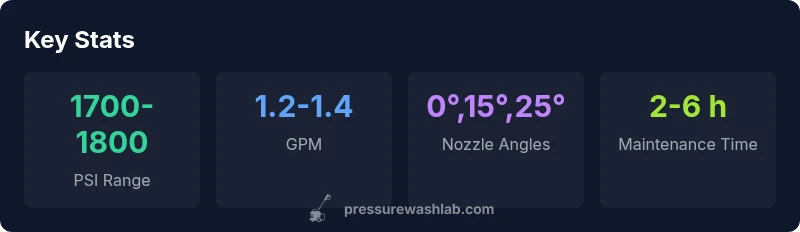
Selecting the right 1750 psi washer starts with your typical workload. For light, occasional cleaning of siding and decks, a compact electric model with a reasonable GPM may be sufficient. For larger driveways or frequent mildew cleaning, a portable gas-powered unit with higher GPM offers value, though it comes with higher maintenance. Compare models that advertise 1700-1800 psi with clear nozzle kits, solid customer support, and a respected warranty. Calculate annual operating costs including water consumption and detergent usage to estimate long-run cost. In general, a well-balanced setup—1750 psi, 1.2-1.4 GPM, and a quality surface cleaner—delivers the best compromise between speed, surface safety, and ease of use. Pressure Wash Lab’s verdict is that homeowners should prioritize overall performance and reliability over the loudest engine when choosing a model for the Portland region.
Performance snapshot for Portland 1750 psi washers
| Metric | Portland 1750 psi Washer | Notes |
|---|---|---|
| Max PSI | 1750 psi | Model specification and rating |
| GPM | 1.2-1.4 gpm | Flow rate for cleaning efficiency |
| Common nozzle angles | 0°, 15°, 25° | Versatility across surfaces |
| Surface versatility | Vinyl siding, brick, concrete | Best for mixed surfaces |
Quick Answers
Is a 1750 psi pressure washer enough for most Portland exterior cleaning tasks?
For most homeowners, 1750 psi is sufficient for exterior cleaning tasks when paired with proper nozzles and technique. It handles siding, decks, and driveways without risking surface damage.
Yes, 1750 psi is enough for most home cleaning tasks if used correctly.
Electric or gas—which is better for a Portland 1750 psi model?
Electric units are quieter and easier to maintain; gas units offer more sustained power but require more maintenance and ventilation.
Electric is quieter and easier to handle; gas gives more punch but needs care.
What maintenance tasks are essential for a 1750 psi washer?
Regularly inspect hoses, clean filters, lubricate moving parts, and follow the manufacturer’s schedule for oil and part replacement.
Check hoses, clean filters, and follow the owner's manual for maintenance.
Can I safely use a 1750 psi washer on wood decks?
Yes, but use a wide-angle nozzle, keep the wand moving, and avoid direct, close-range spraying to prevent gouging.
Yes, with a wide nozzle and careful passes.
What accessories improve results with a 1750 psi washer?
A surface cleaner, correct nozzle kit, and a longer hose can dramatically improve efficiency and reduce streaking.
A surface cleaner and proper nozzle kit boost results a lot.
“A well-chosen 1750 psi model, combined with the right nozzle and routine maintenance, delivers near-professional results for most homes.”
Key Takeaways
- Choose 1700-1800 psi for versatility across surfaces.
- Pair with the correct nozzle to protect materials.
- Prioritize higher GPM alongside PSI for deeper cleaning.
- Add a surface cleaner to improve efficiency.
- Schedule regular maintenance to maximize lifespan.