Pressure Cleaning Calculator: Estimate Your Wash Costs
Learn how the pressure cleaning calculator estimates yearly water usage and costs for pressure washing projects. Understand inputs, outputs, and budgeting tips from Pressure Wash Lab.


Why a pressure cleaning calculator matters for homeowners
The pressure cleaning calculator is more than a novelty—it’s a practical budgeting tool for DIYers and small businesses. For homeowners tackling driveways, decks, or home siding, the calculator translates messy plans into measurable numbers. According to Pressure Wash Lab, this kind of tool helps forecast yearly water use and project costs, so you can compare scenarios before renting equipment or hiring a contractor. By turning cleaning ideas into inputs you can track, you reduce the risk of over-spending or under-allocating time and resources. The calculator also clarifies how small changes in your approach—like a different nozzle, shorter cleaning sessions, or switching to a higher-efficiency pump—affect the bottom line. The result is a clear pathway from intent to budget, with concrete targets for every job. For new users, start with modest weekly loads and a conservative water-per-gallon price, then vary one input at a time to see how the totals respond. This iterative approach builds confidence and helps you make informed decisions quickly.
How inputs drive the results: the math behind the calculator
At the heart of the calculator are three simple inputs and a straightforward calendar factor. The core formula commonly used is: weeklyLoads * gallonsPerLoad * costPerGallon * 52, with the result rounded to two decimals for currency. In other words, how many cleaning sessions you perform each week, how much water each session uses, and what you pay for that water combine to an annual figure. Each input is measured with explicit units: loads per week (loads), gallons per load (gallons), and cost per gallon (dollars). The 52 accounts for weeks in a year, assuming a consistent pattern. In a more advanced mode you can apply pow() for more complex scenarios or min/max to constrain unrealistic inputs; however, for everyday budgeting, the three inputs plus the weekly multiplier give reliable estimates. The calculator’s outputs include the Annual Water Cost and, if desired, the total gallons per year. Keep in mind local rates can vary, so adjust your numbers to reflect regional prices and your actual usage.
Practical scenarios and what to expect
The calculator shines when you compare scenarios across different work scopes. For a typical residential driveway, you might run 2 sessions per week with 15–25 gallons per load and water at roughly $0.003–$0.008 per gallon. That combination often yields a modest annual cost. Cleaner siding or a wooden deck tends to require more gallons per load and perhaps more frequent sessions, pushing annual costs higher. To illustrate, compare two options using the same weekly schedule but different gallons per load: one reduces gallons per load by using a more precise nozzle and shorter spray times; the other increases gallons per load due to a larger surface area or heavier soil. The calculator will show how the annual cost shifts, helping you decide where to invest time or gear for greater efficiency.
Interpreting the outputs: reading the numbers and what they mean
Outputs are designed to be actionable. The Annual Water Cost tells you how much water you’ll pay for over the year under current usage patterns, while the yearly gallons reveal total consumption. If costs are higher than expected, consider reducing gallons per load, consolidating sessions, or investing in more efficient spray equipment. You can also use the calculator to perform what-if analyses: what happens if you shave 20% off weekly loads, or if you switch to a lower-cost water source? The aim is to choose configurations that meet cleaning goals while keeping expenses predictable and controllable.
Best practices to improve accuracy and save money
To maximize the calculator’s usefulness, start with realistic inputs. Measure your typical sessions, set a conservative price per gallon, and adjust your weekly loads to reflect actual patterns. Validate your numbers by running a few scenarios: one “as-is” baseline, one with reduced gallons per load, and one with fewer weekly sessions. This helps you quantify the impact of efficiency upgrades, like adjusting nozzle size or adopting better cleaning techniques. Remember to account for regional variations in water rates and seasonal changes in usage. Finally, treat the calculator as a budgeting aid, not a binding quote—real-world costs will vary with equipment, maintenance, and job complexity.
Step-by-step walkthrough: a complete calculation with default inputs
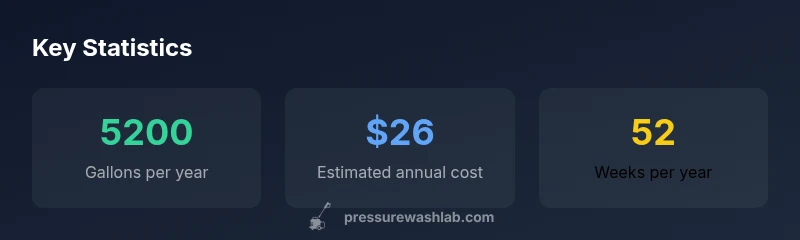
Using the default inputs (5 loads per week, 20 gallons per load, $0.005 per gallon), the calculator schedules 5 × 20 = 100 gallons per week. Over 52 weeks, that’s 5,200 gallons per year. Multiply by the cost per gallon: 5,200 × 0.005 = 26.00 dollars per year. Rounding to two decimals ensures consistent currency formatting. This example shows how a light, steady schedule yields a surprisingly modest annual water cost, while large properties or higher water prices will push numbers higher. You can replicate this walkthrough with any inputs to see how changes affect the annual figure.
Limitations and assumptions
All estimates assume a constant weekly pattern and fixed water rates. The calculator does not model seasonal shifts, detergent usage, or equipment variations that affect flow. It also assumes the same price per gallon across the year, which may not reflect regional rate fluctuations. For best results, update inputs to reflect current local prices and actual weekly usage. The tool is designed to support budgeting and decision-making, not to replace professional quotes or on-site assessments.