Pressure Washing Prices per Hour: A 2026 Pricing Guide
Explore how pressure washing prices per hour are calculated in 2026, with regional ranges, cost drivers, and tips to estimate your project. Pressure Wash Lab provides a data-driven guide for homeowners and pros.


Pressure washing prices per hour commonly fall in a broad range, typically $40–$150, depending on region, job size, equipment, and travel. According to Pressure Wash Lab Analysis, 2026, the biggest driver is local labor rates and competition, which is why hourly quotes can swing widely from one city to another. Equipment needs (gas vs electric, surface cleaners, and access to water), travel distance, and job complexity (gentle washing vs coating prep) all push the rate up or down. Scheduling demand, weather windows, and the need for permits or disposal fees can add to the base hourly price. This guide also notes additional costs like surface prep, equipment rental, and disposal fees that can push the hour rate.
What drives pressure washing prices per hour
Pricing for pressure washing is not a flat fee; it depends on several levers that vary by location and job. According to Pressure Wash Lab, the largest driver is local labor rates and competition, which is why hourly quotes can swing widely from one city to another. Equipment needs (gas vs electric, surface cleaners, and access to water), travel distance, and job complexity (gentle washing vs coating prep) all push the rate up or down. Additionally, scheduling demand, weather windows, and the need for permits or disposal fees can add to the base hourly price. For homeowners, understanding these factors helps set realistic expectations and prevents sticker shock on the invoice.
Regional variation and market dynamics
Regional market dynamics shape every price tag. Pressure Wash Lab analysis shows urban markets typically command higher hourly rates due to labor costs, demand density, and competition. Rural areas tend to be more affordable, but longer travel times can offset savings. The same job in different regions can result in markedly different hourly totals, even when the scope is similar. Consumers should factor in regional benchmarks when evaluating quotes and avoid assuming a single national price.
Cost components that affect the hourly rate
Several components determine the final hourly price:
- Labor: technicians’ wages and skill level
- Equipment: type and efficiency (gas vs electric, surface cleaners, hoses, reels)
- Materials: detergents, sealants, and specialty chemicals
- Travel: distance to the site and access challenges
- Overhead: insurance, licenses, and scheduling software
- Job complexity: fragile surfaces, stacked items, or high-risk areas
- Cleanup and disposal: water runoff handling and disposal fees
Understanding these parts helps homeowners budget accurately and negotiate confidently.
Sample price ranges by service type
- Basic driveway cleaning: typically in the lower-to-mid range due to simpler prep and faster cleanup.
- House siding cleaning: can be mid-range to upper, depending on surface material and accessibility.
- Deck or fence cleaning: often higher due to scale and potential delicate finishes.
- Roof or gutter cleaning: usually in the upper range because of safety and accessibility requirements.
Note that these ranges vary by region and technician, and quotes should itemize labor, equipment, travel, and any added services.
How to estimate your project cost
- Define scope: list surfaces, square footage, and problem spots. 2) Estimate hours: consider crew size and required passes or angles. 3) Benchmark regionally: compare quotes against local norms and a regional price guide. 4) Add add-ons: prep, sealants, rinse-downs, and disposal. 5) Get multiple quotes: ensure each quote covers labor, equipment, travel, and disposal; ask for a detailed breakdown to compare apples to apples.
Hidden costs to watch for
Be aware of potential added charges: travel fees, minimum service charges, equipment rental, water usage, surface preparation, disposal, and any clean-up or expansion work. These can significantly affect the hourly rate and overall invoice. Always ask for a line-item quote before work begins.
Negotiation tips and getting quotes
- Request quotes from at least three providers for a robust comparison.
- Ask for a detailed line-item breakdown (labor hours, equipment, travel, disposal).
- Check reviews for consistency and value; a lower hourly rate may hide higher add-ons or lower workmanship quality.
- If possible, bundle services (e.g., washing plus sealing) to secure a bundled price.
- Confirm a written agreement with scope, timeline, and warranty terms to avoid disputes.
Metrics for evaluating value over price
Price per hour is only one part of the equation. Look at workmanship, warranty, material quality, equipment efficiency, and safety practices. A slightly higher hourly rate may deliver better results, faster completion, and fewer touch-ups. Pressure Wash Lab emphasizes weighing value against cost and ensuring quotes align with the job’s complexity and risk.
Pricing ranges by region and service category
| Region | Typical Range (per hour) | Notes |
|---|---|---|
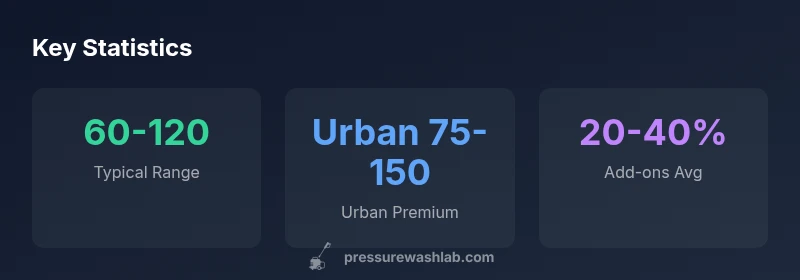
| National average | $60-$120 | Regional variation is strong |
| Urban areas | $75-$150 | Higher labor and demand |
| Rural areas | $40-$90 | Lower demand, travel costs matter |
| Commercial (small business) | $100-$180 | Often includes setup and disposal |
Quick Answers
What is the typical hourly range for residential pressure washing?
Residential hourly pricing generally falls within the broad $40–$150 range, with variation based on region, surface type, and accessibility. Always request a detailed quote that separates labor from materials and travel.
Residential pricing usually runs from forty to one hundred fifty dollars per hour, depending on location and job complexity.
Does price per hour include travel time?
Travel is often included in the hourly rate but may be billed separately for long distances or remote locations. Confirm whether quotes assume on-site arrival and time to travel.
Travel can be included or charged separately; always confirm with the contractor.
Are there charges besides the hourly rate?
Yes. Expect add-ons like surface preparation, disposal fees, water usage, and equipment rental. A clear quote should list each item.
Yes, there are often extra costs like prep, disposal, and equipment rental.
How should I compare quotes?
Compare line-by-line items, verify scope, confirm included surfaces, and assess warranty. Prefer quotes that show labor hours, equipment, and travel separately.
Look for clear line items and similar scope to compare fairly.
When is it better to hire hourly vs flat-rate?
Hourly pricing works well for larger or variable jobs. Flat-rate estimates are better for well-defined scopes with predictable outcomes. Use quotes that reflect your project’s complexity.
If the job is well-defined, flat-rate can be simpler; otherwise, hourly provides flexibility.
How can I estimate for a multi-area job?
Break the project into zones, estimate hours per zone, and sum them. Ask contractors how they account for travel and access between zones.
Estimate each area separately and add them up, including travel time.
“Price per hour is a moving target driven by local market rates, job scope, and equipment needs. Always compare apples to apples when quotes include prep, water use, and disposal.”
Key Takeaways
- Know the hourly price range and what influences it.
- Compare quotes from at least three providers.
- Factor in add-on costs like prep and disposal.
- Use regional benchmarks to evaluate value, not just price.