Pressure Wash Test: A Practical How-To Guide
A complete, practical guide to performing a pressure wash test to verify nozzle performance, surface safety, and cleaning effectiveness with step-by-step protocol and safety guidance.


A pressure wash test helps you verify nozzle performance, cleaning effectiveness, and surface safety before tackling a bigger job. This guide provides a repeatable protocol, recommended distances, PSI/GPM ranges for common surfaces, and safety steps to keep you and your property protected. Use the test to document results and adjust settings for consistent outcomes on every project.
What is a pressure wash test?
A pressure wash test is a structured assessment of your equipment and technique before a full cleaning job. Its goal is to confirm that your nozzle choices, spray distance, and pressure settings deliver effective cleaning without damaging surfaces. By running a controlled test, you verify that the flow rate (GPM) and pressure (PSI) interact with surface material in a predictable way. This practice reduces the risk of etching, gouging, or overspray on nearby plants and siding, and it helps you compare performance across different nozzle tips. According to Pressure Wash Lab, a well-documented test protocol increases consistency and helps homeowners and pros set a repeatable standard for future jobs. The pressure wash test should be integrated into your prep routine for any project, from driveway cleaning to exterior siding refreshes. In short, it’s a safe, practical way to setup for success and protect both your surfaces and your equipment.
Why a test matters for different surfaces
Different surfaces respond uniquely to the same spray. Concrete absorbs pressure more aggressively than wood, and painted metal can scratch if you use a sharp stream up close. A formal test identifies surface-specific thresholds, guiding you to the correct nozzle angle and distance. For porous materials like concrete, you’ll often need a broader spray pattern and slightly more finesse with distance to avoid pitting. For smoother surfaces like vinyl, a gentler approach with a wider nozzle can achieve cleanliness without damage. The test also helps you verify that your detergents or degreasers are compatible with the surface, reducing the risk of chemical damage or residue.
Safety and PPE considerations
Before you start the pressure wash test, assemble basic PPE: eye protection, gloves, and sturdy footwear. Keep bystanders away and establish a clear safety zone. Examine hoses for wear or leaks, ensure electrical cords are away from water, and avoid spraying towards outlets or electrical fixtures. Use masking tape or a dedicated patch area to test, rather than blasting a random spot on your home’s exterior. Pressure changes should be incremental; never jump from high pressure to a surface in one pass without evaluating the impact first. Pressure Wash Lab emphasizes safety as the foundation of any test protocol, so keep a safety-first mindset throughout the process.
Tools, settings, and test surfaces
To run a reliable pressure wash test, you’ll need a suitable pressure washer, a choice of nozzle tips, a way to measure distance, and test surfaces. A 2,000–3,500 PSI machine is common for residential work, with nozzle tips ranging from 0° to 25°. Start your test with a rubber-surfaced or cardboard target at a known distance (6–8 inches to begin with) to gauge impact and reflectivity. Use a tape measure to keep consistent distances during repeated passes. For surfaces, include a concrete patch, an unpainted wood board, a vinyl siding sample, and a paver or brick area to capture broad results. Document each surface with notes and sample photos to reference later.
Step-by-step protocol (overview)
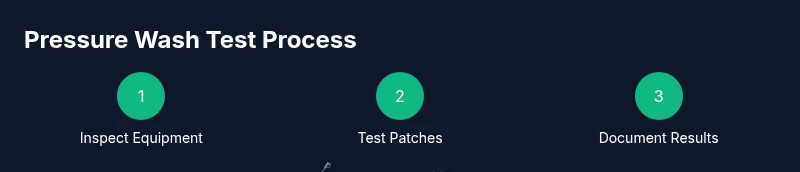
A well-structured pressure wash test follows a repeatable sequence that minimizes guesswork. Begin with equipment inspection, then set a baseline pressure using your lowest nozzle. Progressively test at increased distances and with different nozzle tips, moving across each surface patch. Record outcomes for cleanliness, any surface issues, and ease of use. Finally, compare results across surfaces to identify best practices for future projects. Pressure Wash Lab observes that a standardized protocol yields the most reliable, repeatable outcomes and helps you refine your technique over time.
Interpreting results and adjustments
When you review your test results, look for consistent cleaning across patches and surfaces without signs of damage. If a surface shows fiber lift, chipping, or spotting, reduce pressure, switch to a wider nozzle, or increase distance. A lack of cleaning efficiency on a surface may indicate not enough pressure, improper nozzle selection, or insufficient dwell time with detergents. If overspray is an issue, adjust your stance and angle, or move to protective barriers to protect nearby plants or surfaces. The goal is to balance cleaning power with surface safety, producing predictable results and reducing rework.
Maintenance after testing and common mistakes
After completing the test, flush and inspect all hoses and nozzles for wear. Clean or replace worn tips to maintain accuracy. Record the exact nozzle, distance, and setting in a project log for future reference. Common mistakes include rushing the test, skipping smaller surfaces, or increasing pressure without verifying impact on the target patch. Avoid using high-pressure jets on fragile materials and never spray metal surfaces at close range, which can cause scorching or etching. Taking notes and keeping a standardized checklist helps you reproduce the same results on future jobs.
Tools & Materials
- Pressure washer(Gas or electric, 2000–3500 PSI typical for home use; ensure unit is in good working order and rated for intended surfaces.)
- Nozzle tips (0°, 15°, 25°)(Keep a set and test different angles to find the balance between agitation and surface safety.)
- GPM/PSI test gauge(Measures flow and pressure to verify operating range during the test.)
- Patch surfaces (cardboard, plywood, vinyl panel)(Use to simulate real surfaces and avoid testing directly on your property at first.)
- Tape or markers(Mark distance and patch areas for repeatability.)
- Personal protective equipment(Safety goggles, gloves, and closed-toe shoes; consider hearing protection for prolonged use.)
- Detergent appropriate for surfaces(Eco-friendly or surface-specific cleaner as needed; test compatibility on patches.)
Steps
Estimated time: 45-60 minutes
- 1
Inspect equipment and prep safety
Check hoses, connections, nozzle tips, and the machine for any leaks or wear. Put on PPE and clear the area of people and pets. Prepare your test patch surfaces and mark distances with tape.
Tip: Test spray on a patch at the lowest pressure before applying to any surface. - 2
Mount test patches and measure baseline distance
Place cardboard or plywood patches on a stable surface. Set a baseline distance of 6 to 8 inches from the patch and select the 25° nozzle for a gentler start.
Tip: Record the exact distance and nozzle used for repeatability. - 3
Spray at low pressure to gauge initial effect
Begin spraying with the nozzle at the baseline distance, moving steadily across the patch. Observe cleaning action, mist spread, and any edge effects.
Tip: Keep the spray wand steady and avoid lingering in one spot. - 4
Increase distance or switch nozzles for efficiency
If the patch shows insufficient cleaning, gradually reduce distance or switch to a wider spray (e.g., 15° or 0°) while monitoring surface response.
Tip: Avoid abrupt pressure changes; make incremental adjustments. - 5
Test multiple surfaces and document results
Repeat for each surface patch (concrete, wood, vinyl). Document cleanliness, surface response, and any damage indicators.
Tip: Take photos before and after to reference future projects. - 6
Assess detergents and dwell time
If using cleaners, apply to a patch and allow a short dwell time before rinsing. Check for residues or surface reaction.
Tip: Rinse thoroughly after dwell to prevent streaks on real surfaces. - 7
Compare results and choose final settings
Review outcomes across patches to determine the best nozzle, distance, and pressure combination for each surface.
Tip: Create a simple reference sheet for future jobs. - 8
Clean up and secure equipment
Flush hoses, store nozzles cleanly, and power down the machine. Sanitize test surfaces and discard test materials properly.
Tip: Label your equipment to avoid cross-mixing detergents.
Quick Answers
What is the purpose of a pressure wash test?
A pressure wash test establishes safe, effective settings before scaling up a job. It helps you identify the right nozzle, distance, and cleaning approach for each surface while preventing damage.
A pressure wash test ensures you pick the right nozzle and distance so you clean effectively without harming the surface.
What PSI range should I use for testing residential surfaces?
For most residential projects, start with a low to moderate PSI range (around 1200–1800 PSI equivalent on your surface) and adjust based on material response. Always begin at the lowest setting to assess impact.
Begin with a low PSI equivalent and gradually increase while watching the surface for any signs of damage.
Can I perform a pressure wash test indoors?
Indoor testing is generally not recommended due to moisture and power considerations. Use exterior patches or controlled outdoor spaces to conduct tests.
Indoor testing is usually not advised; do tests outside where you can control spray and drainage safely.
Which surfaces benefit most from a test patch?
Patched surfaces should include concrete, painted wood, vinyl siding, and brick or paver surfaces to capture a range of materials you'll encounter.
Test patches on concrete, wood, vinyl, and brick to represent common project surfaces.
How often should nozzle tips be tested or replaced?
Inspect nozzles before major jobs and replace worn tips as needed. Worn tips reduce spray accuracy and increase the risk of surface damage.
Check nozzle tips before each project and replace worn ones to keep spray precise.
Watch Video
Key Takeaways
- Test early with patches to gauge impact
- Match nozzle angle to surface for safety
- Log settings for repeatable results
- Evaluate both cleaning power and surface response
- Protect nearby plants and finishes during testing