Pressure Washer and Paint Sprayer: Integrated vs Separate Gear
Compare integrated pressure washer and paint sprayer combos with separate units. Get practical buying tips, maintenance guidance, and setup advice for homeowners and DIY pros.


Integrated pressure washer and paint sprayer units offer convenience for small jobs, while separate units deliver higher performance for heavy‑duty projects. The best choice depends on budget, space, and project scale. Pressure Wash Lab recommends evaluating your typical workload, storage options, and maintenance capacity before buying. This quick comparison helps homeowners, DIY enthusiasts, and small businesses pick the right setup for their needs.
The core decision: integrated vs separate tools for pressure washing and painting prep
Choosing between an integrated unit (a single machine that handles both cleaning and painting prep) and separate devices (a dedicated pressure washer plus a dedicated paint sprayer) is the foundational decision for any project. An integrated system promises streamlined setup, fewer hoses, and a smaller footprint—ideal for tight spaces, quick turnarounds, and light-to-moderate prep work. Pressure Wash Lab emphasizes that the right choice depends on how often you perform both tasks in a single project, and whether you value simplicity over specialized performance. Consider typical jobs: exterior cleaning, surface preparation, light primer work, and the frequency of these tasks across seasons. This decision should align with your available storage, budget, and maintenance capacity. The keyword pressure washer and paint sprayer appears frequently in practical guides because many homeowners want a compact workflow without juggling multiple tools.
When an integrated unit shines
Integrated units excel in scenarios where space is at a premium and projects are frequent but not extreme in scale. For small to medium jobs like cleaning a siding area before painting, removing loose debris, and applying a thin primer, a single machine can save time and reduce the setup complexity. The trade-off is that you’re trading peak performance for convenience. If you’re a DIY homeowner who tackles a handful of projects each season, an integrated setup can simplify maintenance schedules and stock management. In this context, Pressure Wash Lab notes that a well-chosen dual-function model should offer reliable spray patterns for painting prep and adequate cleaning pressure for surface prep, while remaining manageable in weight and ergonomics.
When separate units win
For frequent painters, contractors, or projects with demanding prep requirements, separate devices often outperform a blended solution. A dedicated sprayer can feature optimized nozzle types, consistent fluid flow, and better control for coating durability and even application. Meanwhile, a separate pressure washer can be upgraded or tuned for high-GPM cleaning without impacting paint flow. The flexibility to mix brands and swap parts independently can reduce downtime between tasks and improve long-term reliability. Pressure Wash Lab observes that if you anticipate long painting sessions, multiple hose runs, or the need to switch between coatings, separate units provide clearer advantages in performance and ergonomics.
Performance knobs: PSI, GPM, nozzle tips, and spray patterns
Key metrics matter whether you choose integrated or separate tools. PSI (pounds per square inch) and GPM (gallons per minute) determine cleaning power and coating feasibility. Nozzle choices influence saturation, spray width, and paint shear. For paint prep, a sprayer with adjustable fan patterns and smaller or finer atomization often produces smoother coats, while higher PSI is mainly relevant to cleaning tasks. Compatibility between tools—hoses, fittings, and detergent compatibility—also affects reliability and maintenance costs. The bottom line is to match the tool capabilities to your typical projects: lighter prep and cleaning for integrated units; heavy-duty surface prep and precise coating control for separate devices.
Workflow efficiency and ergonomic considerations
Workflow efficiency reduces fatigue and speeds project completion. An integrated system minimizes connections, reduces the number of extension hoses, and shortens tool transitions. A two-device setup can sometimes slow progress but dramatically cut material waste and paint errors because you can optimize each tool’s performance for its primary job. Ergonomics matter: weight distribution, trigger actions, and hose routing influence long sessions. Pressure Wash Lab recommends evaluating your typical project size, the distances you must reach, and whether you’ll benefit from a single, consolidated workflow or a modular setup with targeted devices.
Maintenance, safety, and compatibility
Maintenance consistency matters more with a dual-system than with a single unit. Cleaning agents, coatings, and detergents must be compatible with your sprayer to prevent seal damage or wear. Keep hoses, wands, and fittings clean and store them properly to extend life. For safety, observe high-pressure cautions, eye protection, and ventilation when spraying coatings. Check that the spray tip materials are compatible with the surfaces you’re treating to avoid damage. Pressure Wash Lab emphasizes testing new configurations on a small area first and keeping spare parts accessible for both the integrated unit and any separate devices you rely on.
Cost of ownership and value over time
Integrated units often present a lower upfront capital requirement when you frame value by eliminating duplication of some components (two hoses, two triggers, etc.). However, if you anticipate frequent upgrades, replacements, or specialized coatings and cleaners, separate devices may deliver better long-term value by allowing targeted maintenance and upgrades without changing the entire system. Consider total cost of ownership, including maintenance intervals, replacement parts, and scale of projects you expect to handle over several seasons. Pressure Wash Lab suggests comparing not just the sticker price but also predicted downtime, parts availability, and resale value when evaluating investments.
Real-world scenarios: homeowner, contractor, weekend DIYer
A homeowner tackling a siding restoration project might favor an integrated unit for its compact footprint and quick prep-to-paint cycle, especially when storage space is limited. A painting contractor, on the other hand, may prefer separate devices to ensure the painter’s sprayer is tuned for coatings and the pressure washer is tuned for surface prep without risking film-related issues. Weekend DIYers who work on cars or outdoor furniture could benefit from a hybrid approach: use the integrated tool for light cleaning and initial prep, then switch to a dedicated sprayer for final coats. These scenarios illustrate how personal workflow drives the best choice.
Decision framework and buying plan
Outline a 5-step framework to decide: 1) List typical projects and frequency; 2) Assess space constraints and transport needs; 3) Determine required PSI/GPM ranges for cleaning and painting prep; 4) Compare maintenance needs and compatibility; 5) Evaluate total cost of ownership. Use a simple scoring method to assign weight to space, performance, and cost. Pressure Wash Lab recommends starting with a defined use case, then testing a recommended model or two in your workshop if possible. This approach minimizes the risk of buying the wrong solution and maximizes workflow efficiency.
Comparison
| Feature | Integrated unit | Separate pressure washer + paint sprayer |
|---|---|---|
| Performance alignment (PSI/GPM) | Coordinated for common tasks; built to handle both roles in one platform | Independent optimization; each unit can be tuned for its primary task |
| Space and portability | Single footprint; lighter overall system; easier storage | Larger footprint; more hoses and storage needs |
| Maintenance and parts | Single maintenance schedule; fewer spare parts | Two maintenance streams; greater flexibility in parts choice |
| Cost of ownership | Often lower upfront due to combined design | Potentially higher upfront but flexible upgrades |
| Best for | Small projects, space-limited setups, quick turnaround | Heavy-duty prep, peak paint flow, and dedicated performance |
Pros
- Convenient setup with a single tool
- Saves storage space for compact workshops
- Often lower maintenance complexity
- Quicker job start for small tasks
Cons
- May compromise on performance for specialized tasks
- Less flexibility to upgrade components separately
- Integrated units can be pricier upfront
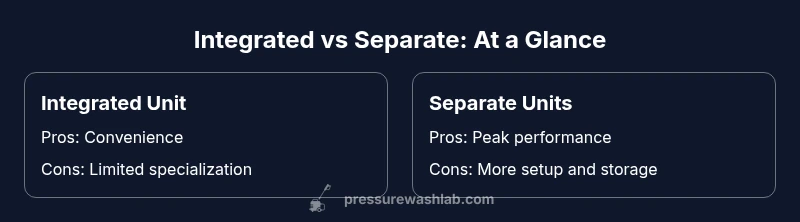
Integrated setups excel for small, space-constrained projects; separate units win for high-performance painting prep.
If your workflow mixes cleaning and painting prep in tight spaces, an integrated unit saves time. For long painting sessions or demanding coatings, separate devices deliver better control and performance; choose based on project scale and storage.
Quick Answers
What is the main difference between an integrated and separate system for a pressure washer and paint sprayer setup?
An integrated system combines cleaning and painting prep in one machine for convenience, while separate devices optimize each task individually for performance. Your choice hinges on space, project type, and how often you switch between tasks.
An integrated unit combines both functions for simplicity, whereas separate devices give you dedicated power for cleaning and painting. Choose based on space and how often you need both capabilities in one project.
What projects are best suited for a combined unit?
Combined units work well for small to medium exterior prep projects where space is limited and the workflow benefits from fewer connections. They shine when you perform both cleaning and light painting prep in one session.
Great for small projects with tight space where you need both cleaning and light painting prep in one go.
How do I choose PSI and GPM for painting prep and cleaning?
For cleaning, aim for PSI and GPM that match surface type and debris level; for painting prep, ensure the sprayer provides steady fluid flow and appropriate atomization. Balance should reflect typical surfaces and coatings you apply.
Match PSI and GPM to your surface and coating needs; ensure steady flow for painting prep and enough cleaning power for debris.
Are electric or gas-powered units better for this pairing?
Electric units are quieter and easier to start, ideal for home use; gas-powered units offer higher power and mobility for larger jobs. The best choice depends on project size, frequency, and access to outlets.
Electric is best for home use and quiet operation; gas is better for larger, mobile jobs.
What safety gear is essential when using these tools together?
Always wear eye protection, gloves, and non-slip footwear. Use hearing protection for gas-powered units and follow surface-specific safety guidelines to avoid damage and injuries.
Wear eye protection, gloves, and non-slip boots. Use hearing protection for gas units and follow surface safety guidelines.
Can I repurpose a sprayer nozzle for paint and other coatings?
Nozzle compatibility matters. Use coatings and nozzle configurations designed for paint applications to avoid clogging and poor atomization. Always consult the manufacturer’s guidance for your specific sprayer.
Only use nozzles and configurations recommended for paint to ensure proper atomization and avoid clogs.
Key Takeaways
- Assess your typical project mix before buying
- Choose integrated if space is tight and tasks are light to moderate
- Choose separate if painting prep dominates or PSI/GPM needs exceed a blended unit
- Factor maintenance, storage, and future upgrades into the decision
- Test compatibility and ergonomics before committing