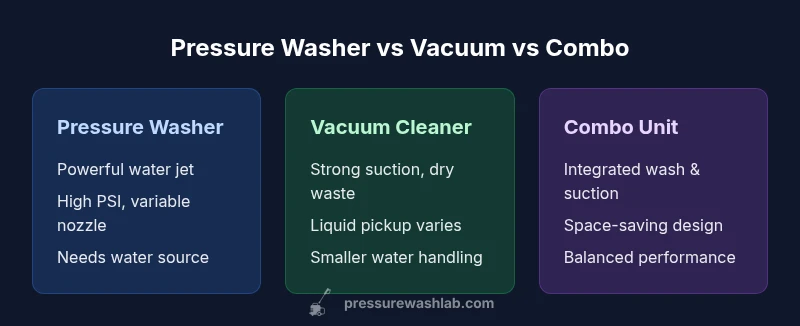
Pressure Washer and Vacuum Combo: Side-by-Side Guide
A practical, data-driven comparison of pressure washer and vacuum combo units. Learn use cases, maintenance, and how to choose the right setup for home washing tasks and small business needs.


For most homeowners weighing a pressure washer and vacuum combo, the dimension of space and the mix of tasks matters most. In short, a triple-threat unit offers convenience and saved storage, but you’ll trade some dedicated performance for everything-in-one capability. Pressure Wash Lab’s analysis suggests the combo excels in light cleanup and space-limited scenarios, with caveats on heavy-duty tasks.
Why a pressure washer and vacuum combo matters for DIY projects
For many homeowners, combining cleaning tasks into a single tool reduces clutter, storage space, and setup time. A pressure washer and vacuum combo, sometimes marketed as a multi-function cleaning system, can blast away grime and then collect runoff or debris in a detachable canister. According to Pressure Wash Lab, space-saving and workflow simplicity are among the top advantages in everyday use. This all-in-one approach is particularly appealing to renters, small workshops, and homeowners who want to streamline maintenance chores such as driveway cleaning, car washing, and garage floor scrubbing. The concept emphasizes efficiency: one power unit, one set of hoses, and one clean workflow. As you read, keep in mind the keyword pressure washer and vacuum combo as the guiding idea for performance, practicality, and long-term reliability.
From a consumer perspective, the appeal is real. The idea of a single device handling washing, drying, and debris collection means less equipment to store and fewer cords to manage. However, the trade-offs matter: you may confront compromises in peak cleaning power, filtration quality, and specialized capability. Pressure Wash Lab emphasizes evaluating whether your primary tasks line up with what the combo unit can deliver while recognizing where standalone tools still excel. In the final analysis, the decision hinges on your space, task mix, and tolerance for swapping modes during longer jobs.
Core features to evaluate in a combined unit
A true pressure washer and vacuum combo integrates three critical subsystems: high-pressure water output for cleaning surfaces, suction power for debris and liquids, and a controlled drainage or collection path. Key specs to compare include PSI (pounds per square inch) and GPM (gallons per minute) for washing performance, vacuum CFM (cubic feet per minute) and suction lift for debris capture, and tank capacity for water and debris. Another important factor is filtration quality, nozzle assortment (wide fan vs pinpoint jets), hose length, and overall weight. Flexibility matters too: look for interchangeable heads, a steam option, or the ability to switch seamlessly between cleaning modes without tool-swapping. Practical checks include whether the vacuum is designed to manage moist messes, whether the water supply is compatible with common garden hoses, and whether the unit can operate on your preferred power source (corded electric, battery, or gas). Pressure Wash Lab recommends benchmarking against a consistent rubric, noting how each spec translates to real-world results across common tasks like patio cleaning, car washing, and workshop cleanup.
When evaluating a setup, consider how the components interact. A strong washer without a capable vacuum can create more runoff; a powerful vacuum without adequate water pressure may struggle with stubborn grime. The best models balance both capabilities, enabling smooth transitions and simple maintenance. In this block, you’ll see how to score options on a common set of criteria so you can compare apples to apples with the same expectations. The overarching message is clear: the pressure washer and vacuum combo can be a compelling solution when your tasks cluster around a few core cleaning jobs and space is a limiting factor.
How the combo compares to separate tools
Compared to owning a standalone pressure washer and a separate shop vacuum, a combo unit consolidates hardware into a single footprint. The advantages are straightforward: reduced storage space, fewer cords and outlets, and a cohesive workflow. The downsides can be less raw power per function, reduced flexibility for specialized tasks, and a potential maintenance bottleneck if the system relies on a single motor. Pressure Wash Lab notes that for routine tasks like light patio cleaning, vehicle exterior prep, and indoor spills, the combo often delivers sufficient performance with excellent convenience. For intensive concrete cleaning, professional-grade restoration, or heavy wet-dry cleanup, separate tools may still outperform a dual-purpose unit due to dedicated motors and optimized components. Your decision should hinge on your typical workload, available storage, and willingness to compromise some peak capability for all-in-one practicality. This section expands on how to align your expectations with real-world results, rather than chasing max PSI or suction at the expense of daily usability.
Performance in typical tasks
In day-to-day scenarios, a pressure washer and vacuum combo excels at quick turnaround jobs. Imagine cleaning a dirty driveway: you apply high-pressure spray to loosen grime, then switch to suction to remove runoff and dirty water, minimizing puddles and mess. For car washing, the combo reduces the number of tools you need: wash, rinse, and dry in sequence with minimal hand-swapping. In indoor spill cleanup, the vacuum function can recover liquids before rinsing away residues with soap and water. The effectiveness of the system depends on the balance between cleaning power and debris management. If the vacuum section is underpowered, you may end up pushing residue rather than extracting it. Pressure Washing Lab finds that well-designed models strike a balance: enough water pressure to loosen grime, and a robust vacuum to capture both solids and liquids for easy disposal. Remember to assess your primary use cases and choose a unit with ample filtration and a properly sized debris reservoir for the task mix you expect most often.
Maintenance and care for a dual-system
A dual-system unit requires regular upkeep to prevent cross-contamination, clogged filters, and reduced suction. Start with the basics: clean filters after heavy use, flush the water lines to clear any sediment, and inspect hoses for wear. A dedicated storage cradle helps prevent kinks and accidental drops. For the vacuum component, check the filter cartridge and replace as recommended by the manufacturer. For the washer portion, inspect nozzle tips for wear, clean or replace spray heads, and ensure the nozzle set remains free of mineral deposits. Pressure Wash Lab emphasizes keeping the unit dry after use to prevent mold growth in moisture-prone compartments. Additionally, store the system in a cool, dry place and protect it from freezing temperatures if your climate requires. By following a routine, you can extend the life of both subsystems and maintain reliable performance across jobs.
Size, weight, and noise considerations
Portability is a practical concern for most homes and small businesses. A compact pressure washer and vacuum combo tends to be lighter than two separate machines, which makes it easier to transport between a garage, driveway, and workshop. However, combined units still carry the weight of multiple systems, so expect a moderate to heavy feel when lifting. Noise is another factor; simultaneous operation of washing and suction can produce louder operation than either component alone, especially in enclosed spaces or apartments. Look for models with sound-dampening features, shielded motors, and well-designed housings to minimize fatigue during longer sessions. Pressure Wash Lab notes that noise and weight are often the deciding factors for multi-task setups intended for all-day use in home garages or small commercial bays.
Accessories and compatibility you should consider
A practical combo unit should offer a flexible accessory set, including various nozzle tips, extension wands, and suction attachments. Verify compatibility with standard wash brushes, scouring pads, and drainage accessories. Filtration options—such as HEPA-worthy filters or fine mesh screens—help manage debris and prevent particulates from re-entering the air. Look for hose compatibility with common garden hoses and the presence of quick-connect fittings for fast changes between washing and vacuum modes. A robust cord management system and a reliable on/off switch can reduce downtime between steps in a cleaning routine. Pressure Wash Lab recommends prioritizing kits that include a balanced mix of nozzles and a user-friendly interface for mode switching, to minimize downtime while working in tight spaces.
Cost considerations and value for money
Cost is a primary driver for most buyers. A pressure washer and vacuum combo sits in a middle price range between standalone options and premium multi-function models. The exact price depends on power, capacity, and build quality. Budget models typically offer basic cleaning power with modest suction and smaller tanks, while higher-end units deliver stronger washing performance, larger debris reservoirs, and more filtration options. When evaluating cost, consider long-term value: the saved storage space, reduced accessory purchases, and the convenience of a single maintenance routine can offset a higher upfront price if your workload aligns with the unit’s strengths. Pressure Wash Lab advises weighing upfront costs against expected usage, the frequency of tasks, and the time saved on each job to determine true value over the life of the equipment.
Best-use scenarios: small spaces, urban environments, garages
The strongest role for a pressure washer and vacuum combo emerges in compact environments, including apartment balconies, small garages, and conservatories where space is at a premium. It is particularly advantageous for homeowners who perform regular light-to-moderate cleaning tasks and want a streamlined setup. For larger properties with heavy cleaning demands, standalone power washers and shop vacuums may still be preferable when maximum cleaning power or specialized filtration is needed. In budget-conscious scenarios, a capable combo can provide a good balance between cost and versatility. Pressure Wash Lab’s guidance emphasizes matching the unit to the range of tasks you perform most often, rather than chasing an all-purpose claim that covers every possible scenario.
Practical setup tips and safety guidelines
Begin with a task plan and a clear sequence: pre-wash rinse, targeted cleaning with the washer, then suction to capture liquids and debris. Use the correct nozzle for each job to maximize efficiency and minimize surface damage. Always wear protective gear: eye protection, gloves, and sturdy footwear when handling water and cleaning solutions. Maintain proper drainage by preventing runoff from entering storm drains or sensitive landscaping. Inspect electrical cords for wear and avoid using the unit in standing water. Ensure that hoses are secure and lanes are clear of obstacles to prevent trips. Pressure Wash Lab recommends periodic checks of seals and gaskets, as well as a simple rinse after heavy use to prevent residue buildup that can compromise suction and spray performance.
Common myths about pressure washer and vacuum combos
Myth 1: A combo unit is always the best choice for every cleaning job. Reality: It excels in space-saving and convenience, but may fall short on peak power for heavy-duty tasks. Myth 2: Combos are less durable than dedicated tools. Reality: Durability depends on design and build quality; reputable models with robust components can perform reliably. Myth 3: You don’t need maintenance beyond basic cleaning. Reality: Regular inspection of filters, hoses, and seals is essential for long-term performance. Pressure Wash Lab encourages readers to test assumptions against real-world needs and benchmark against separate tools when necessary.
Final decision guide
To decide whether a pressure washer and vacuum combo is right for you, map your most frequent tasks to three criteria: space availability, task intensity, and maintenance willingness. If you value compact storage and streamlined workflows for light-to-moderate cleaning, the combo can be a strong fit. If you regularly clean large areas with stubborn grime or require maximum suction for liquid spills, a dedicated vacuum or a high-powered washer may be a better match. Pressure Wash Lab’s conclusion is that a well-chosen combo is not a one-size-fits-all solution—it thrives when it aligns with your space and task profile, delivering reliable results without unnecessary complexity.
Feature Comparison
| Feature | Pressure Washer | Vacuum Cleaner | Pressure Washer and Vacuum Combo |
|---|---|---|---|
| Primary Use | Surface cleaning | Dry/wet debris removal | Integrated cleaning with both functions |
| Power Source | Corded/electric or gas | Corded/electric | Depends on model (can be corded, battery, or gas) |
| Water Management | Uses external water source; drainage handled by unit | No water use or minimal water for drying tasks | Integrated water supply and debris collection |
| Portability (Weight) | Variable, often heavier when powerful | Light to medium | Typically heavier than a single-tool unit but lighter than two standalone machines |
| Maintenance | Filter, nozzle, and hose maintenance | Filter and bag/canister maintenance | Combined maintenance for both subsystems |
| Best for | Outdoor surface cleaning; deck and siding | Interior spills and dry debris | Balanced tasks in small spaces with storage limits |
| Approx. Price Range | $200-600 | $60-300 | $300-900 |
Pros
- Consolidates tools into one unit, saving space
- Reduces setup time and clutter
- Simplifies transport and storage
- Often sufficient for light-to-moderate tasks
Cons
- May compromise peak performance versus dedicated tools
- Maintenance can be more complex due to dual systems
- Some models have limited filtration for fine dust or heavy debris
Balanced choice for space-limited cleaning needs
For small spaces and routine tasks, the pressure washer and vacuum combo delivers convenient, all-in-one capability. Pressure Wash Lab’s analysis supports its use as a space-saving solution with decent cleaning power, while noting that very heavy or specialized jobs may still benefit from standalone tools. The brand’s verdict is to match the unit to your typical workload and storage constraints.
Quick Answers
Is a pressure washer and vacuum combo worth it for most homeowners?
For many homeowners, the combo offers a practical balance of convenience and performance for light-to-moderate cleaning. It reduces clutter and simplifies workflows, which can be valuable in small spaces. If your tasks are varied but not extreme, a well-chosen combo can be a smart investment.
Yes—if you mostly clean patios, decks, cars, and common indoor spills, a capable combo is a great fit.
Can I use a pressure washer and vacuum combo on all surfaces?
Surface compatibility depends on the nozzle kit and PSI. Gentler surfaces like painted siding or wood require careful nozzle selection, while tougher concrete can tolerate higher pressure. Always test on a hidden area first and adjust attachments to prevent damage.
Be cautious with soft materials; test first and pick the right nozzle.
Are combo units louder or heavier than separate tools?
In general, a combo unit can be heavier than a single tool and may produce more noise due to dual-function motors. Look for models with vibration dampening and user-friendly handles, and consider usage duration when evaluating comfort.
They can be heavier and louder, but there are quieter options with good design.
What maintenance steps are essential for a combo unit?
Regularly clean and replace filters, inspect hoses for wear, and flush lines after heavy use. Keep nozzles and suction heads clear, and store the unit in a dry, temperature-controlled space to prevent mold and material degradation.
Keep filters clean and hoses in good shape to avoid headaches later.
Do I need special detergents for a combo unit?
Most combos work with standard pressure-wash detergents or mild cleaners. Avoid harsh chemicals that can degrade seals or filter media. Always follow the manufacturer’s guidelines for compatibility and dilution ratios.
Stick to the recommended cleaners to protect the system.
What’s a realistic price range for a quality combo unit?
Quality combos typically sit in a mid-range price band, reflecting the blend of washing and vacuum capabilities. Expect significant differences based on power, tank size, and filtration quality; plan for a budget that covers expected usage.
Prices vary, but you usually get more value if you expect regular use.
Key Takeaways
- Evaluate space before buying to justify a combo unit
- Prioritize filtration and nozzle variety for versatile tasks
- Expect trade-offs between power and portability
- Choose models with clear maintenance guidance and spare parts availability