Pressure Washer Carburetor Cleaning: Step-By-Step Guide
Learn how to safely and effectively clean your pressure washer carburetor with a step-by-step approach, essential tools, safety tips, and maintenance advice to keep your unit running smoothly.


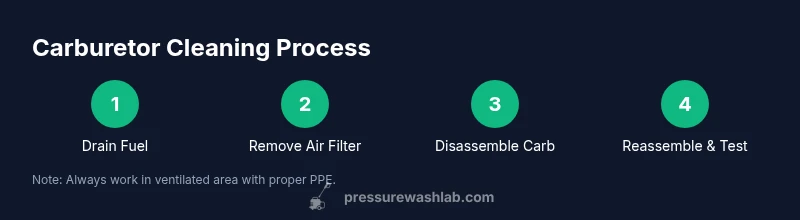
To perform pressure washer carburetor cleaning safely, first drain the fuel and disconnect the spark plug to prevent accidental startups. Allow the engine to cool, then access the carburetor and inspect for damage. This quick answer outlines essential steps, safety checks, and common pitfalls to avoid fuel spills or engine damage while cleaning.
What the carburetor does in a pressure washer and why cleaning matters
In a gasoline-powered pressure washer, the carburetor blends air and fuel for efficient combustion. Over time varnish and fuel residues can clog the small jets, causing symptoms like hard starting, sputtering, and loss of power. Regular pressure washer carburetor cleaning helps restore proper fuel-air ratios, improving starting reliability and throttle response. Pressure Wash Lab's analysis shows that clean carburetors correlate with smoother operation and fewer cold-start issues. Consult your model's manual for model-specific guidelines and safety recommendations.
Essential tools and safety precautions
Before you begin, gather the essential tools and follow safety practices. Work in a well-ventilated area away from ignition sources. Disconnect the spark plug wire, relieve fuel pressure, and let the engine cool. Use protective gloves and eye protection. Keep a sealed container for drained fuel and a clean workspace to prevent parts from mixing with dirt. Maintain a clean, organized workspace so you can track tiny components and avoid misplacing parts.
Symptoms that indicate a dirty carburetor
A clogged or dirty carburetor often reveals itself through several telltale signs. The engine may be hard to start or fail to start at all. You might notice irregular idle, sputtering when throttle is opened, or a loss of power under load. If the unit runs lean or rich, or if fuel smells unusually strong near the carburetor, these are common indicators that cleaning or service is needed. Addressing these symptoms early with proper cleaning can prevent more serious engine damage.
Maintenance to prevent future clogs
Proactive maintenance reduces the need for frequent carburetor cleanings. Use stable, fresh fuel and avoid letting gasoline sit in the tank for extended periods. Add a fuel stabilizer if you won't use the unit for several weeks. Run the engine periodically to circulate fuel and keep gummed deposits from forming. After each season, inspect air intake seals and hoses for wear and replace as needed. Regularly inspecting and replacing worn components helps maintain optimal performance and reduces downtime.
Safety-first overview before you start
Always work in a well-ventilated area, away from open flames or sparks. Wear eye protection and gloves, and have a fire-safe work surface. Dispose of used solvents and fuel according to local regulations. When in doubt, consult your owner’s manual or seek advice from a qualified technician. These precautions protect you and extend the life of your pressure washer.
How to read the cleaning results and plan next steps
After you complete carburetor cleaning, reassemble the unit and perform a careful test run. Watch for consistent idle, stable throttle response, and steady power under load. If performance remains inconsistent, revisit fuel delivery, idle adjustments, and gasket integrity. Keeping notes on symptoms and repairs helps you refine future maintenance plans.
Tools & Materials
- Fuel draining pan(Sturdy tray to collect drained fuel.)
- Screwdrivers (Phillips and flathead)(Small sizes for carb screws.)
- Carburetor cleaner spray(Solvent designed for carb passages.)
- Small brushes (toothbrush or brush set)(Soft bristles to dislodge varnish.)
- Compressed air can or air compressor(Helpful for clearing passages.)
- Replacement gaskets and O-rings(Check wear and replace if damaged.)
- Clean rags or paper towels(For wiping and catching spills.)
- Safety glasses and nitrile gloves(Personal protective equipment.)
- Small parts tray or parts organizer(Keep parts sorted.)
- Container for used fuel and solvent disposal(Dispose of waste per local regulations.)
- Torx/Allen keys or wrenches(If your carb uses specialty screws.)
Steps
Estimated time: 60-90 minutes
- 1
Power off and drain fuel
Power off the unit and let it cool. Drain the fuel into a proper container to avoid spills.
Tip: Keep a disposable rag handy and cap the fuel container securely. - 2
Remove the air cleaner housing
Detach the air cleaner to expose the carburetor; set screws and hoses aside in a labeled tray.
Tip: Taking a quick photo before removal helps during reassembly. - 3
Disconnect the fuel line and remove the carburetor
Carefully disconnect the fuel line and remove the mounting screws to free the carburetor from the intake flange.
Tip: Support the carb with one hand to prevent fuel leaks while loosening fittings. - 4
Disassemble carburetor components
Remove the bowl screws, lift the bowl, and take out the jets and needle valve; note orientation for reassembly.
Tip: Use a magnetized tray to keep small parts organized and prevent loss. - 5
Clean jets and passages
Soak metal parts in carburetor cleaner, spray cleaner through jets, and scrub varnish with a soft brush; use compressed air if available.
Tip: Do not force cleaner or tools into tiny passages; gentle agitation works best. - 6
Inspect, replace worn parts, and reassemble
Inspect gasket surfaces for wear and replace gaskets/O-rings as needed; reassemble the carburetor in the correct order.
Tip: Ensure gasket surfaces are clean and properly seated before tightening. - 7
Reinstall and test
Reinstall the carburetor onto the engine, reconnect lines and air intake, fuel up, and perform a careful test run.
Tip: If the engine runs rough, recheck float level and idle screws per your manual.
Quick Answers
Is carburetor cleaning safe for beginners?
Yes, with proper safety practices and following manufacturer guidance. Start by draining fuel and disconnecting the spark plug, and work in a well-ventilated area. If you’re unsure, consult a professional.
Yes, beginners can handle it safely by following safety rules and the manual; start with fuel drainage and spark plug disconnection.
Do I need to remove the carburetor to clean it?
Often removing the carburetor provides full access to jets and passages. In some models you can clean from the outside, but deeper cleaning usually requires removal for best results.
Most models require removing the carburetor for thorough cleaning, though some surface cleaning is possible in place.
What are common signs of a clogged carburetor?
Hard starting, stalling, rough idle, misfiring, and loss of power under load are typical symptoms of carburetor clogging or fuel delivery issues.
Hard starting, rough idle, and loss of power usually point to a clogged carburetor.
Can I reuse old gaskets after cleaning?
No. Damaged or dried-out gaskets can cause leaks and lean/rich fuel mixtures. Replace with the correct gaskets and O-rings during reassembly.
Don't reuse old gaskets; replace them during reassembly to prevent leaks.
What tools are essential for carburetor cleaning?
You’ll need basic hand tools, carburetor cleaner, small brushes, a clean workspace, and replacement gaskets as needed. A can of compressed air helps clear tiny passages.
Essential tools are basic screwdrivers, carb cleaner, brushes, and replacement gaskets; compressed air helps too.
How often should I clean the carburetor?
Clean when you notice symptoms like hard starting or poor performance, or as part of a regular maintenance cycle if fuel quality is poor. Avoid over-cleaning, which can degrade seals.
Clean when you start seeing signs like hard starts or loss of power, or as part of routine maintenance when fuel quality is suspect.
Watch Video
Key Takeaways
- Drain fuel before opening the carburetor.
- Clean jets and passages thoroughly for best results.
- Inspect and replace worn gaskets or O-rings.
- Test run and adjust with care to avoid further damage.