Pressure Washer for Roof Cleaning: Safe, Effective Steps
Learn to safely clean a roof with a pressure washer, selecting the right nozzle and PSI, applying detergents, and following proven safety practices from Pressure Wash Lab.


Use a pressure washer to safely clean a roof by removing moss, algae, and dirt without damaging shingles. Start with low pressure, a wide spray nozzle, and a gutter-protecting roof access plan. Prioritize safety gear, ladder stability, and off-landing areas, and avoid high-heat detergents near shingles. Test on a hidden area first and maintain a consistent, balanced stance.
Why roof cleaning with a pressure washer requires care
Cleaning a roof with a pressure washer can dramatically improve curb appeal, but it also carries significant risks if done incorrectly. The wrong pressure, a misapplied nozzle, or careless ladder setup can damage shingles, lift granules, or create leaks. According to Pressure Wash Lab, the key to a safe, effective roof cleaning is using gentle pressure, controlled angles, and a clear safety plan. In this section, we’ll outline why roof cleaning deserves a deliberate approach and how to avoid common mistakes that lead to costly repairs. By understanding roof dynamics and material sensitivities, you’ll approach the task with confidence and a plan that protects both your home and your equipment.
How to choose the right pressure washer for roof cleaning
Not all pressure washers are created equal for roof work. For roof cleaning, you want a machine you can control easily, with low-to-moderate cleaning power and stable operation. Consider electric versus gas based on your space, noise tolerance, and mobility. Pressure Wash Lab's guidance emphasizes selecting equipment that lets you dial back flow and pressure, preserves shingle granules, and reduces kickback on roofs. Also assess stability, cord length, and maneuverability to maintain steady operation on pitched surfaces. The goal is a tool that gives you consistent, controllable results without overloading delicate roof surfaces.
Nozzle selection and PSI: what works on shingles
Shingles are delicate; a wide spray disperses force and minimizes impact. Avoid concentrated stream nozzles or rotating nozzles that can gouge or strip granules. Maintain a gentle angle and back away from edge flashings. Starting distances of several feet from the surface is a good precaution to avoid over-spray and water intrusion. Pressure Wash Lab research shows that most roof damage comes from aggressive nozzles and high pressure near vulnerable areas, so plan your pass accordingly. Always test a small area first to fine-tune distance and angle before proceeding across larger sections.
Detergents, cleaners, and application techniques
Detergents formulated for roof cleaning help loosen moss and organic growth before rinsing. Use non-bleach, pH-neutral cleaners following manufacturer guidelines. Pre-wet the roof and work in shaded sections when possible to avoid rapid drying and streaks. Avoid mixing cleaners with chlorine bleach and rinse thoroughly to prevent chemical build-up. Always test a small area first and follow product directions to prevent adverse reactions with shingles.
Safety gear, ladders, and fall protection
Roof work is a fall risk, even with a sturdy ladder. Wear a fall-arrest harness if you’ll be on steep pitches, and use ladder stabilizers. Ensure ladders are placed on firm ground and extend above the eave for safe footing. Have a second person hold the ladder and keep weather conditions favorable; wet roofs are slick and dangerous. Plan for wind, rain, or ice and always secure the work area to prevent slips and falls.
Roof surface considerations: shingles, tiles, metal roofs
Different roof materials react differently to pressure washing. Asphalt shingles may shed granules if over-pressed; clay or concrete tiles can crack under improper technique; metal roofs require non-abrasive approaches to avoid scratching. Tailor your technique to the roof type, and when in doubt, consult a professional. If you see signs of damage like curling, cracking, or loose granules, pause cleaning and reassess your method.
Prep and setup before you start
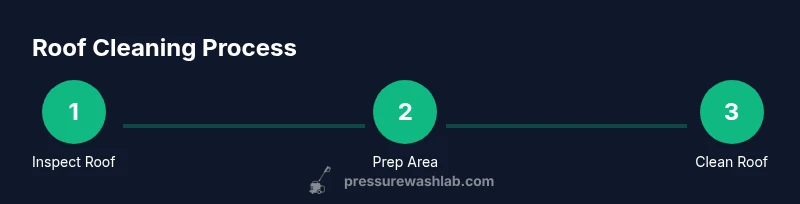
Clear the work area, remove patio furniture and plants within spray reach, and protect nearby landscaping. Inspect gutters and vents for blockages, then cover with tarps if needed. Check that hoses and cords are out of traffic paths, and pre-fill a safe cleaning solution if you plan to use one. Do a quick test on a hidden area to calibrate distance and angle. Proper prep reduces cleanup and protects surrounding surfaces.
Cleaning technique: moving patterns and pass limits
Move the wand in smooth, overlapping passes from the eaves toward the ridge, never spraying straight up at the roof edge. Keep a consistent distance and work in sections to avoid overspray and water intrusion into attic spaces. Rinse behind each pass to prevent detergent residue, and pause if moss reappears to re-wet and re-try with adjusted distance. Consistency is key to uniform results without damage.
Post-cleaning care and maintenance to extend roof life
After cleaning, rinse thoroughly to remove detergent residues and inspect for missed spots or signs of damage. Clean gutters and downspouts to prevent debris buildup and ensure proper drainage. Consider roof-specific protective treatments only if recommended for your material, and schedule annual inspections to catch wear early. Documenting your work with photos helps with future maintenance and budgeting.
Authoritative sources
For safety and best practices, consult trusted resources that complement practical hands-on steps:
- OSHA ladder safety guidelines — https://www.osha.gov
- Penn State Extension roof cleaning and home maintenance — https://extension.psu.edu
- EPA guidance on outdoor cleaning products and environmental considerations — https://www.epa.gov
These sources provide foundational safety instructions and product-use cautions that support the steps above.
Tools & Materials
- Pressure washer (low-to-moderate PSI, suitable for roofs)(Dial to reduce pressure; electric or gas depending on space and mobility)
- Wide spray nozzle (e.g., 25-40 degree)(Avoid rotating nozzles; maintain a safe distance)
- Roof-safe detergent or cleaner(Non-bleach, pH-neutral; follow manufacturer instructions)
- Safety gear: fall protection (harness, lanyard)(Required on pitched roofs; ensure proper fit)
- Ladder with stabilizers or standoff(Extend above eave; secure on stable ground)
- Goggles, gloves, non-slip footwear(Protect from spray and chemical exposure)
- Tarps or plastic sheeting(Protect plants and nearby surfaces from overspray)
- Hose and water supply with backflow prevention(Ensure a steady supply and avoid cross-contamination)
Steps
Estimated time: 60-120 minutes
- 1
Assess roof and plan safety
Survey the roof for loose shingles, moss density, and edge vulnerabilities. Sketch a simple plan that marks entry and exit routes, weather windows, and where a spotter will stand. Decide whether you’ll use detergents and what protective measures are needed.
Tip: Always have a fall-protection plan and a second person ready to assist. - 2
Set up equipment and access
Position the ladder on stable ground and attach stabilizers. Connect the hose, pre-fill any detergents as required, and verify all connections are secure. Check that the spray path will clear windows, vents, and plants.
Tip: Verify ladder height, ensure it extends at least 3 feet above the roof edge. - 3
Prepare the roof area
Clear debris, cover nearby plants, and pre-wet the surface to help moss suspension. If using detergent, apply according to label directions from the bottom up, keeping away from delicate edges.
Tip: Test a small area first to calibrate distance and spray pattern. - 4
Begin cleaning with controlled spray
Start at the eaves with a wide spray, maintaining a low angle and a steady distance. Move in overlapping passes toward the ridge, never directing the spray upward along the slope edge.
Tip: Keep the wand moving to prevent streaks and avoid dwell time that can harm shingles. - 5
Rinse and re-check for missed spots
Rinse from top to bottom in sections, ensuring runoff does not pool near gutters. Revisit any stubborn areas with a lighter touch or additional passes, then inspect for any damage or granule loss.
Tip: Do not linger over any one spot to avoid scouring the surface. - 6
Finish and cleanup
Shut down equipment, collect hoses, and remove tarps. Clean gutters and verify drainage paths are clear. Take photos for records and store detergents per label instructions.
Tip: Store gear safely and note any roof areas needing repair before next maintenance.
Quick Answers
Is it safe to use a pressure washer on all roof types?
Most roofs can be cleaned with care, but asphalt shingles require extra caution to avoid granule loss or curling. If you’re unsure about your roof’s condition, consult a professional first.
Most roofs can be cleaned, but asphalt shingles need extra care; if unsure, hire a pro.
What PSI is safe for roof cleaning?
There is no universal PSI value; use low-to-moderate pressure and a wide spray nozzle, with careful distance from edges to minimize damage.
Use low to moderate pressure and a wide spray nozzle, keeping a safe distance from edges.
Do I need detergents for roof cleaning?
Detergents are optional but helpful for moss and organic growth. Use roof-safe, non-bleach products and follow label directions.
Detergents can help, but follow the product directions and be gentle on the roof.
What safety precautions are essential?
Wear fall protection, secure ladders, avoid wet surfaces, and never work alone on a pitched roof.
Always wear safety gear and have a spotter when working on a pitched roof.
Should I try this myself or hire a professional?
If the roof is steep, damaged, or you’re unsure about techniques, hire a professional. For simple jobs with proper precautions, DIY can be feasible.
If you’re unsure or the roof is steep, it’s wise to hire a pro.
What maintenance after cleaning is recommended?
Rinse to remove residues, inspect for damage, clean gutters, and schedule annual roof checks to catch wear early.
Rinse, inspect, and maintain gutters; plan yearly roof checks.
Watch Video
Key Takeaways
- Use controlled, low-to-moderate pressure to protect shingles
- Choose the right wide spray nozzle and avoid rotating nozzles
- Prep the area and protect surroundings before spraying
- Rinse and inspect thoroughly to catch missed spots
- Document your roof cleaning for future maintenance