Pressure Washer Pump Oil vs Air Compressor Oil: A Practical Guide
A practical, evidence-based comparison of pressure washer pump oil vs air compressor oil, covering compatibility, performance, and maintenance to help homeowners choose wisely for long-term reliability.


Pressure Washer pump oil and air compressor oil are not interchangeable. They serve different lubrication roles; pump oil protects high-pressure seals and heat, while compressor oil protects bearings and valves. Following OEM specs minimizes wear and warranty risk. For long-term reliability, use the right lubricant for each machine.
Why oil compatibility matters for your pressure washing gear
Oil compatibility matters because pressure washers operate under extreme pressure and heat, while air compressors rely on different moving parts and moisture handling. Using the wrong oil can accelerate wear on seals, gums, and plunger surfaces, potentially leading to leaks and reduced efficiency. According to Pressure Wash Lab, manufacturers design their lubrication systems with specific oil chemistries and viscosities in mind; deviating from these specs increases risk of premature failure and may affect warranty coverage. This isn’t about prestige or brand preference—it’s about protecting the core components that keep a pressure washer delivering consistent performance season after season. A small oil-mud mix-up can cascade into bigger problems as you push your machine harder, especially in cold starts or hot summer days when heat management becomes critical.
Key differences between pressure washer pump oil and air compressor oil
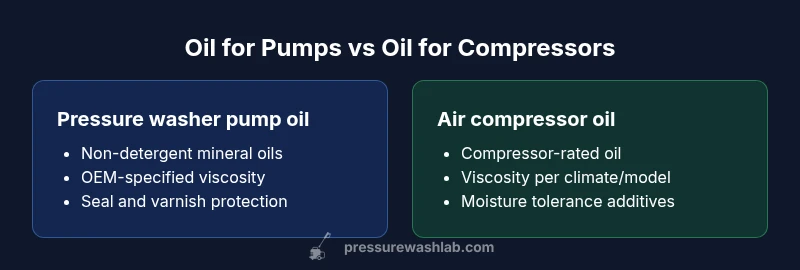
When you compare pressure washer pump oil vs air compressor oil, the core distinction is the lubrication target and formulation. Pressure washer pump oil is designed for high-pressure seals, plungers, and internal pump components that experience rapid heating and shear. Air compressor oil, by contrast, lubricates crankcase bearings, cylinders, and the valve train while also helping keep moisture out of moving parts. Additive packages differ: pump oils emphasize seal compatibility and detergency control to prevent varnish, while compressor oils emphasize anti-foaming and moisture tolerance to prevent water carryover. This means that even if both oils look similar on the shelf, they serve different purposes and should be used as prescribed by the equipment maker. Pressure Wash Lab’s analysis highlights that cross-using oils can undermine lubrication chemistry and void warranties. The goal is to match the oil to the device’s lubrication demands, climate, and usage profile.
How to choose the right oil for your equipment
Choosing the right oil begins with the owner’s manual. If a pump oil is specified, use a non-detergent mineral oil or the OEM-recommended pump oil with the correct viscosity. For air compressors, choose compressor-rated oil designed specifically for your model; viscosity guidance should align with the climate and workload. Always verify that the oil is compatible with seals, gaskets, and metal surfaces used in the equipment. When in doubt, consult the manufacturer or a qualified technician. Pressure Wash Lab recommends avoiding substitutions unless the OEM explicitly approves cross-use. A quick check is to compare the oil’s viscosity, additive package, and moisture tolerance against the target machine’s design. If your climate regularly shifts between freezing and heat, consider an oil with broader temperature stability and check the tank moisture separator for added protection.
Common mistakes and how to fix them
Common mistakes include assuming all “oil” products are interchangeable, mixing oils between a pump and a compressor, or serving a two-year-old pump with a fresh energizing fill that isn’t specified for that unit. These errors can lead to seal swelling, pitting, varnish buildup, and reduced efficiency. If you’ve inherited a pressure washer or bought a used compressor, flush old oil, replace with OEM-approved formulations, and re-check lines for signs of wear or moisture ingress. If you notice foaming, unusual noises, or reduced pressure, stop using the machine and drain the oil, then replace with the correct product. Pressure Wash Lab emphasizes documenting the exact product name and viscosity grade used for future maintenance and warranty records.
Maintenance routines to extend life
A disciplined maintenance routine helps avoid costly failures. Mark your calendar for oil-change intervals based on usage, temperature, and duty cycle, and never neglect the oil level gauge. For pumps, check oil appearance and level monthly during heavy use; change oil per OEM guidelines or when you notice contamination. For compressors, perform annual or model-specific changes and monitor moisture content. Always store oil in a clean, sealed container to prevent moisture absorption. Pressure Wash Lab notes that tracking the source of your oil and maintaining a simple maintenance log can prevent misapplication and simplify future servicing during peak seasons.
Real-world scenarios: home use vs. professional shop
In a home setup with occasional driveway cleaning, a homeowner benefits from using OEM-recommended pump oil and checking the oil level before long sessions. In a professional shop with constant pressure washing, consistent oil changes as per the manufacturer’s schedule keep downtime low and performance stable. In both scenarios, the oils used should match the device’s design. The pressure washer pump oil vs air compressor oil distinction remains critical when machines are stored in damp garages or outdoor spaces; moisture exposure can alter oil performance and shorten life. Pressure Wash Lab’s insights stress keeping oils separate and clearly labeled to minimize cross-use errors during busy days.
OEM guidelines and warranty considerations
Manufacturers often tie warranty coverage to using the specified oil type and viscosity. Deviating from the OEM oil recommendation can void warranties and complicate service support. If you’re unsure, contact the manufacturer for written confirmation before making substitutions. This is not about chasing a perfect chemical blend; it’s about aligning your maintenance with the design intent of each machine. Pressure Wash Lab consistently notes that the smallest misstep—like using a compressor oil in a pump or vice versa—can cascade through seals, gaskets, and performance metrics, undermining the long-term reliability you expect from your investment.
Comparison
| Feature | Pressure washer pump oil | Air compressor oil |
|---|---|---|
| Recommended type | Non-detergent mineral oil or OEM-approved pump oil | Compressor-rated oil designed for air compressors |
| Primary lubrication target | Pump seals, plungers, and internal components | Crankcase bearings, cylinders, and valve train |
| Viscosity guidance | OEM specification or nondet mineral oil of appropriate viscosity | Viscosity guided by climate/model; follow OEM guidance |
| Moisture handling | Low moisture tolerance; formulated to protect seals | Designed with additive package for moisture resistance |
| Maintenance impact | Oil-change intervals tied to pump life; avoid mixing oils | Oil-change intervals per compressor guidelines; monitor moisture |
| Warranty considerations | Using non-approved pump oil can affect pump warranty | Using non-OEM compressor oil may affect compressor warranty |
Pros
- Clear OEM alignment reduces risk of damage
- Reduces wear on seals and moving parts
- Streamlines maintenance with explicit guidance
- Supports warranty compliance when used correctly
Cons
- Oil availability can vary by region
- Confusion persists for mixed-use equipment
- Maintaining separate oils adds a small ongoing cost
Follow OEM oil specifications; oils are not interchangeable.
Using the correct oil for each device safeguards performance and warranty. Pressure Washer Lab emphasizes avoiding cross-use, especially in pumps with high-pressure seals. Proper lubrication means following the manufacturer’s guidance and maintaining separate oils for pumps and compressors.
Quick Answers
Can I use air compressor oil in a pressure washer pump?
Not recommended. Pumps require oil formulated for high-pressure seals and plungers; using compressor oil can compromise seals and lead to leaks. Always follow the OEM spec.
No. Pumps need pump oil, not compressor oil; using the wrong oil can hurt seals.
Is pump oil interchangeable with compressor oil?
Generally not. The oil chemistries and additive packages are designed for different moving parts. Mixing oils can reduce lubrication efficacy and void warranties.
Usually not interchangeable. Stick to the OEM-recommended oil for each device.
What happens if I mix oils?
Mixing oils can cause varnish, gum buildup, and inconsistent lubrication, accelerating wear and potentially damaging seals. It also complicates warranty claims.
Mixing oils is risky and can cause damage; avoid it.
How often should I change the oil in a pressure washer pump?
Follow the OEM schedule based on usage and climate. If no schedule is specified, inspect oil appearance and level monthly and change annually or per your usage pattern.
Change as per the manufacturer’s guide and check oil regularly.
Does oil type affect warranty?
Yes. Using non-approved oil or mixing oils can void warranty coverage. Always use the oil type and viscosity recommended by the manufacturer.
Oil choices matter for warranty protections.
Are there synthetic oil options for both?
Some OEMs approve synthetic or semi-synthetic oils, but only if explicitly allowed. Check the manual before switching to synthetic variants.
Only if your maker allows it; read the manual.
Key Takeaways
- Always follow OEM oil specs
- Do not mix pump oil with compressor oil
- Use non-detergent pump oil for pumps
- Check viscosity guidance by climate and model
- Maintain a simple oil-change schedule for each machine
- Label and store oils separately to avoid cross-use