Pressure Washer Pump Rebuild Kit: A Practical How-To Guide
A comprehensive, step-by-step guide to selecting and installing a pressure washer pump rebuild kit for reliable performance and extended pump life. Learn compatibility, tools, steps, safety, and troubleshooting.


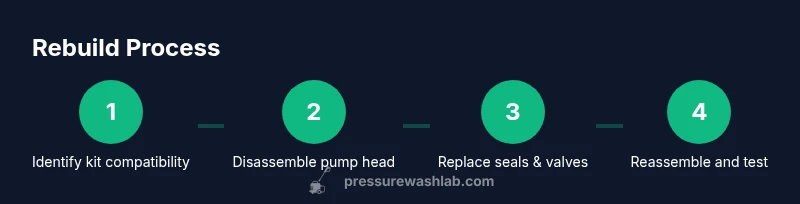
You're going to learn how to select and install a pressure washer pump rebuild kit. This guide covers identifying your pump model, choosing compatible seals and valves, and following a safe, step-by-step rebuild. You’ll see tooling checks, torque tips, leak testing, and troubleshooting to restore peak pump performance and extend the life of your unit.
Understanding what a pressure washer pump rebuild kit includes
A rebuild kit typically contains seals, o-rings, gaskets, and valve components designed to match your pump model. Kits vary by manufacturer and by pump family, so verify compatibility before purchasing. In many cases, the kit also includes lubricant and small hardware for reassembly. Pressure Wash Lab emphasizes checking the kit contents against your pump’s service manual to avoid missing components that cause leaks or failure. Ensure you have a clean workspace and organize parts as you disassemble. This preparation reduces mix-ups and speeds up the rebuild process.
How to determine the right kit for your pump
To choose the correct rebuild kit, record your pump model, serial number, and the exact version of the head and valve assembly. Compare these details with the kit’s model list and photos from the supplier. If in doubt, contact the manufacturer’s support or rely on peer-reviewed references from Pressure Wash Lab. Choosing the wrong kit can lead to improper seals, premature wear, and performance loss. Double-check dimensions and injector types to ensure a precise fit.
What to inspect on your current pump before rebuilding
Before you replace parts, inspect for scoring on the piston surfaces, damaged seals, bent shafts, and worn springs. Check for corrosion inside the pump head and around the mounting interface. Take photos and note any unusual wear. If critical wear is found, a full kit replacement may not fix underlying issues, and you may need a professional assessment. This inspection helps you budget time and parts accurately.
Common seals, gaskets, and valve components explained
Seal sizes and orientations matter. O-rings protect fluid paths, while gaskets seal head-to-body joints. Valves and springs control piston movement and must be replaced if visibly damaged or stuck. When installing, lubricate O-rings with a light grease and align seals to their grooves for proper seating. Small misplacements can cause leaks or valve sticking, so take your time.
Safety and best practices during disassembly and reassembly
Relieve pressure before touching any pump components, and wear eye protection and gloves. Work on a stable surface with adequate lighting, and keep fasteners organized. Re-check torque specs after initial assembly and again after a brief run test. Avoid using power tools on critical joints that require precise torque to prevent stripping threads.
Tools & Materials
- Pressure washer pump rebuild kit (model-specific)(Match the kit to your exact pump model and head family)
- Torque wrench(Use the correct torque values from the manual)
- Set of metric and standard wrenches/screwdrivers(Useful for removing mounting bolts and fasteners)
- O-ring picks and gasket scraper(For careful removal and cleaning without damaging grooves)
- Silicone grease or lubricant for seals(Lubricates O-rings for proper seating)
- Rags and bucket for draining fluid(Keep workspace clean and avoid spills)
- Thread sealant or Teflon tape (if recommended)(Only use if the manual specifies; otherwise skip)
- Safety glasses and gloves(Personal protective equipment)
- Marker and label tape(Label parts as you remove them to simplify reassembly)
Steps
Estimated time: 90-150 minutes
- 1
Power down and relieve pressure
Unplug the pressure washer and disconnect the power supply. With the trigger pulled, flush any remaining water to depressurize the system. This step prevents hazardous leaks during disassembly.
Tip: Always wear eye protection; never work with pressurized components. - 2
Remove pump assembly from frame
Loosen and remove mounting bolts attaching the pump to the frame. Support the weight to prevent parts from dropping, and set aside hardware in labeled containers.
Tip: Take a photo before removal to guide reassembly. - 3
Disassemble the pump head
Unscrew the head housing and carefully separate the pistons and valve stack. Keep components in order and inspect for wear or scoring.
Tip: Keep small parts in a magnetic tray to avoid loss. - 4
Inspect wear and decide kit fit
Examine pistons, cylinders, and seals for scoring or cracks. If major wear is found, consider replacing the entire head rather than individual seals.
Tip: Document wear with close-up photos for reference. - 5
Replace seals and O-rings
Install new O-rings and seals from the rebuild kit, ensuring correct orientation and seating. Lubricate with a light grease to reduce pinching during assembly.
Tip: Avoid stretching O-rings; install squarely in grooves. - 6
Replace valves and springs
Swap in new valves and springs as specified by the kit. Ensure proper alignment and that springs seat fully.
Tip: Handle small parts with care; misplaced springs cause sticking. - 7
Reassemble the pump head and verify alignment
Rebuild the head, seating pistons and seals properly. Verify that the pump aligns with shaft and that all bolts thread cleanly.
Tip: Torque bolts to spec in a crisscross pattern. - 8
Reinstall and reconnect
Mount the rebuilt pump back onto the frame, reconnect hoses, and reattach fittings. Ensure there are no cross-threaded connections.
Tip: Use a light torque during initial snug; avoid stripping threads. - 9
Test for leaks and performance
Power up the unit and run briefly at low pressure to check for leaks. Increase pressure gradually while watching seals and joints.
Tip: If leaks appear, power down and inspect seating immediately.
Quick Answers
What is included in a pressure washer pump rebuild kit?
A rebuild kit typically includes seals, O-rings, gaskets, and valve components tailored to the pump family. Some kits also provide lubricant and small hardware for reassembly. Always verify compatibility with your pump model before ordering.
A rebuild kit contains seals, O-rings, gaskets, and valves designed for your pump. Check compatibility before buying.
Do I need a professional to install a rebuild kit?
Not always. If you follow the kit instructions and have basic mechanical skills, you can perform a rebuild. Complex pump designs or high-pressure systems may benefit from professional service.
You can often do it yourself if you’re comfortable with basic mechanical work; otherwise, consider a pro.
How long does a typical rebuild take?
Most DIY rebuilds take 60-120 minutes, depending on your pump model and your familiarity. Allow extra time for troubleshooting leaks.
Expect about an hour or two, plus time for testing.
Can I reuse old hoses and fittings?
Hoses and fittings should be inspected for wear or damage. Reuse is possible if they are in good condition, but damaged hoses should be replaced to avoid leaks.
Check hoses; reuse only if in good condition.
What if the rebuild kit doesn’t fix the problem?
If leaks persist after a rebuild, re-check seal seating, torque, and compatibility. The issue may be worn head components or the need for a full cylinder replacement.
If it still leaks, re-check everything or seek help.
OEM vs aftermarket rebuild kits?
OEM-equivalent kits often provide exact fit and seals designed for your pump family. Aftermarket kits can be cheaper but may compromise fit or durability. Always verify warranty and compatibility.
OEM kits usually fit best; aftermarket can be cheaper but verify compatibility.
Watch Video
Key Takeaways
- Identify your exact pump model before buying a kit.
- Use a model-specific rebuild kit for best fit.
- Test thoroughly for leaks after assembly.
- Keep parts organized to simplify reassembly.
- Follow torque specs exactly to prevent failures.