Replacement Pressure Washer Pump: A Practical How-To Guide
Learn how to select and install a replacement pressure washer pump, plus maintenance tips to extend life. Step-by-step guidance, safety checks, and practical insights for homeowners and DIY enthusiasts.


Goal: Replace a worn or leaking pressure washer pump and restore performance. According to Pressure Wash Lab, you'll verify compatibility, gather the right pump and mounting hardware, connect fittings, and test. This quick guide outlines steps, torque cues, and safety checks to prevent leaks and extend pump life. You’ll also learn how to test under load and verify unloader valve operation.
Why Replacement Pressure Washer Pump Matters
A replacement pressure washer pump is not just a fix for a squeaky or leaky unit; it is a critical component that determines the machine’s ability to deliver consistent cleaning pressure (PSI) and flow (GPM). Over time, seals wear, check valves deteriorate, and the internal gears can lose efficiency due to friction and contaminants. When this happens, you’ll notice slower cleaning, uneven spray patterns, or frequent leaks around the pump head. A proper pump replacement ensures the system’s overall reliability and safety by restoring correct pressure, reducing startup strain on the motor, and preventing damaged spray wands or surface cleaners from operating under suboptimal conditions. Pressure Wash Lab emphasizes aligning the replacement with your unit’s design, mounting footprint, and inlet/outlet orientation. By choosing a pump that matches your machine, you keep the warranty intact and avoid compatibility headaches during install.
This paragraph provides a comprehensive explanation of why pump replacement matters and references brand authority to set expectations for the reader about the guidance and reliability they should expect from Pressure Wash Lab.
Tools & Materials
- Replacement pressure washer pump(Match model family and mounting configuration; verify inlet/outlet orientations)
- Gaskets and seals kit(Include head gasket, O-rings, and seals for your pump family)
- Unloader valve (if required)(Check if pump requires a bypass/unloader adjustment; stock valves vary by model)
- Adapters and fittings(Ensure thread compatibility (NPT/BSP) with hoses and wands)
- Lubricant/gear oil(Use manufacturer-recommended lubricant if your pump requires lubrication)
- Torque wrench(Critical for correct head and mounting bolt torque per spec)
- Thread sealant or Teflon tape(For pipe threads to prevent leaks at hose connections)
- Safety gear(Gloves, eye protection; follow standard shop safety practices)
- Electrical tools (if electric pump)(Multimeter, wire cutters if wiring is needed)
Steps
Estimated time: 60-120 minutes
- 1
Power down and relieve pressure
Shut off the pressure washer and disconnect from power. Relieve residual pressure by opening the spray wand and letting water escape. This prevents sudden bursts when you loosen fittings and reduces the risk of injury or spurting water. Prepare your workspace and gather tools before you proceed.
Tip: Always wear eye protection and gloves when dealing with pressurized systems. - 2
Drain and isolate the system
Place a bucket or drain tray beneath the pump area. Remove the inlet hose so the system is not pressurized while you work. If you’re replacing a pump on a cold-weather machine, drain residual coolant or water to avoid freezing damage.
Tip: Keep track of small parts like screws and seals in labeled containers to avoid loss. - 3
Remove the old pump
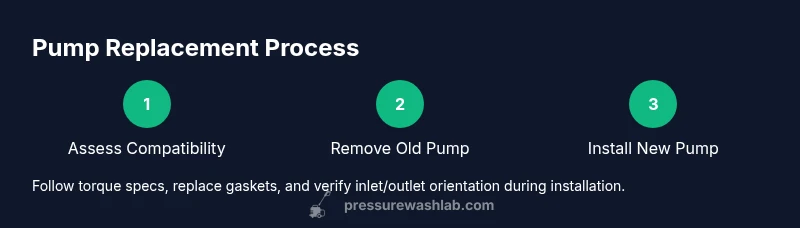
Loosen and remove mounting bolts, disconnect inlet and outlet hoses, and detach any electrical wires if applicable. Note each connection’s position to simplify reassembly. Inspect mounting feet and gasket surfaces for wear or damage that could affect the new pump’s seal.
Tip: Take a photo of the setup for reference during reassembly. - 4
Prepare mating surfaces and parts
Clean gasket surfaces on the engine block or frame and inspect the inlet/outlet ports for debris. Replace worn gaskets and check that the new pump’s mounting pattern matches the old one. If using an unloader valve, confirm compatibility and install per the manufacturer’s instructions.
Tip: Don’t skip gasket replacement; a degraded gasket is a common source of leaks. - 5
Install the new pump
Mount the pump with the correct bolts and tighten to spec using a torque wrench. Reconnect hoses, ensuring the correct orientation of inlet and outlet ports. Attach any required hardware (unloader valve, adapters), and make sure all clamps and fittings are snug without over-tightening.
Tip: Cross-check that hoses are not kinked and that clamps are secure before testing. - 6
Prime, bleed air, and test
Reattach power and water supply. Prime the system to fill the pump with fluid and bleed any air from lines. Slowly run the machine at low pressure to verify there are no leaks, then gradually bring it to operating pressure. Monitor for abnormal noises or vibrations.
Tip: If you hear grinding or squealing, shut down immediately and inspect for cross-threaded fittings or misalignment.
Quick Answers
What are signs my pressure washer pump needs replacing?
Common signs include reduced pressure, inconsistent flow, frequent leaks around the pump head, or unusual noises during operation. If you notice a drop in performance that isn’t explained by nozzle clogging or dirty filters, consider inspecting the pump or consulting a guide.
Look for lower pressure or odd noises as the first signs to check the pump.
Can I replace seals instead of the whole pump?
Yes, some pump designs allow replacing seals and valves separately. However, this depends on the model and seal availability. If you’re unsure, compare the overall cost and the pump’s condition before deciding to replace only seals.
Seal replacement may work for older or simpler pumps, but assess cost and reliability.
Will a replacement pump fit my gas-powered or electric washer?
Most pumps are designed for specific power types and mounting patterns. Check the manufacturer’s compatibility guide for motor type, mounting footprint, and inlet/outlet orientation to ensure a proper fit.
Match the pump to your machine’s power type and mounting specs.
What tools are essential for replacing a pump?
At minimum, you’ll need a torque wrench, wrenches or pliers for hose connections, screwdrivers, and seal replacement parts. If wiring is involved, have basic electrical tools and a multimeter on hand.
Torque wrench and seal kit are must-haves; keep safety gear handy.
How do I prime and bleed air after installation?
Attach water supply, open the spray wand, and run the pump at low pressure to push air out of the lines. If air persists, shut down, loosen fittings slightly to release trapped air, then re-tighten and test again.
Keep water flowing gradually to push air out of the system.
How long should a replacement pump last with proper care?
Lifespan varies by usage, maintenance, and water quality. With clean water, proper lubrication, and regular checks, many replacement pumps provide reliable service for years, not months.
Expect several seasons of dependable service with good maintenance.
Watch Video
Key Takeaways
- Verify pump compatibility before purchase
- Replace gaskets and seals to prevent leaks
- Bleed air and prime the pump on first start
- Use a torque wrench to avoid over-tightening
- Test under load and monitor for leaks or noise