Undercarriage Cleaning with a Pressure Washer: A Practical Guide
Learn to safely clean your car's undercarriage using a pressure washer. This practical guide covers prep, safety, nozzle tips, detergents, and maintenance—backed by Pressure Wash Lab insights.


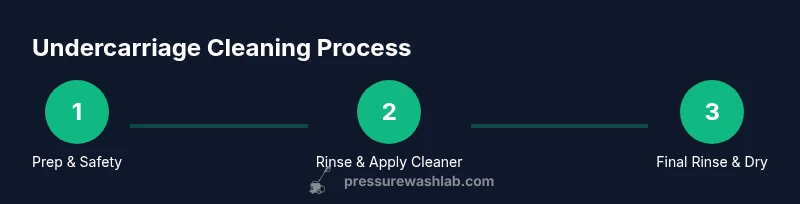
Prepare to safely clean the undercarriage of your vehicle with a pressure washer under car setup. This quick answer outlines the goal and the essential requirements: a suitable pressure washer with adjustable psi, the correct nozzle, biodegradable cleaner, protective gear, and a tidy workspace. Follow the steps for safe prep, technique, and post-clean inspection.
Why undercarriage cleaning matters
Dirt, road salt, oil, and debris accumulate along the chassis, frame rails, and exhaust shields. Left unchecked, this grime can hide corrosion, leaks, and mounting wear. Regular attention to the undercarriage helps protect your investment, spot issues early, and improve overall vehicle longevity. In practical terms, the goal is to remove baked-on grime without harming protective coatings or nearby components. Informed car owners know that this maintenance task pays dividends over time. According to Pressure Wash Lab, neglecting the undercarriage can lead to accelerated rust and hidden damage. A practical approach uses a pressure washer under car to flush away grit from rails, frame, and shields, while steering clear of sensitive sensors, wiring, and connections. This guide prioritizes a safe, controlled method that homeowners and DIYers can follow. You’ll learn how to set up your workspace, choose the right nozzle, and apply detergents or degreasers without creating runoff or splash onto your vehicle’s painted surfaces. By the end, you’ll feel confident tackling undercarriage cleaning with a systematic routine rather than a random spray.
Safety and prep prerequisites
Cleaning the undercarriage requires attention to safety and environmental considerations. Park on a level, well-lit surface, engage the parking brake, and chock the wheels to prevent movement. Clear the area of pets and bystanders and shield nearby plants or pavement from runoff. Wear protective eyewear and gloves, and keep a dry exit path for your hands and hose. Pressure Wash Lab analysis emphasizes that protective gear reduces risk, and a controlled setup minimizes splash onto sensitive components. If you’re unsure about the vehicle’s electronics or wiring, consult the owner’s manual or a professional. Always test your method on a small, inconspicuous area first, then broaden to larger sections if the spray angle and distance are controlled.
Tools, settings, and gear
A successful undercarriage cleaning relies on the right toolkit and sensible settings. Use a pressure washer with adjustable PSI and a wide-angle nozzle (e.g., a 25-degree tip) to avoid concentrated hits on delicate parts. An extension wand can help reach tight spots without moving the vehicle. Have biodegradable cleaner or degreaser on hand, and consider a spray bottle for quick pre-wetting of stubborn grime. Protective covers or tarps prevent runoff from splashing onto the body or pavement. A pair of wheel chocks, a sturdy ladder (if needed for access), soft brushes for crevices, and towels for drying complete the setup.
Detergents, degreasers, and protecting sensitive areas
Biodegradable cleaners designed for automotive use are preferred to minimize environmental impact. Apply cleaner to heavily soiled sections after a pre-rinse to help break down grease, oil, and road grime. Avoid direct contact with electrical connectors, sensors, and exposed wiring; if necessary, cover these components with plastic or protective sheathing. Do not mix cleaners with other chemicals. Rinse away residues thoroughly to prevent streaks or residue buildup. Pressure-Wash Lab’s guidance highlights testing any cleaner on a hidden area first and following label directions for dilution and dwell time.
Planning the cleaning: zones and sequence
Approach the job like a mini project: start at the front and work toward the rear, rinsing as you move to prevent dry spots. Prioritize the most heavily soiled zones—front suspension cradle, control arms, and exhaust shields—before moving to less dirty sections. Map out your spray pattern to minimize overlap and avoid soaking sensitive areas such as the catalytic converter heat shield and wiring harnesses. Establish a routine: pre-wet, apply cleaner to stubborn spots, rinse, and then perform a final, careful pass with the spray at a greater distance.
Step-by-step technique: approach and distance
Begin with a gentle pre-rinse to remove loose debris and prevent mud from splashing back onto clean areas. Hold the wand at a modest distance and sweep in steady, overlapping motions; never linger on one spot. Lock your wrist and move with a smooth, wide arc to maximize coverage while minimizing pressure spikes. For stubborn grime, apply cleaner and give it a short dwell time before rinsing. If you encounter a stubborn spot near a hose or sensor, pause, reposition, and spray from a safer angle.
Rinse, inspection, and drying
After the main cleaning, perform a thorough rinse from front to back and top to bottom to ensure removal of all cleaner residues. Inspect for missed spots, rust, or seal damage; a flashlight helps spot areas that iron grime masked. Use towels to dry exposed surfaces and prevent water spots in crevices. If you notice anything unusual, stop and reassess rather than forcing a deeper clean. A final walk-around ensures you didn’t miss sensitive areas.
Post-clean maintenance and storage
Rinse hoses, wands, and brushes with clean water and let them dry completely before storing in a cool, dry place. Wipe down wheels and metal surfaces to prevent water spotting and corrosion. Keep a log of any findings from the undercarriage inspection and address them promptly. For future cleanings, store biodegradable cleaners in a cool area away from direct sunlight and label containers for easy reference. A well-maintained toolkit saves time and reduces the risk of damage on the next job.
Environmental considerations and tips
Be mindful of runoff. If you’re cleaning on an impervious surface, collect runoff with tarps or a catch basin when possible, and dispose of dirty rinse water according to local regulations. Use biodegradable cleaner only as directed and avoid mixing chemicals. Keep pets away during cleaning and ensure you have a stable footing when bending or reaching under the vehicle. Staying mindful of the environment makes undercarriage maintenance safer and more responsible.
Troubleshooting and common mistakes
Common mistakes include using too high pressure near the exhaust, wiring, or brake lines; failing to cover sensitive parts; and neglecting to rinse thoroughly, which leaves residue. If spray patterns appear erratic or you hear unusual sounds from the washer, stop and inspect the setup. Regularly check hoses for wear or leaks, and never spray directly at a gasket or seal from too close a distance. With patience and the right technique, undercarriage cleaning becomes more predictable and safe.
Tools & Materials
- Pressure washer with adjustable PSI(Use a wide-angle nozzle; avoid high-velocity hits on sensitive components)
- Hose long enough to reach the undercarriage(Ensure there are no kinks; maintain steady water supply)
- Nozzle tips (15° or 25°)(Avoid zero-degree tips; test distance first)
- Extension wand (optional)(Helps reach tight spots without repositioning the vehicle)
- Biodegradable cleaner or degreaser(Follow label directions; test on inconspicuous area first)
- Protective eyewear and gloves(Safety first; shield eyes from spray and debris)
- Tarps or plastic sheeting(Shield plants and pavement from runoff)
- Wheel chocks(Stabilize vehicle; keep wheels from rolling)
- Soft-bristle brush(For stubborn grime in crevices)
- Drying towels(Prevent water spots; aides inspection)
Steps
Estimated time: 60-90 minutes
- 1
Prep the area and vehicle
Move the vehicle to a level, dry surface. Engage parking brake, chock wheels, and protect nearby plants with tarps. Put on safety glasses and gloves. Wipe the undercarriage area is clear of loose weight or obstacles before starting the washer.
Tip: Have a friend hold a flashlight to spot hidden grime as you begin. - 2
Set up the washer and nozzle
Attach the wide-angle nozzle, connect water supply, and test spray on a inconspicuous patch of metal surface. Adjust spray distance so that the jet cleans without striking metal components directly.
Tip: Begin with a larger spray angle and increase distance if you see chipping or spray deflection. - 3
Pre-rinse the undercarriage
Rinse from front to back to remove loose dirt. Keep the nozzle moving in slow, overlapping sweeps to avoid concentrating spray in one spot.
Tip: Avoid staying too long on a single area to prevent splash onto sensitive parts. - 4
Apply cleaner to heavy grime
Apply a biodegradable degreaser to areas with the toughest grime and allow a brief dwell time. Do not spray cleaner directly on electrical components or sensors.
Tip: Test in an inconspicuous area first to confirm no staining or damage. - 5
Rinse thoroughly
Rinse with a broad sweep, maintaining distance and overlap. Move to adjacent zones, ensuring all cleaner residues are washed away.
Tip: Use a second pass at a greater height if runoff collects near seams. - 6
Focus on stubborn pockets
Targets recessed areas using a closer distance and angled sweep. Do not apply excessive pressure in confined spaces.
Tip: If a spot remains dirty, pause, reposition, and reapply at a safer angle. - 7
Final rinse and dry
Perform a final rinse to remove any remaining residue. Dry exposed areas with towels and inspect for missed spots or corrosion.
Tip: A quick toweling also helps spot potential rust lurking under the frame. - 8
Store equipment
Turn off equipment, release pressure, and dry hoses and wands before storing. Keep cleaners in labeled, cool containers away from sunlight.
Tip: Regularly inspect hoses for wear and replace as needed.
Quick Answers
Is it safe to pressure wash the car’s undercarriage?
Yes, when you follow proper safety steps: use a wide-angle nozzle, maintain distance, cover sensitive parts, and avoid electrical components. Start slowly and test on a small area before proceeding.
Yes, with caution. Start with a wide spray, keep some distance, and protect sensitive areas.
What nozzle should I use for undercarriage cleaning?
A wide-angle nozzle such as 15° or 25° is recommended for undercarriage cleaning. Avoid zero-degree nozzles which can damage metal and components.
Use a wide-angle nozzle and avoid zero-degree tips.
Can I use detergent or degreaser on the undercarriage?
Yes, use a biodegradable automotive cleaner. Follow label directions and test first in a hidden area to ensure no staining or corrosion.
Yes, biodegradable cleaners work well when used as directed.
How should I protect electrical components and sensors?
Cover or shield exposed wiring and sensors before applying cleaner. Do not spray directly onto electrical parts and avoid prolonged dwell on sensitive areas.
Protect electrical parts by covering them and avoid direct hits.
Do I need to rinse after applying cleaner?
Yes. Rinse thoroughly from front to back to remove all cleaner residues. This minimizes streaks and corrosion risk.
Yes—rinse thoroughly to remove all cleaner.
What maintenance steps follow the cleaning?
Dry exposed areas, inspect for damage, and store tools properly. Keep cleaners sealed and away from heat.
Dry and inspect after cleaning, then store everything properly.
Watch Video
Key Takeaways
- Protect surrounding areas and trim the spray distance.
- Use wide-angle nozzle and controlled sweeps.
- Rinse thoroughly and inspect for missed spots.
- Choose biodegradable cleaners and minimize runoff.
- Store tools properly after each job.