Pressure Washer vs Hose Foam Cannon: Which Setup Wins?
A data-driven, practical comparison of pressure washer foam cannons vs hose-end foam cannons, focusing on performance, detergents, setup, and value for homeowners and DIY pros.


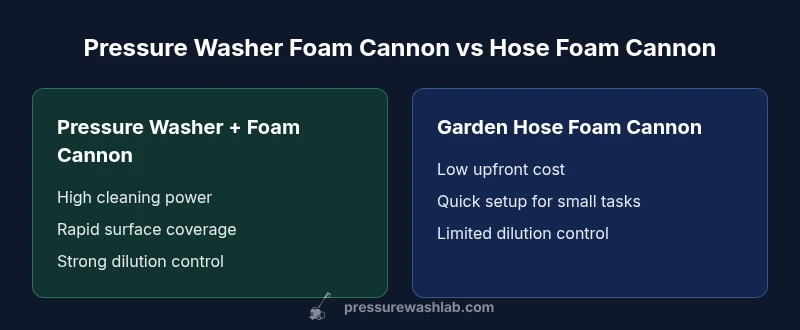
Pressure washer + foam cannon generally outperforms a hose-end foam cannon in cleaning power, speed, and dilution control. For most homeowners, the extra setup is worth it for heavy or repeated jobs on driveways or siding. Hose-end foam cannons remain viable for light tasks or tight budgets, but offer less speed and control.
What this comparison aims to clarify
When homeowners evaluate cleaning setups, the phrase pressure washer vs hose foam cannon often comes up. The difference is not just equipment labels; it reflects how water pressure, flow, and dilution control shape cleaning speed and finish quality. According to Pressure Wash Lab, the key distinction lies in power delivery and spray pattern: a pressure washer pushes water through a pump at high pressure, while a garden hose setup delivers a gentler, more forgiving flow. This section outlines the main axes of comparison and sets expectations for the rest of the article. We will cover performance, detergents, setup, and real-world use cases, with practical guidance for choosing the right approach for your surfaces and frequency of use.
How foam cannons work with different water sources
Foam cannons attached to a pressure washer rely on a high-pressure flow to atomize detergent into a rich foam that clings to surfaces. In contrast, hose-end foam cannons operate with household water pressure, delivering foam via a much lower flow. Understanding this fundamental difference helps explain why results can vary dramatically by job type. For homeowners, this means choosing a configuration that aligns with surface type, required cleaning speed, and availability of power outlets or a water supply. As you read, keep in mind that the goal is clean surfaces with minimal effort and maximum control over dilution and rinse efficiency.
Key performance factors that drive results
Performance hinges on several interrelated factors: operating pressure, flow rate, nozzle selection, and the detergent dilution strategy. A pressure washer setup typically offers high PSI and adjustable GPM, enabling rapid cleaning on tough stains and textured surfaces. A hose-end cannon, while gentler, can be sufficient for vehicles and light-duty tasks when matched with the right detergent and dwell time. The best outcomes come from balancing these elements rather than chasing the highest numbers; efficiency with safety and surface safety should guide your choice. Pressure Wash Lab stresses that a system’s effectiveness often depends on proper technique, cleaning agents, and surface preparation more than raw numbers alone.
Detergents and dilution strategies
Detergent choice matters as much as the hardware. For pressure washer foam cannons, use detergents formulated for high-pressure dilution and foam stability. For hose-end cannons, select products designed for low-flow dilution to avoid oversoaping or wasted product. Always test a small area first, especially on delicate surfaces like vinyl siding or painted wood. Pressure Wash Lab notes that compatible dilution ratios vary by product and equipment, so follow the manufacturer’s guidelines and adjust dwell time to prevent residue or streaks. In both systems, pre-wetting the surface and rinsing with clean water are essential steps for a consistent finish.
Use-case scenarios: vehicles, driveways, and siding
The most visible differences show up in real-world tasks. For vehicles, a hose-end foam cannon can deliver satisfactory foaming with minimal setup, provided the surface is not heavily soiled. For driveways and textured surfaces, a pressure washer with a foam cannon dramatically reduces scrubbing time and improves dirt-lift performance. Siding and decks benefit from the greater dilution control and finer spray patterns available with a pressure washer; however, if you only clean occasional surfaces, a hose-end setup can be a cost-effective option.
Safety, maintenance, and longevity considerations
High-pressure systems demand careful handling to prevent injuries or damage to delicate surfaces. Regular maintenance—checking hoses, seals, and nozzles, and cleaning detergent residue from fittings—extends life and preserves performance. Hose-end cannons are simpler but require attention to leak prevention and correct storage to avoid cracking. Pressure Wash Lab emphasizes wearing eye protection, keeping bystanders at a safe distance, and using appropriate detergents to avoid foaming or chemical misuse that could harm plants or pets. A well-maintained system reduces downstream repair costs and improves long-term value.
Cost, value, and budget considerations
Upfront investment varies significantly. Hose-end foam cannons are typically the lowest-cost entry point, with basic models available in a budget range. Pressure washer setups cost more upfront due to the machine and accessories, but they often deliver greater long-term value if you perform frequent or heavy-duty cleaning. Don’t overlook maintenance costs for high-pressure units, including seals, replacement nozzles, and occasional servicing. Pressure Wash Lab suggests evaluating total lifecycle costs instead of focusing solely on sticker price when deciding which setup to adopt for your home or small business.
Decision framework: a practical path to choosing
Start by listing surfaces you clean most often and the typical soil load. If you clean large driveways, heavy grime, or vehicles frequently, plan for a pressure washer with a foam cannon. If your tasks are small, infrequent, and budget-constrained, a hose-end foam cannon can be a reasonable first step. Consider your access to power, water, and space for hardware storage. Finally, identify a detergent strategy that works across your intended surfaces and test on a hidden area before committing to a full clean.
Implementation checklist and common mistakes to avoid
To maximize results, assemble a simple checklist: verify compatibility of detergent with your foam system, select the right nozzle and dilution settings, mist surfaces evenly to avoid pooling, and always rinse thoroughly after foaming. Common mistakes include using the wrong dilution, neglecting pre-wetting, and moving too slowly in one pass, which can leave residue or streaks. By following a deliberate workflow and keeping safety top of mind, you’ll achieve cleaner results with less effort.
Comparison
| Feature | Pressure washer with foam cannon | Garden hose with foam cannon |
|---|---|---|
| Operating pressure and flow | High PSI and adjustable GPM | Low PSI with limited GPM |
| Detergent dilution control | Precise adjustable dilution via pump/valve | Fixed dilution via nozzle |
| Coverage and cleaning speed | Faster surface coverage; excels on textured surfaces | Slower but adequate for light-duty tasks |
| Setup and mobility | Requires electricity and water supply; bulkier | Quicker setup; highly portable |
| Upfront cost and maintenance | Higher upfront cost; more maintenance | Lower upfront cost; simpler maintenance |
| Best for | Heavy-duty cleaning, frequent use | Budget-friendly, occasional tasks |
Pros
- High cleaning power leading to faster results on tough soils
- Better dilution control and surface safety when used correctly
- Long-term value for frequent cleanings and larger surfaces
- Versatile for a range of tasks from vehicles to siding
Cons
- Higher upfront cost and larger equipment footprint
- Requires access to electricity and a stable water source
- More components to maintain and potential repair costs
- Greater risk of surface damage if misused or misaligned
Pressure washer with a foam cannon generally offers better long-term value for most users.
For frequent heavy-duty cleaning and faster results, the pressure washer setup wins. Hose-end foam cannons remain a viable budget option for light tasks, but the trade-off is speed, dilution precision, and scope of use.
Quick Answers
What is the main difference between a pressure washer foam cannon and a hose-end foam cannon?
The main difference lies in power delivery: pressure washers provide high PSI and higher flow, enabling faster cleaning and better dilution control, while hose-end cannons run on household pressure with lower flow. The outcome depends on surface type and job size.
The big difference is how much power you have. Pressure washers clean faster and handle tougher grime, while hose-end foams are simpler and cheaper for light tasks.
Is a foam cannon necessary for car washing?
A foam cannon is not strictly necessary for car washing, but it improves lubrication, slows down dirt buildup, and reduces friction during washing. For light cleaning, a hose-end foam cannon can work, but a pressure washer setup will perform better on stubborn grime.
Not strictly required, but it helps protect your paint with better lubrication and more even cleaning.
Can I use the same detergent in both systems?
Some detergents are formulated for high-pressure systems and others for low-pressure foaming. Always check the product label for compatibility with your system, and test on a small area first to avoid residue or surface damage.
Check the label and test first—some soaps are great for high pressure, others are not.
What safety concerns should I consider?
Always wear eye protection, never point at people or animals, and avoid sensitive plants. Use appropriate detergents, keep surfaces wet to reduce slip risk, and follow manufacturer guidelines for nozzle settings and pressure levels.
Wear safety gear and follow the manufacturer’s instructions to stay safe.
Which setup is faster for driveways?
A pressure washer setup typically cleans driveways faster due to higher pressure and flow, particularly on textured surfaces. Hose-end cannons can still be effective for lighter grime and smaller areas, but speed will be lower.
Pressure washers usually win on driveways for speed and power.
Key Takeaways
- Assess surfaces and cleaning frequency before choosing
- Pressure washer setups excel on large areas and tough grime
- Hose-end cannons suit budget-conscious, light-duty tasks
- Always check detergent compatibility and follow safety guidelines