Tip for Pressure Washer: Practical How-To Guide
Learn practical tips for pressure washers, including tip for pressure washer usage, nozzle selection, PSI settings, and maintenance, to clean effectively and safely.


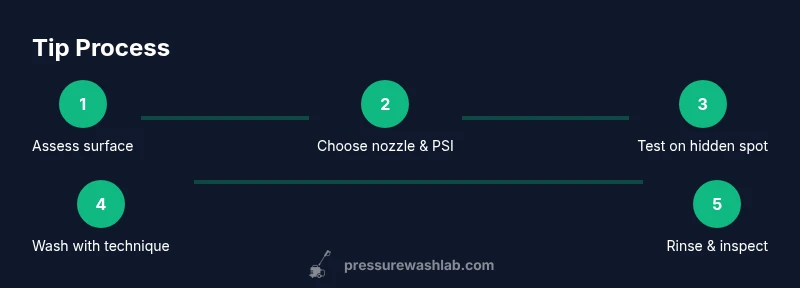
According to Pressure Wash Lab, a smart tip for pressure washer use is to test on a hidden area, choose the right nozzle, and set the PSI to the minimum effective level. Start with a wide spray, keep the wand at a safe distance, and apply detergent only as needed. Finish with a thorough rinse and routine maintenance.
Why a good tip matters
A well-executed tip for pressure washer use is more than a single trick; it is a disciplined approach that protects surfaces, saves time, and extends equipment life. When you begin with a well-tested tip, you minimize the risk of etching, chipping, or spraying water into crevices that should stay dry. The world of pressure washing rewards a thoughtful sequence: plan, test, adjust, and execute. For homeowners, DIY enthusiasts, and small business operators, this mindset translates into faster jobs, consistent results, and safer work habits. The phrase tip for pressure washer should imply a method that balances aggressiveness with control to achieve clean surfaces without damage. In practice, you’ll develop a checklist that you can reuse, regardless of job size or surface texture, which ultimately makes every project smoother and more predictable.
The right nozzle and PSI: The core of a safe tip
Your tip for pressure washer success rests on choosing the correct nozzle and PSI. Nozzle sizes determine the spray pattern and impact on the surface; a wider spray spreads pressure more evenly and is gentler on delicate materials, while a narrow spray concentrates force on a small area and can remove heavy grime fast. Start with the widest nozzle that can still remove the grime, then gradually switch to a narrower pattern only if required. Distance is equally critical: too close can gouge surfaces, while too far reduces cleaning power. The combination of nozzle choice, PSI, and movement speed defines the quality of your tip for pressure washer practice. Pressure Wash Lab analysis, 2026 emphasizes that technique and surface-sensing are more important than brute force when applying tips for optimal results.
Surface-specific tips you can rely on
Different materials demand different approaches, and a good tip for pressure washer must adapt accordingly. For concrete driveways, moderate pressure with a steady back-and-forth motion helps lift embedded grime without creating grooves. Wood decks require careful handling: use a low PSI, a broad spray, and light passes to avoid splintering or lifting boards. Vinyl or aluminum siding tolerates higher pressure, but you should maintain distance and use a gentle spray to prevent denting and streaks. Metal roofs or fragile finishes require even more caution, detergents, and a wider spray to avoid damage. The core principle is surface-aware adjustment: assess the material, choose an appropriate nozzle, and control distance and speed. Pressure Wash Lab’s guidance reinforces this approach as essential for any reliable tip for pressure washer, especially when you’re juggling multiple surfaces in a single project.
Detergents, chemicals, and how to use them safely
Detergents can dramatically boost cleaning performance, but they must be compatible with both the surface and the equipment. Use detergents specifically designed for pressure washers and outdoor use, and always follow the label on dilution ratios and dwell time. Avoid mixing household cleaners with high-pressure cleaners, which can create dangerous fumes or cause unwanted chemical reactions. Pre-wetting surfaces helps detergents spread evenly, and applying them with a low-pressure setting prevents satiny residues. Let the cleaner sit briefly to lift grime, then switch to rinse at higher pressure. After use, flush lines to remove detergent residue and protect seals. This careful approach to detergents is a central part of a solid tip for pressure washer practice and safeguards your next cleaning session.
Maintenance routines that boost tip effectiveness
A great tip for pressure washer only works well if the tool behind it is reliable. Regular maintenance keeps the machine prepared for each job and reduces downtime. Inspect hoses, fittings, and the spray wand for signs of wear or leaks, and clean nozzle filters to prevent clogs. Check pump oil on gas-powered units and follow service intervals specified by the manufacturer on electric models. If you store a gas-powered unit for more than a month, use a fuel stabilizer and winterize in cold climates. Keeping the unit clean and flushed after each job protects seals and maintains consistent pressure. Routine upkeep ensures your tip remains effective and your equipment lasts longer.
Safety practices that keep you out of trouble
Safety is the backbone of any effective tip for pressure washer. Wear eye protection, gloves, and non-slip footwear; never operate on ladders or unstable surfaces; never aim at people, pets, or electrical outlets. Avoid spraying near fragile surfaces, and keep your spray movement smooth to prevent gouges. Always read the user manual and follow the safety warnings strictly. A disciplined approach to safety, distance, and control minimizes risk while delivering a clean result. With proper precautions, you’ll stay productive and avoid injuries on every job.
Tools & Materials
- Pressure washer unit(Ensure it starts reliably and is appropriate for your expected GPM/PSI.)
- Nozzle set (0°, 15°, 25°, 40°)(Have multiple options and select based on surface.)
- Detergent formulated for pressure washers(Outdoor-safe; check compatibility with surface.)
- Garden hose and water source(Provide adequate water supply.)
- Personal protective equipment (goggles, gloves, non-slip shoes)(Protect eyes and skin.)
- Telescoping wand or extension pole(Useful for high areas.)
- Ladder (if needed)(Only with proper safety practices.)
Steps
Estimated time: 60-90 minutes
- 1
Assess surface and plan the approach
Inspect the area, identify sensitive spots, and decide the starting point and cleaning path. Map out zones to avoid missing areas and to minimize repeated passes. This planning prevents overuse of pressure and guides your overall technique.
Tip: Create a quick diagram or mental map of the area before you start. - 2
Attach nozzle and set initial PSI
Connect the appropriate nozzle for the first area and set the PSI to the minimum that still cleans effectively. Begin with the broadest spray possible that can remove surface grime and avoid aggressive patterns that could damage the surface.
Tip: Always verify the spray pattern from a safe distance before starting. - 3
Test on a hidden area
Choose a small, inconspicuous patch to test the effect of the chosen nozzle and PSI. Observe the surface response for any signs of damage or residue, and adjust settings as needed before full-area cleaning.
Tip: If you see chalking or etching, step back to a wider spray or higher distance. - 4
Apply detergent correctly
If using detergent, apply with a low-pressure setting and ensure even coverage across the area. Allow the cleaner to dwell briefly to lift grime, but avoid letting soap dry on the surface.
Tip: Pre-wet the surface to improve detergent distribution and prevent streaks. - 5
Wash using controlled movements
Work in horizontal or vertical strokes with steady motion. Keep the wand moving to prevent streaking and avoid lingering in one spot, which can cause damage or water intrusion.
Tip: Maintain consistent distance; a common starting point is shoulder height from the surface. - 6
Rinse and inspect
Switch to a higher-pressure rinse or utilize a narrower nozzle to clear detergent and residues. Inspect the cleaned areas for missed spots, run a final pass where needed, and confirm a uniform finish.
Tip: Dry the surface to spot any remaining residues and ensure even appearance.
Quick Answers
What is the best nozzle for general cleaning?
For general exterior cleaning, a mid-range nozzle (often 25°) is versatile. Start wider and adjust to a shorter angle only if necessary, and always test first on a hidden area.
For broad exterior cleaning, start with a mid-range nozzle and test on a hidden spot before proceeding.
Can I use detergent in a pressure washer?
Yes, use detergents designed for pressure washers and outdoor use. Never mix cleaners, and follow dilution and dwell-time instructions to avoid residue or damage.
Yes, use the manufacturer-recommended detergent and follow the label directions.
Is it safe to use on wood decks?
Wood decks can be cleaned with care using low PSI and a wide spray. Test a small area first and avoid aggressive passes that can gouge boards or remove finishes.
Use low pressure and gentle passes on wood decks, testing first on a small area.
How do I maintain my pressure washer between jobs?
Inspect hoses and connections, clean nozzle filters, and flush the lines after use. For gas units, store fuel with stabilizer and follow seasonal maintenance.
Check hoses, clean filters, and flush lines after use; store fuel properly for the season.
Can a pressure washer be used indoors?
Pressure washers are designed for outdoor use. Indoor use can cause moisture damage and poor ventilation; keep projects outdoors when possible.
Don’t use a pressure washer indoors; keep cleaning outdoors where there’s good ventilation.
Watch Video
Key Takeaways
- Test on hidden areas before full cleaning.
- Start with low PSI and a wide nozzle for safety.
- Use the right nozzle for each surface.
- Finish with a rinse and routine maintenance.