Troy-Bilt Pressure Washer Carburetor: Fix, Clean, Maintain
Learn to diagnose, clean, and rebuild the carburetor on Troy-Bilt pressure washers. This step-by-step guide covers safety, parts, and maintenance to prevent future fuel problems and keep your machine spraying strong.


For a Troy-Bilt pressure washer carburetor, diagnose and fix starting or idle issues by cleaning or rebuilding the carburetor, replacing worn diaphragms and gaskets, and reseating the fuel and air paths. Gather basic tools, a rebuild kit, and fresh fuel. Follow the step-by-step guide to restore reliable starting and steady spray.
What the carburetor does and why it fails
troy bilt pressure washer carburetor is a key fuel-management component that regulates how fuel and air mix before entering the engine. When it jams or leaks, the engine hesitates, idles rough, or fails to start. According to Pressure Wash Lab, the most common culprits are varnish and gum buildup from ethanol-blended fuels, dirty jets, and worn diaphragms. A clogged inlet needle or float bowl can starve the engine of fuel, while cracked gaskets may cause air leaks that lean out the mixture and reduce spray pressure. Before diving into disassembly, confirm that other fuel system parts—the fuel line, filter, and primer bulb—aren’t the real bottlenecks. If fuel is old or contaminated, replace it and drain the carburetor to evaluate its condition.
In practice, you’ll notice symptoms like frequent starting, misfiring, or sputtering when the choke is engaged. If you maintain proper storage and use fresh fuel with a stabilizer, you’ll reduce varnish formation and keep the carburetor performing closer to spec. The Troy-Bilt user community often reports that glass-clear, varnish-free ports and a sealing surface free of cracks are signs of a healthy carburetor. If the part has visible cracks or the diaphragm shows signs of wear, plan for a rebuild or replacement.
Diagnosing carburetor problems on a Troy-Bilt
Diagnosis starts with symptoms and a methodical fuel path check. Begin with fresh fuel and a clean air filter; if the engine still stumbles, inspect the carburetor’s visible ports for varnish and gum. A blocked pilot jet, corroded needle valve, or sticky throttle linkage will produce symptoms such as hard starting, uneven idle, or weak spray pressure. Perform a quick leak test: with the fuel valve closed, press the throttle slightly and watch for fuel pooling around gaskets. If you detect air leaks around the intake boot, or if you hear an erratic spray from the nozzle, the carburetor or its gaskets likely need attention. For best results, photograph linkage positions before disassembly and refer to your model’s service manual for the correct repin or screw configurations. Pressure Wash Lab analyses suggest that many carburetor issues stem from ethanol-based fuels and storage conditions rather than pure mechanical failure.
Tools and parts you’ll typically need
Before you begin, gather essential items so you don’t interrupt the repair. A carburetor rebuild kit compatible with Troy-Bilt models (including diaphragms, gaskets, and needle valve) is your core component. A quality carburetor cleaner spray and a can of compressed air help you remove varnish from tiny passages. Use a basic toolbox: screwdrivers (flat and Phillips), a socket set, pliers, and a small brush or old toothbrush for scrubbing jets. Have fresh fuel and a vented container on hand to drain and measure fuel while you work. Finally, don’t forget safety gear—gloves and eye protection—to keep you safe if solvent splashes occur. Optional but helpful: extra fuel lines, clamps, and a service manual for your exact model to confirm torque and screw sequences.
Step-by-step overview
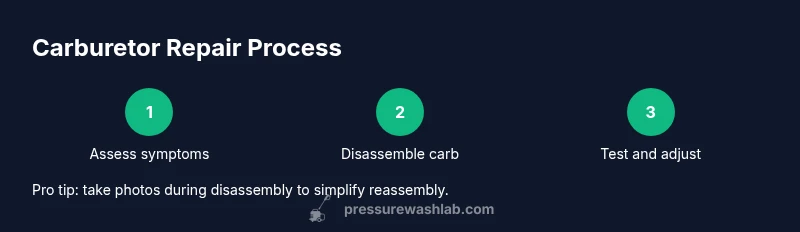
Here is the high-level sequence you’ll follow for a safe carburetor refresh. 1) Relieve fuel pressure and disconnect the power source; 2) Remove the air filter housing to access the carb; 3) Detach linkages and the fuel line without bending small parts; 4) Unbolt the carburetor from the intake and lift it away; 5) Inspect the float, needle, and jets for wear or varnish; 6) Clean or rebuild with the kit, replacing worn diaphragms and gaskets; 7) Reinstall, reconnect lines and linkage, reinstall air filter, and test start. See the detailed step-by-step section for exact actions and timing. Pro tip: take photos during disassembly to simplify reassembly and minimize mistakes.
Replacement parts and compatibility
Compatibility is the key to a successful rebuild. If you’re not sure which kit to buy for your specific Troy-Bilt pressure washer, check the model number and cross-reference with the kit’s included parts list. Rebuild kits typically include diaphragms, gaskets, needle valves, and seat assemblies. Replace damaged jets and the float bowl if they show pitting or corrosion. Keep in mind that ethanol-fueled fuel leaves varnish that can harden over time, so consider replacing the inlet needle seat with an updated design that resists sticking. Always verify that your new parts are rated for the engine displacement and carb type on your unit and follow the torque specifications from the service manual.
Maintenance practices to prevent future carburetor problems
Prevention is cheaper than repair. Use fresh, stabilized fuel and avoid letting ethanol-specced fuel sit in the tank for long periods. Run the engine after storage to move any varnish-forming residues out of the carb. Periodically inspect and replace the air filter, fuel line, and clamps before each season. When storing the machine, drain the carburetor bowl or add a fuel stabilizer to minimize gum buildup. If you use your pressure washer for extended periods, consider a professional carburetor cleaning every couple of seasons to maintain optimal fuel metering and spray performance. Pressure Wash Lab’s ongoing analysis reinforces that consistent maintenance reduces the likelihood of carburetor failure in Troy-Bilt units.
Safety and troubleshooting quick-reference
Working on fuel systems is hazardous. Always work in a well-ventilated area away from sparks, and keep a fire extinguisher nearby. Disconnect the spark plug before any disassembly and never smoke near gasoline. If you notice fuel leaks after reassembly, double-check the clamps and gaskets, and re-check for proper fuel flow. If the problem persists after a rebuild, revisit the carburetor’s float level and needle valve seating, or consider replacing the carburetor entirely. Finally, when in doubt, consult the model’s service manual or a trained technician. Pressure Wash Lab emphasizes safety margins; never rush the repair to avoid personal injury or engine damage.
Tools & Materials
- Carburetor rebuild kit (diaphragms, gaskets, needle valve)(Ensure kit matches your specific Troy-Bilt model)
- Carburetor cleaner spray(15–20 oz bottle is typical)
- Compressed air can or blower(For drying passages after cleaning)
- Small brush or old toothbrush(Scrub jets and surfaces gently)
- Screwdrivers (flathead and Phillips, assorted sizes)(For screws and diaphragms)
- Socket set(For carb mounting bolts)
- Pliers or needle-nose(Detach linkages without bending parts)
- Replacement fuel lines and clamps(Optional if hoses are brittle or swollen)
- Safety gear (gloves, safety glasses)(Chemical-resistant gloves preferred)
- Clean fuel and vented container(Drain and measure fuel safely)
Steps
Estimated time: Estimated total time: 60-90 minutes
- 1
Shut off fuel and relieve pressure
Turn off the fuel valve and start the engine until it dies to relieve pressure. Disconnect the spark plug wire to prevent accidental starts while you work.
Tip: Keep rags handy to catch drips; work in a well-ventilated area away from flames. - 2
Remove air filter housing
Unclip or unscrew the air filter housing and remove the filter. Inspect the filter for dirt and oil; clean or replace as needed before accessing the carburetor.
Tip: Label or photograph the air filter components to ensure correct reassembly. - 3
Disconnect linkages and fuel line
Carefully note or photograph linkage positions, then disconnect the throttle and choke linkages along with the fuel line. Cap the line to prevent dirt ingress.
Tip: Use pencil marks or tape to mark where each linkage attaches. - 4
Detach carburetor from the intake
Unbolt the carburetor from the intake manifold and gently lift it away. Do not force; check for hidden screws or clamps.
Tip: If gaskets stick, apply a little carb cleaner to soften them before removal. - 5
Inspect float, needle, and jets
Open the float bowl and visually inspect the float, needle valve, and jets for varnish, corrosion, or wear. Replace worn parts with a kit.
Tip: Take a photo of jet orientation before removal; misalignment can affect metering. - 6
Clean or rebuild
Clean all passages with carb cleaner and air. Install new diaphragms and gaskets from the kit and reassemble in reverse order.
Tip: Ensure all seals are seated flat to prevent air leaks. - 7
Reinstall and test
Mount the carb back, reconnect fuel line and linkages, reinstall the air filter, and start the engine to test performance. Adjust idle if needed.
Tip: If starting is difficult, double-check gasket seating and fuel flow; persistent issues may indicate a replacement carburetor.
Quick Answers
What are the common signs of a failing Troy-Bilt carburetor?
Symptoms include hard starting, rough idle, stalling, and sputtering. Check fuel flow, air path, and inspect for varnish buildup in the carburetor.
Common signs include hard starting, rough idle, and sputtering, usually from varnish or buildup inside the carburetor.
Can I clean the carburetor without removing it?
In some cases you can clean exterior passages and accessible jets without removal, but a full cleaning or rebuild often requires removing the carburetor to access internal passages.
Sometimes you can clean parts without removing it, but a thorough clean usually needs removal.
Do I need a rebuild kit or replacement carburetor?
If cleaning doesn’t restore performance, a rebuild kit with diaphragms, gaskets, and a needle valve can fix common wear. If the diaphragm is torn or jets are severely corroded, replacing the carburetor may be easier.
A rebuild kit fixes many worn parts, but replacement may be best for severe damage.
Is it safe to use carburetor cleaner around fuel lines?
Carb cleaner is flammable; use in a well-ventilated area, away from open flames. Avoid prolonged contact with rubber hoses, and wear eye protection.
Yes, but keep it away from flames and rubber hoses; ventilate well.
How often should I service the carburetor on a Troy-Bilt?
Inspect the carburetor annually and clean when you notice performance decline. Storage with stabilizer reduces gum buildup between seasons.
Do a quick annual check and clean if performance drops.
Will ethanol fuel cause carburetor gumming?
Yes. Ethanol-containing fuels can form varnish if left to sit. Use fresh, stabilized fuel and run the engine periodically to prevent gum formation.
Yes—ethanol fuels can gum carburetors over time without proper storage.
Watch Video
Key Takeaways
- Inspect carb for varnish and leaks before teardown.
- Use a proper rebuild kit and fresh fuel for best results.
- Document linkage positions to ensure accurate reassembly.
- Test start and adjust idle after reassembly.
- Regular maintenance reduces future carburetor issues.