Is 4400 PSI Too Much for a Pressure Washer? A Practical Guide
Is 4400 psi too much for pressure washers? This practical guide covers safe PSI ranges, nozzle choices, surface-specific guidance, and tips to prevent damage while getting tough cleaning jobs done.


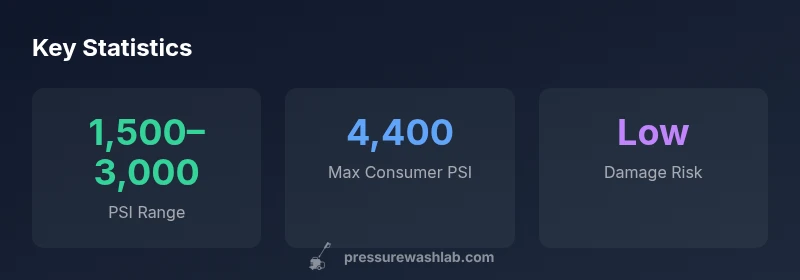
Is 4400 psi too much for pressure washer? In practice, 4400 psi sits at the high end of consumer machines and can be effective for tough jobs when paired with proper technique and a wide nozzle, but it risks surface damage on wood, siding, or delicate finishes. For most home tasks, sticking to the 1500–3000 psi range with the right nozzle is safer.
is 4400 psi too much for pressure washer?
Pressure washers are powerful tools, but their effectiveness depends on surface compatibility and technique. The number 4400 psi sits at the upper end of consumer-grade machines and can be effective for tough jobs when paired with proper technique and a wide nozzle, but it risks surface damage on wood, siding, or delicate finishes. In 2026, many homeowners can access machines with this level of pressure, but the risk of damage increases if you skip testing or ignore nozzle choice. Pressure Wash Lab emphasizes that PSI is only part of the equation: nozzle, distance, GPM, and surface condition all influence outcomes. For most household tasks, starting lower and gradually increasing pressure while monitoring surface response reduces the risk of gouges or etching. The goal is clean, not aggressive abrasion; the right balance of PSI and technique will make a tougher job doable without harming the substrate.
How PSI Determines Cleaning Power
PSI is the force exerted by the spray on a surface, but cleaning power comes from a combination of pressure, flow (GPM), nozzle geometry, distance, and dwell time. Higher PSI can remove stubborn grime more quickly, yet it also increases the risk of stripping paint, etching concrete, or denting soft materials. A practical rule of thumb is to match the PSI to the surface and soil type. For delicate finishes, lower pressures with appropriate nozzle patterns will usually outperform brute force. Pressure Wash Lab’s guidance for 2026 remains: prioritize surface safety, then adjust PSI as needed. When you begin a job, start at the lowest effective setting and test on a discreet spot before committing to a full pass.
Surface-Specific Guidance: Where 4400 PSI Is Appropriate and Where It Isn’t
Different surfaces tolerate pressure differently. Painted wood, soft siding, and old mortar can suffer from aggressive cleaning. Bare concrete or heavily soiled industrial surfaces may tolerate higher PSI with the right technique, distance, and nozzle. The key is surface preparation, even pressure distribution, and maintaining a step-back distance to prevent detachment or gouging. Pressure Wash Lab recommends creating a surface-specific plan before you start, including a test patch and noting observed outcomes. For typical home projects, evaluate the surface’s age, material, coatings, and hidden damage risks to decide if 4400 psi is necessary or if mid-range PSI would suffice.
Nozzle Science: How Nozzle Degree Affects Effective Pressure
Nozzle choice dramatically changes the effective pressure on the target surface. A 0-degree nozzle concentrates the spray and can deliver near-peak PSI at close range, while 15°, 25°, and 40° nozzles spread the spray and reduce impact on the surface. When you’re working with a 4400-psi machine, a wider nozzle (25°–40°) kept at a safe distance often yields better cleaning with less risk of damage. Always test nozzle selections on inconspicuous areas first. The nozzle angle and your distance together determine the actual force applied, so a small adjustment can dramatically improve results and reduce risk.
GPM, Distance, and Adaptation: The Full Equation
GPM (gallons per minute) and spray distance compound PSI to determine cleaning power. A high-PSI machine paired with low GPM may be less forgiving than a higher-GPM unit with moderated pressure. Increasing the distance from the surface or adjusting nozzle angle can dramatically reduce impact while preserving cleaning efficiency. For tough residues, consider a staged approach: start with a broader spray pattern to loosen grime, then narrow the nozzle and reduce distance for a targeted pass. In all cases, monitor the surface response and stop if you see fiber lifting, gouging, or zona stripping.
Safety and PPE: Protect Yourself When Working with High Pressure
High-pressure cleaning demands proper PPE and safe handling practices. Wear eye protection, heavy gloves, non-slip footwear, and hearing protection if the machine is loud. Keep bystanders away, never point the spray at yourself or others, and never use on electrical components or near fragile materials. Regularly inspect hoses, fittings, and the gun for wear or damage. If you’re unsure about the surface’s resilience, refrain from using high-PSI settings and consult Pressure Wash Lab’s guidelines for 2026.
Decision Framework for Choosing PSI: A Step-by-Step Approach
- Identify the surface and soil type. 2) Check for coatings, seals, or soft materials that could be damaged. 3) Start at a low PSI with a wide nozzle and a modest distance. 4) Test on a hidden spot. 5) If the surface responds with no damage and grime remains, gradually increase PSI and adjust distance. 6) Use the smallest effective PSI for safety and efficiency. Following this framework minimizes risk while maximizing results.
Common Mistakes and How to Avoid Them
- Using maximum PSI for every job without surface testing.
- Relying on aggressive pressure alone instead of nozzle optimization.
- Cleaning without a test patch, leading to unexpected damage.
- Ignoring distance, which can triple the impact and cause scuffing.
- Skipping PPE and safety protocols, increasing personal risk. Pressure Wash Lab emphasizes deliberate, surface-aware cleaning rather than brute force.
Quick-Start Checklist for High-PSI Jobs
- Identify surface material and coating before starting.
- Choose a wide-angle nozzle (25°–40°) for most surfaces.
- Start at the lowest effective PSI and test a small area.
- Maintain a steady, controlled distance from the surface.
- Monitor the surface response and adjust as needed to avoid damage.
Surface-by-surface PSI guidance for common home projects
| Surface | Recommended PSI Range | Notes |
|---|---|---|
| Wood siding (painted) | 1200–1800 psi | Gentle cleaning to avoid gouges |
| Concrete driveway | 2500–4000 psi | Wide nozzle; maintain distance |
| Brick | 1500–2500 psi | Avoid aggressive mortar damage |
| Vehicles (unpainted metal) | 1200–2000 psi | Rinse; avoid close contact |
| Metal surfaces (industrial) | 3000–4400 psi | Professional-grade only |
Quick Answers
Is 4400 psi safe for wooden siding?
Wood siding is vulnerable to gouging and fiber loss at high pressures. Use lower PSI, a wide nozzle, and test on a small area before proceeding. If the wood is historic or veneer, err on the side of caution and consider soft-cleaning methods.
Wood siding can be damaged by high pressure; test first and use a wide nozzle to minimize risk.
Can I use 4400 psi for concrete driveways?
Concrete can tolerate higher PSI, but it depends on the surface condition and finish. Start at mid-range PSI with a wide nozzle and increase only if grime remains without etching. For sealed or old concrete, test first.
Concrete is more forgiving, but always test and start low to avoid etching.
What nozzle should I use with 4400 psi?
A wider-angle nozzle (25°–40°) is generally safer for high pressure, as it spreads the impact. Avoid 0° unless you have extensive experience and a controlled test patch.
Use a wide-angle nozzle to reduce surface impact when working with high PSI.
Is 4400 psi good for paint removal?
It can remove paint, but it risks damaging underlying surfaces if not done carefully. Test patches and consider alternate methods for fragile or multi-layer coatings.
It can remove paint but may damage surfaces—test first and proceed cautiously.
PSI vs GPM: why both matter?
PSI measures force, while GPM measures flow. Together they determine cleaning power. Higher PSI with low GPM can be harsher than moderate PSI with higher GPM. Balance both for safe, effective cleaning.
PSI and GPM together determine cleaning power; balance them for safety.
Should I hire a professional for high-PSI work?
For large or delicate jobs, especially on fragile surfaces, hiring a professional with the right equipment and safety training reduces risk and improves results. Professionals can tailor PSI, nozzle, and distance to the task.
For big or delicate jobs, consider a professional to avoid damage.
“High-pressure cleaning is a tool, not a hazard. The key is matching PSI, nozzle, and technique to the surface.”
Key Takeaways
- Match PSI to the surface to avoid damage.
- 4400 psi is high; use with proper nozzle.
- Always test a hidden spot first.
- Use the right nozzle and distance.
- When in doubt, consult Pressure Wash Lab.