Can Pressure Washer Hose Be Repaired? Practical Troubleshooting Guide
Learn whether your pressure washer hose can be repaired, how to inspect for wear, repair options, and when to replace for safe, reliable pressure washing.


You might ask: can pressure washer hose be repaired? In many cases, yes for small exterior cracks or loose fittings, but major splits or bulging hoses typically require replacement. Start with a visual inspection for leaks, wear, and compromised couplings before deciding on a repair vs replacement. This quick check helps prevent dangerous spray leaks and bursts.
can pressure washer hose be repaired
You might wonder, can pressure washer hose be repaired. In many cases, yes for small exterior cracks or loose fittings, but major splits or bulging hoses typically require replacement. According to Pressure Wash Lab, safety comes first when diagnosing hose issues. Start with a visual inspection to spot leaks, wear, and compromised couplings before deciding on a repair versus replacement. This initial check helps homeowners, DIY enthusiasts, and small-business operators avoid dangerous spray leaks and high-pressure bursts. A careful assessment also sets realistic expectations: some hose damage is repairable, but other damage makes replacement the safer option.
Pressure Wash Lab analysis shows that most failures stem from weakened fittings or exterior wear rather than the hose core itself. By catching wear early, you can extend hose life and reduce unexpected downtime. If you notice any bulges, heat-softened rubber, or kinked sections that don’t spring back, plan for replacement rather than attempting an unsafe patch.
First signs of trouble and what to look for
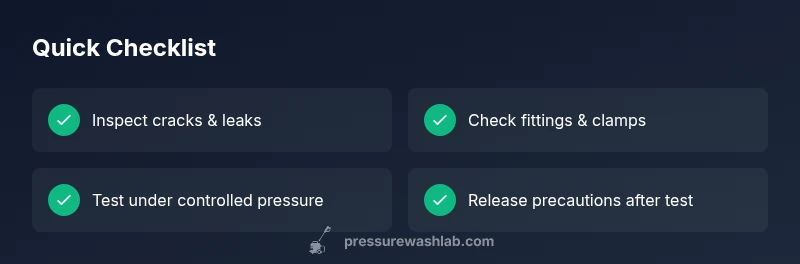
When you start troubleshooting, focus on observable signs of wear. Look for cracks along the hose length, softened or melted rubber, and bulges that indicate internal damage. Check the fittings at both ends for corrosion, stripped threads, or loose clamps. A hose that leaks only under pressure or after a short run time is a strong clue that the seal or ferrule is compromised. Remember to power off and depressurize the system before handling the hose. Can pressure washer hose be repaired? The answer depends on the damage type; superficial cracks near the coating may be patchable, while deep splits and fusible bulges usually necessitate replacement for safety.
Safety first: testing without risks
Never test a suspected damaged hose at full pressure. Attach the hose to the washer, but start with the spray wand off and the unit at idle to check for leaks at fittings. Gradually increase pressure in short bursts while watching for any change in spray pattern, leaks, or sudden hose flexing. If the hose shows any whine, hiss, or a kink that does not resolve, shut down and move to replacement. Always wear eye protection and gloves, and keep a safe distance during testing. This approach minimizes risk while confirming hose integrity.
Repair options and their limits
Minor exterior cracks, small pinholes, or loose clamps can sometimes be addressed with patch kits, epoxy, or hose clamps rated for high pressure. Ferrule replacement and end fittings can restore a connection if threads are undamaged. However, keep in mind that many repairs are temporary. The hose adhesive or patch may fail under actual operating pressure, leading to a sudden burst. A repaired hose is often best reserved for light-duty, non-critical tasks, and should be tested after repairs under controlled conditions.
Replacement vs repair: decision criteria
Ask these questions: Is the crack run lengthwise or near a coupling? Is the internal reinforcement visible or compromised? Does the hose feel soft or appears deformed when bent? If any of these apply, replacement is the safer choice. Replacing a damaged hose ensures consistent flow, maintains proper GPM and PSI, and reduces the risk of dangerous spray back. Consider upgrading to a heavier-duty hose or a hose with reinforced couplings if your use case is frequent or commercial.
Preventing future damage and extending life
Preventive steps save time and money. Use compatible nozzles and avoid over-bending; store the hose off ground and away from sunlight; periodically inspect for wear at the fittings; replace worn connectors early; and keep connectors clean from dirt and debris. If you operate in freezing conditions, ensure proper winterization to prevent hose cracks. Regular inspection and mindful storage are the best defense against premature hose failures.
Steps
Estimated time: 45-60 minutes
- 1
Power off and depressurize
Turn off the pressure washer, unplug if needed, and release pressure by squeezing the trigger on the wand while the trigger is closed. This ensures your hands are safe during inspection.
Tip: Always wear eye protection when depressurizing. - 2
Inspect hose exterior and fittings
Carefully run your fingers along the hose length to feel for cracks, bulges, or abrasions. Check both ends for corrosion, stripped threads, or loose clamps that could cause leaks under pressure.
Tip: Use good lighting and a mirror to inspect hard-to-see areas. - 3
Test at low pressure and observe
Connect the hose and run a short test at low pressure with the wand pointed away from you. Look for new leaks or changes in spray pattern that indicate a failure point.
Tip: Never test at full power until you confirm there are no leaks. - 4
Evaluate repair options
Decide if a patch, clamp, or ferrule replacement is feasible. For any crack beyond surface-level or near the fitting, prepare for hose replacement.
Tip: Use a repair kit that is rated for your PSI and GPM. - 5
Perform the repair or replace
If repairing, follow the kit instructions exactly. If replacing, detach the old hose entirely and install a compatible new hose, ensuring end fittings are properly tightened and sealed.
Tip: Do not over-tighten fittings; overtightening can damage threads. - 6
Retest and monitor
Run the system again at operating pressure for a short period to ensure there are no leaks or heat build-up. Monitor for several minutes in case the hose shifts during operation.
Tip: Keep a safe distance and have a bucket nearby in case of leaks.
Diagnosis: Hose leaks, cracks, or drops in performance under pressure
Possible Causes
- highVisible exterior wear or small cracks
- highDamaged fittings or clamps
- mediumInternal hose reinforcement wear or bulging
- lowOver-pressurization or incorrect nozzle
Fixes
- easyInspect and tighten fittings; replace clamps if corroded
- easyReplace damaged ferrules or end fittings
- mediumPatch minor exterior cracks with approved repair kits (for non-critical tasks)
- hardReplace the hose if there is bulging, deep cracks, or interior damage
Quick Answers
What kinds of hose damage can be repaired safely?
Minor exterior cracks and loose fittings can sometimes be repaired using patch kits or ferrule replacements. Deep internal damage, bulging, or cracks near fittings usually require hose replacement for safety.
Minor exterior cracks can sometimes be repaired, but deep damage or bulges require hose replacement for safety.
Is patching a hose approved by manufacturers?
Most manufacturers do not recommend patching a hose with severe damage. Always check your hose specifications and use compatible parts designed for high-pressure use.
Patch repairs are often not approved for severe damage; check compatibility before attempting a fix.
How can I tell if a hose should be replaced instead of repaired?
If you see bulging, deep cracks, torn reinforcement, or compromised fittings, replace the hose. Replacement provides reliability and reduces the risk of dangerous spray.
Bulges, deep cracks, or weakened fittings mean replace the hose for safety.
What maintenance helps prevent hose damage?
Regular inspection, using compatible nozzles, avoiding sharp bends, proper storage, and winterizing can extend hose life and reduce the chance of leaks.
Inspect regularly, store correctly, and winterize to prolong hose life.
When should I call a professional?
If you’re unsure about the damage, lack the right repair parts, or the hose is under warranty, consult a professional technician to avoid risks.
If in doubt, consult a professional for safety and warranty considerations.
Can I use a different brand hose with my washer?
Use hoses and fittings that match your washer’s PSI, GPM, and thread size. Mismatches can lead to leaks or failures.
Choose hoses that match your washer’s PSI, GPM, and thread size.
Watch Video
Key Takeaways
- Assess damage before repairs; many issues warrant replacement.
- Patch repairs are only for minor exterior cracks and reliable fittings.
- Always depressurize and test safely before resuming work.
- Prevention is cheaper than replacement: inspect regularly and store properly.