How to Fix Pressure Washer Hose Kink: A Practical Guide
A practical, step-by-step guide from Pressure Wash Lab on diagnosing and fixing a kinked pressure washer hose, with safety tips, parts to replace, and maintenance advice.


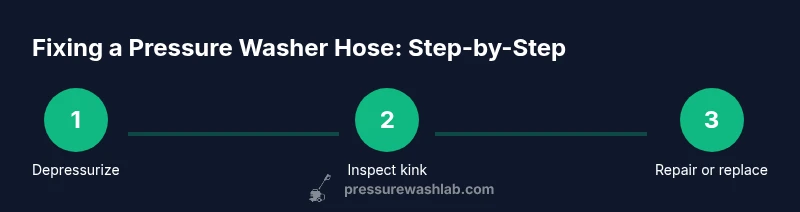
In this guide you’ll learn how to fix a kink in a pressure washer hose by safely relieving pressure, inspecting bend points, and repairing or replacing damaged segments. You’ll diagnose common causes, choose the right replacement parts, and test the system with proper safety precautions. Follow the step-by-step process to restore performance and prevent future kinks for long-term reliability every day.
Understanding why hoses kink
Hose kinks are usually the result of sharp bends, improper routing, or overlong hoses that don’t flex smoothly. According to Pressure Wash Lab, most kink issues stem from how the hose is stored when not in use and how it is threaded around the machine and attachments. If you let the hose coil tightly or press it against a hard edge, bending radii shrink and a kink forms at the bend. Recognizing the patterns—kinks near connectors, at tight corners, or where hoses rest on metal edges—helps you plan a reliable fix rather than a repeated problem. The takeaway is simple: protect the hose from sharp turns and ensure a gentle, consistent radius from the outlet to the wand. Regular inspection for nicks or cracks also prevents hidden weakness from becoming a kink under pressure.
Safety basics before you start
Working on a live pressure washer requires respect for high-pressure fluids. Always unplug the unit, relieve all pressure by pulling the trigger with the wand pointed away from you, and wear eye protection. A sprayed jet at even modest steam-clean strength can injure skin. Keep the work area dry and away from children or pets. If you smell fuel or hear unusual sounds, stop and inspect for leaks. Pressure Wash Lab emphasizes safety as the foundation of any hose repair, because a damaged hose can fail catastrophically if not handled correctly.
Why this matters: Safe handling reduces risk and gives you a clear view of the hose condition so you can decide whether to patch, replace, or reroute.
Locate the kink locations and assess severity
Start at the ends where the hose attaches to the spray gun and the machine, then scan along the length for visible crimps, bulges, or deep creases. If a kink holds a curved shape when the hose is relaxed, the bend radius is too tight and the hose may need replacement. For minor kinks that disappear after straightening, careful rerouting during maintenance can prevent reoccurrence. Severity matters: a kink with exposed wire reinforcement, leaks, or soft spots cannot be trusted to be temporary and is a sign you should replace the affected section.
This step is where you decide whether a patch is feasible or a full replacement is needed. If you can’t restore a smooth bend with simple repositioning, move to the replacement options.
Immediate relief: safely depressurize and prepare
Relieve pressure completely before handling any hose segment. Disconnect the hose from the pressure washer and wand, then point the nozzle away from yourself and others while pulling the trigger to release any residual pressure. Wipe down the fittings to remove oil, water, or debris that could interfere with a clean connection. If you notice a stubborn kink, avoid forcing it back into shape; instead, shift the hose layout to a gentler curve and consider replacing the affected portion to prevent re-kinking.
Pro tip: plan your reassembly path so that the hose won’t need to cross or lay over sharp edges during usage.
Inspect and test: check radii, fittings, and hose length
Measure the bend radius of the kinked section and compare with the hose’s recommended minimum bend radius (usually printed on the hose sleeve). Inspect fittings for cracks, stripped threads, or leaks. Tighten fittings only to snug, not overtight, to avoid damaging the connector seat. If the hose section length is excessive or too short to achieve a gentle curve, replace it with a correctly sized segment. After assembly, lightly flex the hose by hand to confirm there is no pinching or binding before reinstalling the wand and nozzle.
This inspection reduces the risk of covert leaks and helps ensure a durable fix that lasts beyond a single use.
Repair options: patch, replace, or swap sections
For minor creases, a patch kit or heat-shrink sleeve can be a temporary fix, but a clean, reliable repair often requires replacing the damaged length with a new hose segment or a full hose. When selecting a replacement, match the inner diameter, outer diameter, and end fittings to your machine model. Use PTFE tape on threaded fittings and tighten with a wrench to the manufacturer’s torque spec. If the hose is old and has multiple weak spots, replacing the entire length avoids repeated failures.
Choosing the right option depends on kink severity, availability of parts, and your tolerance for downtime. The most durable solution is a properly sized, new hose with correct fittings.
Reassembly and routing: avoid future kinks
Attach the hose to the pump and wand with clean, dry connections. Route the hose away from hot surfaces and sharp edges; use soft clamps or zip ties to secure it along a smooth path. Avoid wrapping the hose around the machine handle too tightly; a loose loop with a gentle curvature is far less prone to kinking during operation. If your setup involves vertical rises or tight corners, consider a longer hose or a hose reel to keep the path straight and reduce pinch points.
Proper routing pays dividends over time and minimizes the risk of future kinks caused by movement or vibration during use.
Maintenance habits to prevent kinks long-term
Set a routine to inspect hoses at the start and end of every work session. Check for signs of wear, micro-cracks, or hardened insulation that could indicate aging. Store hoses loosely coiled, not folded, with the wand detached to reduce bending stress. When possible, avoid dragging the hose over rough ground. Periodically test the hose after longer storage to ensure it maintains a smooth bend and doesn’t develop new kinks under pressure.
Preventive maintenance is cheaper than repeated repairs and significantly improves performance over time.
Common mistakes and troubleshooting tips
Avoid using adapters that increase the likelihood of sharp corners. Don’t force-kink a hose to fit a tight space; instead, re-route or replace with a more flexible segment. If you hear new leaks after a repair, recheck fittings and reseal with PTFE tape. Never skip depressurizing steps; working on a pressurized hose is hazardous and can cause injuries or a blow-off. If you’re unsure about a repair, consult the manual or a professional technician.
Bottom line: careful routing, proper parts, and thorough testing are the pillars of a reliable fix.
When to replace the entire hose and how to pick parts
If the hose shows multiple cracks, bulges, or repeated kinks despite replacement segments, it’s time to replace the entire hose. Select a hose with the same internal diameter and compatible connectors for your model, and consider upgrading to a higher-quality reinforced product if you frequently work at high pressures. Check the warranty and compatibility with your washer’s GPM and PSI specifications. A new hose that fits your setup and is routed properly will prevent recurring kink issues and extend the life of your equipment.
Tools & Materials
- Replacement pressure washer hose section(Select same diameter as existing hose; ensure compatible connector type)
- Quick-connect fittings / hose couplings(Have spare fittings sized to your model)
- Adjustable wrench or pliers(For loosening/tightening fittings safely)
- PTFE tape (Teflon tape)(Use on threaded connections to prevent leaks)
- Hose repair kit or heat-shrink sleeve(Optional for minor quick-fixes)
- Marker tape or zip ties(Helps route hose to prevent future kinks)
Steps
Estimated time: 30-60 minutes
- 1
Depressurize the system
Turn off the pressure washer, unplug it, and pull the trigger on the wand to release any stored pressure. Wipe the fittings and the hose to remove moisture or debris. This prevents sudden spray and protects you during inspection.
Tip: Always verify zero pressure before touching hose fittings. - 2
Disconnect from wand and pump
Carefully detach the hose from both the spray gun and the pump. Place the hose on a clean work surface to inspect without clutter. Avoid twisting or bending during removal.
Tip: Label ends if you will reassemble multiple pieces later. - 3
Locate kink locations
Inspect the entire length for visible kinks, bulges, and cracked insulation. Note whether the kink occurs near fittings or in mid-length. Mark problem areas with tape for quick reference during repair.
Tip: Photograph the damaged area for future reference. - 4
Assess severity
Decide if a patch is feasible or if the section must be replaced. If the plastic reinforcement shows visible cracking or the diameter is distorted, replacement is recommended.
Tip: When in doubt, replace to prevent leaks. - 5
Relieve residual pressure
Even after depressurizing, re-check that no pressure remains in the hose. This ensures safe cutting and handling of parts.
Tip: Keep the wand pointed away from you during checks. - 6
Remove damaged section
Cut out the kinked portion using a sharp tool designed for hoses. Ensure clean, straight cuts to seat new fittings properly.
Tip: Use a hose cutter for clean, square cuts. - 7
Prepare replacement length
Measure the removed segment and choose a replacement with the same inner diameter. Cut the new hose to length with a clean edge.
Tip: Allow a little extra length for a gentle bend. - 8
Install new fittings
Attach new fittings to the replacement hose as required. Apply PTFE tape to threads, then tighten with a wrench to the manufacturer’s torque spec.
Tip: Avoid over-tightening, which can crack seats. - 9
Reattach hose to equipment
Reconnect the hose ends to the pump and wand. Check for proper seating and leak-free joints before testing.
Tip: Hand-tighten first, then snug with a wrench. - 10
Route for durability
Run the hose along a smooth path, away from heat and sharp edges. Use clamps or ties to secure, avoiding tight bends.
Tip: Keep a gentle curve radius similar to the hose’s minimum bend radius. - 11
Test at low pressure
Power on and test at a low setting first to observe leaks or future kinks. Increase gradually while monitoring the hose path.
Tip: Stand to the side of the spray to avoid the jet. - 12
Final inspection
Inspect all joints for leaks, verify routing, and ensure there are no pinch points. Store properly after use.
Tip: Document the repair for your toolbox and future reference.
Quick Answers
What causes kinked pressure washer hoses?
Kinks typically form from sharp bends near fittings, improper routing, or overlong hoses that don’t flex smoothly. Regular storage and careful routing reduce kink risk.
Kinks form mainly from sharp bends, poor routing, or hoses that are too long or stored badly.
Can I repair a kinked hose instead of replacing it?
Minor kinks can sometimes be patched, but severe kinks, cracks, or bulges usually require replacing the damaged section or the entire hose.
Minor kinks might be patched, but big damage usually needs replacement.
How do I prevent future hose kinks?
Route the hose with a generous bend radius, store loosely coiled, and use a hose reel or clips to keep it off sharp edges. Regular inspections help catch wear early.
Prevent kinks by proper routing and regular checks.
Is it safe to operate a pressure washer with a kinked hose?
No. A kinked hose can burst or leak under pressure, which can cause injury. Stop immediately and fix the hose before resuming use.
No. Don’t run it with a kink—fix first to avoid injury.
What hose size should I buy when replacing?
Buy a hose with the same inner diameter and end fittings as your current setup. Check the machine’s manual for compatible PSI and GPM specs.
Match the diameter and fittings; check the manual for specs.
Watch Video
Key Takeaways
- Depressurize before any work
- Replace severely kinked sections rather than patching
- Route hoses to maintain a gentle bend
- Match hose diameter and fittings for reliable repair
- Regular maintenance prevents future kinks