Common problems with Karcher pressure washer: Troubleshooting
A practical troubleshooting guide for common problems with Karcher pressure washer. Learn causes, quick fixes, maintenance tips, and safe practices to restore performance and extend your unit's life.


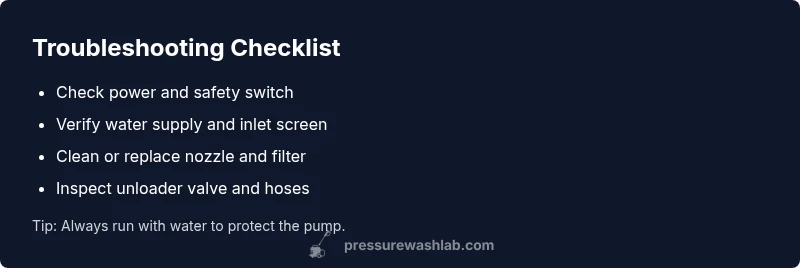
Most common issues with a Karcher pressure washer are caused by power, water intake, or nozzle blockages. Quick fixes: verify the outlet and power switch are on, ensure the trigger safety is released, inspect the water inlet screen for debris, clean or replace clogged nozzles, and check the unloader valve for proper release. If pressure remains low, recheck hoses and connectors.
Why problems with Karcher pressure washers happen
According to Pressure Wash Lab, common problems with karcher pressure washer often stem from simple setup errors, clogged filters, or improper storage. The good news is most issues can be diagnosed quickly with a few quick checks. This guide focuses on practical, no-nonsense steps to get your unit back to peak performance. From power supply quirks to water inlet blockages and nozzle wear, understanding the typical failure modes helps you act fast and safely. Expect to find clear, actionable steps you can perform without expensive tools. We also highlight maintenance habits that prevent recurring problems and prolong the life of your machine, so you spend less time troubleshooting and more time cleaning.
Symptoms you might notice and what they imply
Low or inconsistent pressure often signals nozzle or intake issues, while a unit that won't start usually points to electrical or safety-switch problems. Leaks around seals or the pump can indicate worn o-rings, loose fittings, or over-pressurization. A buzzing or grinding sound typically means a failing pump seal or debris in the impeller. Recognizing these signs early helps you choose the right fix and avoid costly mistakes. Pressure Washing Lab’s experience shows that most symptoms map to a short list of causes, which we cover with practical, step-by-step remedies.
Core causes and prevention habits
The most frequent culprits are: clogged inlet filters, blocked spray nozzles, air leaks in hoses, and improper water supply. Electrical issues—like a tripped GFCI or a worn power cord—also crop up. Storage conditions, temperature changes, and summer heat can degrade seals and hoses. Preventive habits include flushing water through the system before storage, cleaning filters after each use, inspecting hoses for cracks, and using the correct nozzle for the job. Regular checks reduce downtime and improve long-term reliability.
Quick checks you can perform safely
Always start with safety: unplug the unit and disconnect from power before touching any components. Inspect the water inlet and filter for debris; a clogged filter is a common cause of weak spray. Verify the detergent/soap valve is in the correct setting if you’re using chemical cleaners. Check the nozzle for wear or blockages and replace if needed. Ensure all hoses and fittings are tight and free of cracks. If you notice water leaks, tighten connections and inspect seals. These steps are simple, fast, and often resolve the majority of issues without professional help.
Diagnostic flow: symptom → diagnosis → solutions
If the unit won’t start, test power at the outlet, examine the switch, and look for a tripped breaker. If pressure is low, inspect water supply and inlet filter, then check the nozzle and unloader valve. If leaks are present, inspect seals and hose connections, then replace worn o-rings or damaged hoses. For every symptom, try the most straightforward fix first and move to more involved solutions only if needed. Always end with a test run and safety check.
Maintenance routines to prevent issues
Create a simple post-use routine: run through a quick rinse with clean water, remove and clean the inlet filter, inspect the nozzle, and check hoses for wear. Store the unit in a dry location away from extreme temperatures. Periodically winterize or use anti-freeze if you live in freezing climates. Keeping a maintenance log helps you track wear and plan part replacements before failures occur.
Steps
Estimated time: 60-90 minutes
- 1
Power down and safety check
Unplug the unit and let it sit for 30 seconds to discharge capacitors. Inspect the power cord for cuts or wear and ensure the outlet is delivering power. Do not operate with damaged cords.
Tip: Never yank the cord; unplug by the plug. - 2
Test the electrical circuit
If you use a GFCI outlet, reset it. Try another outlet on a different circuit if available. Confirm the on/off switch engages properly when you press it.
Tip: Use a multimeter to verify voltage if you have one. - 3
Check water supply
Attach the garden hose and turn on the faucet fully. Bleed any air by squeezing the trigger until a steady stream of water emerges, then release.
Tip: Always run with water flowing to protect the pump. - 4
Inspect and clean filters/nozzles
Remove the inlet filter and clean any debris. Inspect the spray nozzle for wear or blockages and replace if necessary. Reassemble securely.
Tip: Only use the nozzle type recommended for your model. - 5
Check the unloader valve and seals
Ensure the unloader valve moves freely and is not jammed. If you hear a grinding noise or see leakage around seals, plan replacement parts.
Tip: Relieve pressure before adjusting the unloader valve. - 6
Test run and safety check
Reconnect to power, engage the trigger, and run the unit at low pressure to verify operation. Look for leaks around fittings and listen for unusual sounds.
Tip: If it still fails, it's time to consult a pro.
Diagnosis: Pressure washer won't start or loses pressure
Possible Causes
- highPower issue (outlet, switch, or cord)
- highWater inlet blocked or water supply absent
- mediumNozzle or filter clogged, or air leaks in hoses
- mediumUnloader valve stuck or pump seals worn
Fixes
- easyTest outlet with another device, inspect switch, and replace any damaged cord
- easyClear debris from water inlet screen, open faucet fully, and ensure water supply is steady
- easyInspect and clean nozzle holes with a proper wand cleaner; replace damaged filters or hoses
- mediumRelieve pressure, inspect unloader valve, and service seals if leaks occur or pressure remains low
Quick Answers
Why won't my Karcher pressure washer start?
Check power at the outlet and inspect the cord for damage. Confirm the on/off switch works and that any safety latches aren’t engaged. If the outlet is live and the unit still won’t start, seek professional help to inspect internal components.
Check power at the outlet, inspect the cord, and ensure the safety latch isn’t engaged. If it still won’t start, consult a technician.
Why is the pressure low or inconsistent?
Inspect the water supply and inlet filter for debris, then check the nozzle for wear or blockage. Verify the unloader valve is correctly set and not stuck. Clean or replace worn parts to restore consistent pressure.
Check water supply, filter, nozzle, and unloader valve; replace worn parts to regain pressure.
Why does it leak from the pump area?
Leaks around the pump often indicate worn seals or loose fittings. Tighten connections where safe, and replace any gaskets or seals showing wear. If the pump housing itself leaks, consider a professional evaluation.
Leaks usually mean worn seals; tighten fittings and replace seals as needed. Contact a pro if the pump itself leaks.
Can I use bleach or other detergents with a Karcher?
Only use detergents designed for pressure washers. Some cleaners can corrode seals or damage the pump. Rinse thoroughly after use and never mix chemicals unless the manufacturer specifies compatibility.
Use only approved detergents and rinse well after use.
How often should I replace the nozzle or filters?
Nozzles wear with use; replace when spray pattern becomes uneven or persistent clogs occur. Clean or replace inlet filters regularly, especially in dirty or outdoor environments.
Replace worn nozzles and clean filters often to keep performance steady.
Is warranty repair available for common issues?
Warranty coverage varies by model and usage. Check your manual for terms and conditions and contact the manufacturer or authorized service center for evaluation if you suspect a covered defect.
Warranty depends on model; check the manual and contact an authorized service center for evaluation.
Watch Video
Key Takeaways
- Troubleshoot in a safe, stepwise way
- Secure water supply is essential for performance
- Regular maintenance reduces future breakdowns
- Know when to call a professional for pump work