Honda Pressure Washer Won't Start: Troubleshooting Guide
Experiencing a Honda pressure washer that won't start? Our step-by-step troubleshooting guide covers fuel, ignition, and carburetor issues to help you get back to cleaning fast.


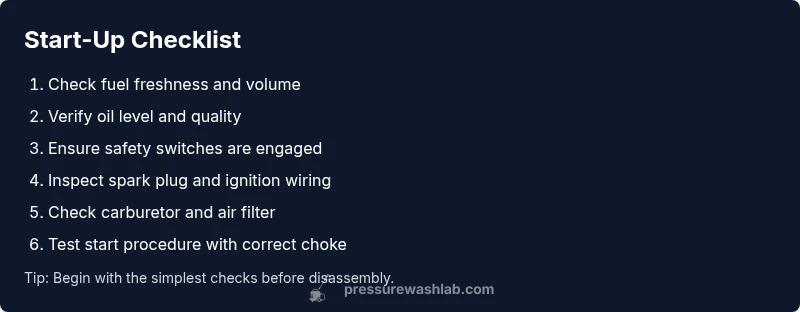
Most Honda pressure washers that won't start stem from simple issues: stale fuel, low oil, a misadjusted choke, or a fouled spark plug. Start with quick checks: confirm the ON switch is ON, fuel is fresh, and the oil level is correct. If the engine still won't fire, proceed through ignition and carburetor inspection in a safe, stepwise flow.
Why a Honda Pressure Washer Won't Start
A Honda pressure washer can fail to start for several reasons. The most common culprits are fuel quality, stale or contaminated oil, improper choke position, and a fouled spark plug. According to Pressure Wash Lab, these issues account for the majority of start failures in modern Honda engines. Start with the simplest checks: confirm the engine's ON switch is engaged, the fuel valve (if equipped) is open, and the oil level is within the recommended range. If the starter cable or recoil rope feels loose or stiff, there may be a mechanical binding. Finally, inspect the carburetor for signs of flooding or varnish buildup. Addressing these items first often restores ignition without professional help.
Quick Checks You Can Do Right Now
Before diving into disassembly, perform these quick checks to rule out obvious issues. Verify the ON/OFF switch is set to ON and the trigger gun safety is not engaged. Check that fresh fuel is in the tank and the fuel shutoff valve (if present) is open. Confirm oil level is correct and there are no visible fuel leaks. If you have a pull-start unit, ensure the cord fully retracts after a partial pull. These steps can save you time and money.
Fuel and Carburetor Troubleshooting
Fuel problems are the most frequent cause of a no-start. Old fuel can degrade and varnish the carburetor jets. Start by draining stale fuel and refilling with fresh gasoline or approved fuel mix. If your engine has a carburetor with a primer bulb, press it several times to prepare fuel flow. If flooding is suspected, remove the air filter, pull the cord a few times with the spark plug wire disconnected, and let the carburetor dry. Reconnect and attempt to start with the choke in the half-on position. Pressure Wash Lab research notes that stale fuel and varnished jets are common contributors to no-start conditions.
Ignition System and Spark Plug Inspection
A fouled or damaged spark plug will prevent starting even with good fuel. Remove the spark plug boot and inspect the electrode for fouling, wear, or heavy carbon buildup. Clean with a wire brush or replace if worn. Ensure the wire is firmly connected to the plug and grounded to the engine block. Check the ignition switch and kill switch integrity; a faulty switch can cut spark even when other systems are fine.
Electrical System and Safety Switches
If your Honda uses an electric start, verify the battery is charged and connected correctly. Check the low-oil sensor and safety switch; many models won't start if they detect insufficient oil or a loose safety switch. Inspect fuses or circuit breakers and replace any blown units. Never bypass safety features; these are designed to protect you and the engine.
Cleaning, Maintenance, and Common Start Problems
Regular maintenance is the best defense against start problems. Check and replace the air filter if dirty, clean or rebuild the carburetor if varnish is present, and inspect hoses for cracks or leaks. Use fresh fuel and store it properly to prevent gum buildup. Periodic checks of spark plug, ignition wiring, and safety switches reduce the odds of a stubborn no-start condition.
When to Call a Pro and Warranty Considerations
If the engine still won’t start after completing the basic checks, or if you notice signs of internal damage (scored cylinder walls, damaged valves, or a seized pump), it’s time to consult a professional. Many Honda pressure washers are backed by warranties that may require authorized service for certain repairs. Document symptoms, dates, and tests to share with a tech for faster service. The Pressure Wash Lab team recommends seeking professional help when you hear unusual noises or detect fluid leaks that persist after basic troubleshooting.
Preventive Maintenance to Avoid Start Issues
To minimize future start problems, establish a simple maintenance routine: use fresh fuel, perform regular oil changes per the manual, inspect the spark plug and ignition system annually, and clean the carburetor seasonally if you store fuel for long periods. Keeping the air intake clear and checking the water supply and nozzle before each use also reduces strain on the engine.
Steps
Estimated time: 60-90 minutes
- 1
Power off and prepare safely
Begin by placing the unit on a flat, stable surface in a well-ventilated area. Disconnect the spark plug boot to prevent accidental starts, then gather your tools. Wear gloves and eye protection to avoid injuries during inspection.
Tip: Never work on a hot engine; wait for it to cool. - 2
Check fuel and oil levels
Inspect the fuel tank for freshness and the oil reservoir for correct level. Use fresh, correct fuel and replace any old fuel. If the oil looks milky or foamy, diagnose a leak or coolant intrusion.
Tip: Use the manual’s fuel mix if it requires a specific ratio. - 3
Inspect choke and safety switches
Ensure the choke is in the correct starting position (usually half-on). Check the ON switch and any safety or kill switches; a fault here will prevent starting even with good fuel. Test by gently toggling the switches.
Tip: If unsure, reset to OFF, then ON before attempting start. - 4
Check spark plug and ignition wiring
Remove the spark plug boot and inspect the electrode for wear or fouling. Clean or replace as needed and reattach the boot firmly. Verify the ignition wire is securely connected and not damaged.
Tip: Carry a spare spark plug and gap gauge. - 5
Address carburetor issues
If the engine turns over but won’t start, the carb could be flooded or varnished. Remove the air filter, spray cleaner, or perform a light carb rebuild if you’re comfortable. Allow time for the carb to dry before attempting a restart.
Tip: Avoid forcing fuel into a flooded carb. - 6
Attempt a controlled start
With fuel and air present, try starting per the manual: priming, then a brief pull while ensuring the choke is correct. If it doesn’t start after several tries, stop to avoid flooding again and re-check fuel and spark.
Tip: Don’t repeatedly crank when the engine is flooded.
Diagnosis: Honda pressure washer won't start
Possible Causes
- highStale or poor-quality fuel
- mediumFuel valve closed or shutoff valve not open
- mediumChoke misadjusted or left on
- lowFlooded carburetor or varnished jets
- mediumFaulty spark plug or ignition wiring
- lowFaulty safety switch or kill switch
Fixes
- easyDrain stale fuel and refill with fresh, recommended fuel mix
- easyOpen the fuel valve and ensure fuel reaches the carburetor
- easySet choke to the correct position and verify starting procedure
- mediumClean or rebuild the carburetor if flooding or varnish is suspected
- easyInspect and replace spark plug or ignition wiring as needed
- easyTest safety/kill switches for proper operation and replace if faulty
Quick Answers
Why won't my Honda pressure washer start even with fresh fuel?
Fresh fuel is not a guarantee. A flooded carb or wrong choke position can prevent ignition. Check the choke, ensure fuel is reaching the carb, and inspect the spark plug.
Fresh fuel helps, but a flooded carb or choke issue could still stop starting.
How do I check the spark plug on a Honda pressure washer?
Remove the spark plug boot, inspect the electrode for wear or fouling, clean or replace as needed, and ensure the gap matches the manual spec. Reinstall firmly.
Check the spark plug for wear, clean or replace as needed, and reattach securely.
What should I do if the engine turns over but won’t start?
That usually points to carburetion or ignition. Check for spark, confirm fuel delivery, and review choke position. A dry carb test can help identify flooding.
If it turns over but won’t start, check spark and fuel delivery first.
Can I start a Honda pressure washer without water connected?
No. Running without water can damage the pump. Always connect a water source before attempting a start and keep the nozzle aimed safely.
Always have water connected when starting to protect the pump.
When should I call a professional for start problems?
If basic checks don’t resolve the issue or you hear unusual noises or see leaks, consult a pro. Warranty terms may require authorized service.
If basic checks fail, contact a professional for evaluation.
Is starting fluid OK to use on a Honda pressure washer?
Starting fluid can help diagnose ignition issues but should be used sparingly and only as directed. If used improperly, it can cause engine damage.
Starting fluid can help diagnose ignition issues when used correctly.
Watch Video
Key Takeaways
- Start with simple checks to diagnose quickly
- Fuel and ignition are the most common culprits
- Follow a safe, stepwise flow before disassembly
- Call a pro if the issue persists after basic tests