How to Tell If Pressure Washer Pump Is Bad: Quick Diagnostic Guide
Learn how to tell if your pressure washer pump is bad with a practical, step-by-step diagnostic. Pressure Wash Lab breaks down symptoms, tests, and fixes for homeowners and pros.


A bad pressure washer pump is typically indicated when the unit struggles to build or maintain pressure, surges, or leaks oil. Start with simple checks: verify water supply, clean the inlet screen, and inspect hoses for kinks. If performance remains poor after these quick checks, the pump is the most likely culprit and requires a deeper test or replacement.
Why diagnosing the pump matters
If you rely on a pressure washer for cleaning decks, siding, or driveways, a failing pump can stall your project. According to Pressure Wash Lab, pump wear and internal seal failure are among the most common causes of reduced performance. Identifying the pump as the source early can save time and money. Distinguishing the pump from other parts—engine, unloader, or hosework—lets you target the right repair or replacement. This guide emphasizes the practical, hands-on steps homeowners and DIYers can take without guessing at costs or timelines.
Common symptoms that indicate a bad pump
A pump in decline often shows several telltale signs. Look for: reduced spray pressure or inconsistent output; surging spray without user input; visible oil leaks around the pump or crankcase; unusual grinding noises or overheating; the unit runs but won’t prime; or the system refuses to build pressure after the engine starts. Note that some symptoms overlap with bad fittings, clogged filters, or a worn unloader valve. Use symptoms to guide the diagnostic flow, not to jump to conclusions.
Baseline checks you can perform before teardown
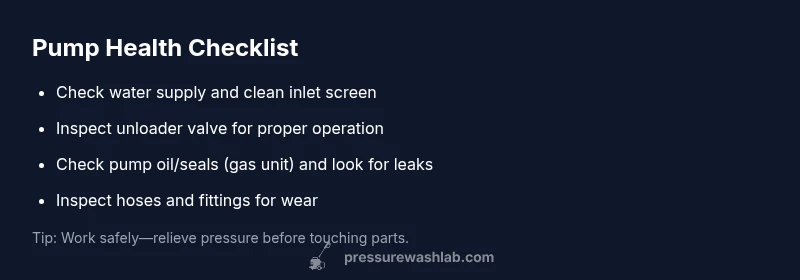
Before you disassemble anything, confirm the basics. Ensure the water supply is sufficient and not restricted by hoses, fittings, or a blocked nozzle. Inspect the inlet filter/screen for debris and clean it if needed. Check the spray gun nozzle and nozzle tips for clogs or wear, and make sure the unloader valve moves freely without binding. Verify the pump oil level (for gas-powered models) and look for fresh oil leaks. If the unit still performs poorly after these checks, the pump remains the strongest suspect and warrants deeper testing.
Diagnostic flow: symptom → diagnosis → solutions
The diagnostic flow helps you move from observation to action in a logical way. Start with the most common, easy-to-fix issues: water supply and inlet screening. If those checks pass but performance remains abnormal, test the unloader valve for proper action and cleanliness. If the valve is fine, inspect seals and pistons for wear or scoring, which often requires rebuild or replacement. For customers who want to avoid guesswork, document symptom patterns and progress through the flow until you either restore pressure or decide on a pump replacement path.
Step-by-step fixes for common pump issues
The most common fixes fall into a practical progression: clean or replace inlet screens, reset or replace the unloader valve, verify oil levels and seal integrity, and consider pump rebuild or replacement if wear is evident. In many cases a simple screen cleaning or valve reseating can restore performance. If the pump shows scoring or obvious wear, a rebuild kit or new pump is usually the best long-term fix. Always test after each fix to identify remaining issues.
Safety and maintenance to prevent future pump failure
Safety comes first when diagnosing or repairing a pressure washer pump. Always disconnect power, bleed pressure, and wear eye protection. Work in a dry, well-ventilated area, and avoid touching hot components. Regular maintenance—clean water intake, fresh oil (where applicable), proper storage, and using clean detergents—extends pump life. Keep an eye on hose wear, gasket integrity, and mounting bolts to prevent vibrations that accelerate wear. Establish a simple seasonal check routine to catch problems early.
Steps
Estimated time: 60-90 minutes
- 1
Power down and relieve pressure
Disconnect the unit from power, engage the trigger with all outlets closed, and relieve any built-up pressure to prevent fluid spray or injuries.
Tip: Even a parked machine can hold residual pressure—double-check before touching fittings. - 2
Check water supply
Verify the hose from the water source is fully open and there are no kinks or leaks. A weak feed starves the pump and mimics pump failure.
Tip: If you have a lengthy garden hose, try a shorter run to see if flow improves. - 3
Inspect inlet screen and filters
Remove the inlet screen and clean away debris. A clogged screen reduces flow and makes the pump seem like it’s failing.
Tip: Rinse screens with clean water and use a soft brush to remove stubborn residue. - 4
Examine the unloader valve
The unloader valve should move freely and return to neutral when released. A stuck valve can cause surging or no-spray conditions.
Tip: If in doubt, reseat the valve or replace with a compatible component. - 5
Test with nozzle removed
Run the pump with the spray gun and nozzle removed to observe flow directly at the wand. If pressure improves, the issue is likely downstream (nozzle, hose, or gun).
Tip: Do not run without water if the nozzle is removed—dry running can damage the pump. - 6
Check pump oil and seals (if applicable)
For gas-powered units, check the crankcase oil level and look for signs of contamination or leaks. Worn seals produce internal inefficiency and leaks.
Tip: Only perform oil checks when the engine is cool and the unit is level.
Diagnosis: Pressure washer loses pressure or surges despite adequate water supply
Possible Causes
- highWorn piston seals or worn head/gasket within the pump
- mediumStuck/unbalanced unloader valve
- lowInlet water supply issues or clogged inlet filter
Fixes
- mediumInspect and replace piston seals or entire pump rebuild kit
- easyTest and adjust/unloader valve or replace it
- easyImprove water supply by cleaning inlet screen and confirming adequate flow
Quick Answers
What is the most common pump failure in a pressure washer?
The most common failures involve worn piston seals or internal wear in the pump head. These symptoms often present as a loss of pressure or inconsistent spray. Replacement or rebuild is typically required.
The most common failures are worn seals or internal wear, which show up as low pressure or uneven spray.
Can I repair a pressure washer pump myself?
Basic fixes like cleaning the inlet screen or reseating the unloader valve can be DIY. For worn seals or internal pump damage, a rebuild kit or replacement is usually needed and may require specialized tools.
You can do simple fixes yourself, but major pump wear usually needs a rebuild or replacement.
How can I test the pump without the engine running?
Disconnect power, open the spray gun with nozzle removed, and briefly observe flow to gauge pump output. This isolates the pump from the engine and downstream components.
With the engine off, you can test by pulling the trigger to see if the pump delivers flow when open.
Why does my pressure washer lose pressure after a few minutes?
Common causes include overheating, worn internal seals, clogged filters, or a stuck unloader valve. Each can throttle flow and cause a rapid drop in pressure.
Overheating, worn seals, and clogged filters are typical culprits when pressure drops after a short run.
When should I replace the pump vs rebuild?
If the pump shows extensive wear, scoring, or multiple worn seals, replacement is often more cost-effective. A rebuild kit can be a good option for localized wear if you have DIY skills.
If wear is extensive, replacing is usually best; a rebuild is fine for targeted wear if you’re comfortable with DIY.
Is it safe to run with a faulty unloader valve?
No. A faulty unloader valve can cause unsafe pressure spikes, hose damage, and dangerous spray. Repair or replace before use.
No—unloader valve problems can be dangerous, so fix it before using the machine again.
Watch Video
Key Takeaways
- Test order matters: verify water supply first
- Unloader valve issues are common but fixable
- Worn seals require rebuild or replacement
- Cleaning screens often restores pump flow