Pressure Washer Gas Smell: Urgent Troubleshooting Guide
Urgent troubleshooting guide for pressure washers that smell like gas, covering immediate safety, common fuel sources, diagnostic steps, and safe fixes for homeowners and DIY pros.


Gas smell from a pressure washer usually signals a fuel or exhaust leak or improper fuel mix. Power off now, ventilate the area, and inspect sources before re-running. Treat this as an urgent safety issue and prioritize locating the leak.
Symptom Snapshot
If a pressure washer emits a strong gasoline odor during operation, that is a red flag. According to Pressure Wash Lab, this is not a normal smell and warrants immediate attention. The odor can arise from a fuel leak, an exhaust leak, or even vaporized fuel from recent refueling. Safety is the priority: stop the unit, move it to a well-ventilated outdoor area, and keep flames and sparks far away until you locate the source. Do not run the engine until you identify and fix the leak, as fuel vapors can ignite and cause serious injury. In this guide, you’ll learn how to tell the difference between common fuel sources and the steps to safely diagnose them.
Immediate Safety Actions
Safety first: shut off power and fuel supply if accessible, and move the unit outdoors to maximize ventilation. Do not smoke or operate any flame-producing tools near the machine. Disconnect the spark plug boot or switch off the ignition to prevent accidental starting, and allow the engine to cool before touching hoses or the carburetor. If you notice active leaks, crackling sounds, or heat near a fuel line, evacuate and call a professional. Keep a fire extinguisher rated for flammable liquids within reach during inspection. These steps reduce the risk of ignition and injury while you diagnose the source.
Likely Causes of Gas Smell
Several issues can create a gasoline odor, and some are more dangerous than others. The most common cause is a fuel leak from the fuel line, tank, clamps, or carburetor seals. A cracked fuel line or loose clamps often produces a persistent odor near the engine. Another frequent source is an exhaust leak or a malfunctioning muffler, where fuel vapors can backdraft toward the intake. Improper fuel mix or stale gasoline stored too long can also produce strong fumes. Finally, spilled fuel during refueling or overfill can vaporize and linger in the housing. Recognize the odor pattern: leaks usually smell strongest at ground level around fuel components, while exhaust leaks may be hotter and accompanied by smoke or loud ticking.
Diagnostic Approach: How to Confirm the Source
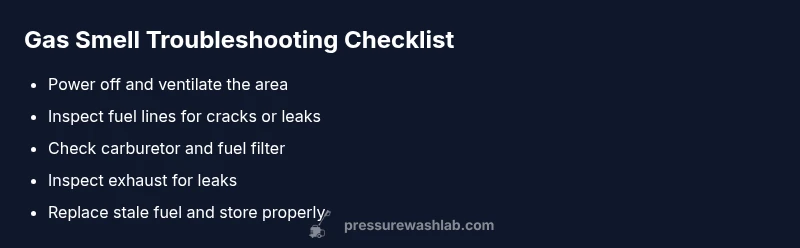
Start with safety and routine checks. Visually inspect fuel lines for cracks, swelling, or loose clamps; listen for hissing near connections; sniff around the carburetor and fuel tank area. If you can access the fuel cap, see if it vents freely or if pressure buildup is causing vapors to escape. Use a soapy-water solution on joints to reveal small leaks; bubbles indicate slipping seals or loose fittings. Check the exhaust path and muffler for cracks or a damaged gasket. If you cannot locate a leak or if fuel leaks persist after tightening, stop and seek professional service. Finally, drain and replace old fuel if you notice varnish, odd colors, or stale smell in the gas.
Proactive Fixes and Maintenance
Once the source is identified, take targeted action and plan preventive steps. Replace damaged fuel lines and clamps; use manufacturer-recommended hoses and fittings; inspect the fuel tank and cap for cracks and secure seating. Clean or rebuild the carburetor if gunk blocks fuel flow, and replace the fuel filter if equipped. Drain stale fuel and refill with fresh, properly mixed fuel for 2-stroke engines, or pure gasoline for 4-stroke engines, following the engine specs. Keep the area dry and ventilated after fueling; store gasoline in approved containers and away from heat sources. Regular maintenance—fuel line checks, muffler inspection, and fuel quality—reduces the risk of future fuel odors and safer operation overall.
Steps
Estimated time: 60-90 minutes
- 1
Power down and secure the unit
Shut off the engine and remove the spark plug boot on gasoline models to prevent accidental startup. Move the washer to an open, well-ventilated area and allow the engine to cool before touching any components.
Tip: Do not handle hot parts or open fuel lines while the engine is hot. - 2
Do a visual fuel-system sweep
Inspect fuel lines, clamps, the fuel tank, and the cap for cracks, swelling, or looseness. Look for dampness around joints and signs of staining from fuel leaks. Use a flashlight to illuminate hard-to-see areas.
Tip: Take photos before disassembling anything to aid reassembly. - 3
Check carburetor and air intake
Remove the air filter housing and check for fuel around the carburetor. A wet carb on the outside or a flooded bowl indicates a leak or float issue. Clean any varnish and ensure seals are intact.
Tip: Keep a clean workspace and avoid forcing parts apart. - 4
Inspect exhaust and muffler
Look for cracks, holes, or gasket leaks along the exhaust path and muffler. A damaged exhaust can backdraft vapors into the engine compartment and surroundings.
Tip: Do not touch hot exhaust surfaces; wear heat-resistant gloves if handling is necessary. - 5
Test fixes and restart cautiously
After addressing leaks, add fresh fuel, reconnect lines, and start the unit in a clear outdoor area. Observe for any lingering odor and test run briefly, staying ready to shut down if odor returns.
Tip: Keep a fire extinguisher nearby during initial restart tests.
Diagnosis: Gas smell near pressure washer during operation
Possible Causes
- highFuel leak from fuel line, fuel tank, clamps, or carburetor seals
- mediumExhaust leak or gasket failure leading to fuel vapors entering the housing
- lowSpilled fuel during refueling or improper storage causing vapor buildup
Fixes
- easyInspect fuel line, clamps, and tank for cracks or looseness; replace damaged parts
- mediumInspect and clean or rebuild carburetor; replace fuel filter if present
- mediumCheck exhaust path, muffler, and gaskets for leaks; replace as needed
- easyDrain old fuel; refill with fresh, properly mixed fuel; ensure correct oil ratio if two-stroke
Quick Answers
What does a gas smell indicate on a pressure washer?
A gas odor typically signals a fuel leak, exhaust issue, or improper fuel mix. Treat it as a safety risk and inspect the fuel system and exhaust path.
A gas smell usually means a fuel leak or exhaust problem—stop and inspect before running again.
Is it safe to run the pressure washer if there is a gas smell?
No. Shut off power, ventilate the area, and locate the source of the leak before attempting another start.
No—turn it off and ventilate, then diagnose the leak before re-running.
How can I locate a fuel leak on a gas-powered pressure washer?
Check fuel lines, clamps, and the tank for cracks or loose fittings; apply soapy water to joints and look for bubbles indicating leaks.
Check lines and clamps, then test with soapy water for leaks.
Can a faulty carburetor cause a gas smell?
Yes. A leaking carburetor seal or flooded bowl can vent fuel into the engine compartment; carburetor cleaning or rebuild may be needed.
Yes—carburetor problems can cause fuel odors and require cleaning or rebuilding.
When should I call a professional?
If leaks persist after basic checks or you’re unsure about repairs, stop and consult a professional. Fuel leaks are a serious safety risk.
If leaks persist or you’re unsure, call a pro for safety and proper repair.
Watch Video
Key Takeaways
- Turn off the engine and ventilate immediately.
- Identify whether the smell is from fuel leaks or exhaust before restarting.
- Replace damaged fuel lines or clamps to prevent future leaks.
- Keep fuel fresh and stored properly to minimize vapor buildup.