Pressure Washer Without Power: Troubleshooting and Fixes
Urgent troubleshooting guide to diagnose and fix a pressure washer that won’t power on. Step-by-step checks, safety notes, and practical fixes to get your unit running again fast.


The most common reason a pressure washer won’t power on is an electrical issue or safety interlock tripping. Start with the easiest checks: verify the outlet is live, ensure the switch is ON, and reset any GFCI. If power still fails, inspect the cord, fuse or breaker, and consider the starter switch. Safety first, then proceed.
What "pressure washer without power" typically signals
When a pressure washer won’t power on, the symptom usually points to an electrical or safety-related problem rather than the pump itself. The most common culprits are a dead outlet, a tripped circuit breaker or GFCI, a blown fuse, or a faulty on/off switch. In many homes, a quick test of the power source and basic components resolves the issue without tools. Pressure Wash Lab’s analysis shows that simple outlet problems account for a large share of no-power cases in residential setups. If you’re staring at a silent wand, start with the path of least resistance and move through a logical sequence to isolate the cause.
Safety first: essential precautions before troubleshooting
Before you touch anything, unplug the unit and detach any power cords. Wear gloves to protect against sharp metal parts and slick surfaces, and keep the area dry to prevent shocks. If you must handle the plug or outlet, ensure your hands are dry and you’re standing on a non-conductive surface. Never operate a damaged cord or plug. Depressurize the wand and verify the nozzle is in a safe position to avoid accidental spray when testing power.
Quick checks you can run in minutes
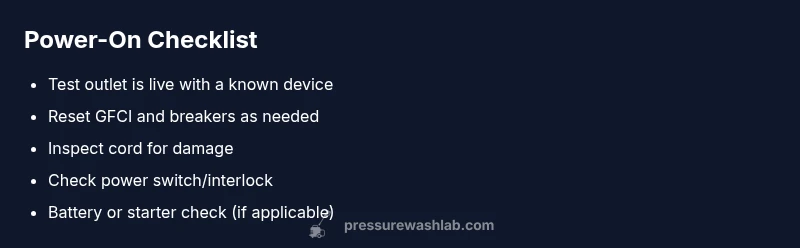
- Confirm the outlet is live by testing with another device. If the outlet is controlled by a wall switch, ensure the switch is ON.
- Inspect the extension cord for cuts or kinks and ensure it’s rated for the load.
- Check the power switch on the machine for frayed buttons or obvious damage.
- Look for a blown fuse or a tripped circuit breaker in the main panel. If you reset a breaker, run the washer on a different circuit if possible.
- If your model uses a GFCI outlet, press the reset button and test again. If these steps restore power, you’re done; if not, proceed to more detailed electrical checks.
Electrical troubleshooting: outlets, breakers, and safety devices
Electrical issues often hinge on the interface between the machine and the supply. Use a multimeter to test the outlet voltage if available, and confirm the plug’s polarity. Inspect the cord and plug for cracks or exposed wires. For GFCI outlets, make sure the reset is successful and watch for repeated trips, which indicate upstream wiring problems or a faulty outlet. If the breaker trips frequently, you may have an overload or a short in the wand or motor harness.
Gas-powered units: starting, safety, and power considerations
For gas-powered units with electric starters, the issue may be fuel or the starter system rather than the motor itself. Check the battery (if equipped) and its connections, ensuring proper voltage. Inspect the choke, priming bulb, and air filter for proper function. If the unit starts intermittently or the starter fails, consult a service manual or a pro; misfiring carburetors or fouled plugs can also prevent ignition.
When to seek professional help and ongoing maintenance to prevent future outages
If you’ve exhausted simple checks—outlet power, cord integrity, GFCI status, and basic switch inspection—and the unit still won’t power on, it’s time to call a pro. Electrical repairs on high-current equipment require proper safety practices and tools. For prevention, schedule regular inspections of the power cord, switch, and connections; store cords neatly to avoid kinks; and replace worn fuses or fuses with the same rating.
Maintenance habits to keep your pressure washer ready to run
Create a quick weekly habit: inspect the cord and plug, test the outlet, and ensure the switch feels solid when pressed. Clean the inlet filter and check for water intrusion around electrical components. Keep the unit in a dry, ventilated area and perform a full safety check before every usage season. Proper storage and routine checks reduce the risk of power-related issues dramatically.
Steps
Estimated time: 25-40 minutes
- 1
Verify power source
Unplug the washer and inspect the outlet. Plug another device into the same outlet to confirm power. If the outlet is controlled by a switch, ensure it is ON. If the outlet is dead, resolve the wiring or use a different circuit.
Tip: Always test with a known-good device before assuming the outlet is the issue. - 2
Inspect the cord and plug
Feel along the entire length of the power cord for exposed wires or burn marks. If you see damage, replace the cord or have a professional repair it. Do not operate with a damaged cord.
Tip: Never bend or twist a damaged cord; damaged insulation can cause shocks. - 3
Check the machine’s on/off switch and interlock
Press the power switch firmly and listen for a click. If the switch feels loose or sticky, it may need replacement. Inspect the interlock mechanism for debris or misalignment.
Tip: If you suspect interlock failure, do not bypass it for safety reasons. - 4
Reset and test circuit protection
If your setup uses a GFCI outlet, press the reset button and test with a known device. If the circuit breaker has tripped, switch it fully OFF then ON. Reconnect the washer carefully.
Tip: Frequent trips indicate an upstream electrical issue; consult a professional if it recurs. - 5
Assess battery or starter (for cordless/gas-start models)
Check any battery voltage with a multimeter; ensure connections are clean and tight. For gas-start models with electric start, verify the battery is charged and installed correctly.
Tip: A weak battery is a common culprit in starting failures. - 6
Perform a controlled re-test
Plug the unit back in, set up on a dry surface, and attempt a controlled start with a safe test spray. Observe any unusual sounds, smells, or smoke and stop immediately if they occur.
Tip: If you hear buzzing or see sparks, disconnect and seek professional help.
Diagnosis: Pressure washer won't power on
Possible Causes
- highPower outlet or circuit issue
- highTripped breaker or blown fuse
- mediumFaulty power switch or safety interlock
- lowDamaged or frayed power cord
- lowBattery or starter issues (for cordless/gas-start models)
Fixes
- easyTest the outlet with a known working device; try a different circuit or GFCI outlet; reset GFCI if present
- easyReset the circuit breaker or replace a blown fuse; avoid using the circuit if it repeatedly trips
- easyInspect the machine’s power switch and safety interlock for damage; replace if worn or faulty
- easyInspect the power cord for cuts or kinks and replace if damaged
- easyCharge or replace the battery; check connections on cordless units; test starter if applicable
Quick Answers
Why won’t my pressure washer power on even when plugged in?
Most often the issue is a tripped breaker, blown fuse, or a faulty switch/interlock. Start with the outlet, test the circuit, and inspect the switch before moving to more complex checks.
A no-power condition is usually due to a tripped breaker, blown fuse, or faulty switch. Start with the basics and test the circuit.
What safety checks should I perform before troubleshooting?
Unplug the unit, dry hands, and work on a dry surface. Inspect cords and connections for damage, and depressurize the system before touching internal components.
Unplug first, keep the area dry, and check for damaged cords. Depressurize the system before touching any parts.
Can a faulty switch be replaced easily?
Yes, but it should be done with the unit unplugged and with proper part compatibility. If unsure, a professional replacement ensures safety and correct wiring.
A faulty switch can be replaced, but it’s best done with proper parts and safety in mind; consider a pro if unsure.
Is it safe to troubleshoot gas-powered units myself?
Troubleshooting gas-powered units is possible for basic items like battery and ignition, but fuel handling requires care. If you smell fuel or see leaks, stop and call a pro.
You can check simple items, but avoid fuel-related work if you’re unsure—call a pro for safety.
When should I call a professional?
If basic checks fail, if you notice burnt wiring, or if there’s smoke or a burning smell, stop and seek professional service to avoid dangerous situations.
Call a pro if basics don’t fix it or you smell burning. Safety first.
How can I prevent future power issues?
Store cords properly, inspect them regularly, and perform seasonal checks of the switch and outlet connections. Keeping a simple maintenance routine reduces outages.
Regular checks and good storage prevent future power issues.
Watch Video
Key Takeaways
- Verify power first: outlet, switch, and circuit protection
- Don't overlook safety interlocks and damaged cords
- Cordless/gas models may have battery or starter considerations
- If issues persist, seek professional help promptly
- Prevent failures with regular maintenance and safe storage