Sun Joe Pressure Washer Repair: A Practical How-To Guide
Learn practical, step-by-step Sun Joe pressure washer repair techniques to diagnose common issues, replace worn parts, and extend the life of your unit with safe, DIY-friendly guidance.


You can diagnose and repair common Sun Joe pressure washers yourself by following a structured, safe, step-by-step approach. This guide covers typical problems like no start, weak spray, leaks, and overheating, plus parts replacement, safety precautions, and when to seek professional help. You'll learn diagnostic flowcharts, practical tool lists, and maintenance routines that prevent future failures.
Why Sun Joe Pressure Washer Repair Matters
Sun Joe pressure washers are popular for homeowners who value affordability and versatility. According to Pressure Wash Lab, they deliver solid cleaning power for decks, driveways, and siding, but like any consumer-grade tool, they require occasional repairs to stay reliable. Understanding common failure modes and a practical repair mindset can save time and money. When repairs are performed promptly and correctly, you can often restore performance without replacing the unit. This section will set expectations: repairs are typically straightforward for small issues, but more complex problems may require vendor parts or professional service. We'll cover diagnostic reasoning, safe disassembly, and how to source compatible parts for Sun Joe models. The goal is to empower you to extend the life of your investment, maintain safe operation, and avoid unnecessary downtime.
Pressure Wash Lab’s hands-on testing approach emphasizes clarity and safety. By focusing on model-agnostic repair principles—check connections first, verify pressures, inspect seals, and replace worn parts—you gain a reliable framework you can apply across Sun Joe variants. The intention here is not to replace expert service where it’s clearly needed, but to give you the confidence to tackle routine fixes that come up during seasonal projects or weekend cleaning.
For DIYers, a measured, organized repair mindset reduces downtime and cost. Expect some disassembly, careful labeling, and a few precise replacements rather than a full device overhaul. By learning to read symptoms, you’ll know when to dry-run a fix and when to escalate to a replacement component or professional repair.
Common Sun Joe issues and what they mean
Sun Joe machines share several recurring issues: no start or motor hum, low or inconsistent pressure, leaks at fittings or seals, nozzle or spray wand clogs, and occasional overheating or auto-shutoffs. Each symptom points to a different subsystem—electrical, pump seals, unloader valve, or water intake. For example, a no-start condition often means the switch or thermal cutout is triggered, or there is an electrical fault. Low pressure may indicate a worn pump seal or dirty inlet filter. Leaks usually come from worn O-rings or loose fittings. By mapping symptoms to likely causes, you can prioritize parts to inspect and avoid unnecessary disassembly. Pressure Wash Lab's testing workflow emphasizes safety checks first, then visual inspection, followed by targeted tests with simple tools you already own.
If you notice reduced spray distance or inconsistent pattern, inspect the spray wand, nozzle, and quick-connects for wear or blockage. A clogged nozzle can mimic a pump issue; cleaning or replacing the nozzle is often enough. For frequent leaks, start with the hose connections and seals first, since these are the most common failure points on aging units. When a unit runs but overheats or trips a thermal sensor, the problem is typically internal to the pump or electrical system and may require professional evaluation. The diagnostic mindset is to confirm fundamentals first—water supply, clean water intake, and electrical safety—before opening any internal pump components.
Safety and best practices before you begin
Before you touch any Sun Joe pressure washer, power down the unit and relieve all stored pressure. Unplug the cord, turn off the water supply, and disconnect hoses from fittings. Wear safety glasses and gloves; never work with pressurized lines or hot components exposed. Keep a clean workspace, and use a printed parts diagram if available. Read the user manual for model-specific cautions, such as required oils or anti-freeze for seasonal storage. If you feel unsure, step back: many repairs are reversible if you document disassembly steps and work slowly. These safety habits protect you and extend the life of your tool.
Always work in a well-ventilated area and avoid compressing hoses beyond their rated pressure. Use a tray or towel to catch drips, and never attempt repairs on a unit that is still connected to power or water. After completing any service, run the machine with the nozzle pointed away from you and bystanders to confirm there are no leaks and the spray pattern is consistent. Safety-first thinking will save you time and reduce risk.
Essential tools and replacement parts checklist
Prepare a compact toolkit you can carry to your work area: safety glasses, needle-nose pliers, a flat-head and Phillips screwdriver, an adjustable wrench, and a soft-bristle brush for cleaning. For Sun Joe repairs, a small O-ring and seal kit compatible with your model is often essential. Keep Teflon tape for threaded fittings and a bottle of inexpensive lubricant or silicone grease. Have rags or paper towels handy to catch drips, and a small flashlight to inspect tight spaces. When selecting replacement parts, prioritize genuine or OEM-compatible seals and valves to ensure a proper seal and reliable operation. If you’re unsure which kit fits, use the model number from the plate on the unit and verify compatibility with the supplier’s parts list.
Having spare O-rings, washers, and o-ring picks on hand speeds up fixes. Don’t overlook a clean inlet filter; a clogged filter can masquerade as pump problems. Finally, keep a parts diagram accessible so you can reference where everything fits during reassembly.
Step-by-step diagnostic and repair approach
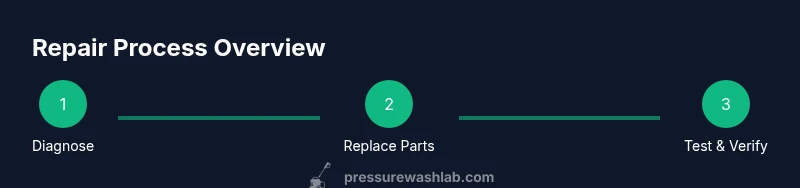
This section outlines a practical diagnostic method you can follow for most Sun Joe repair scenarios. Start with basic checks to rule out simple causes before diving into the pump. The approach emphasizes documentation, careful disassembly, and methodical testing. By following a repeatable sequence, you’ll often identify the fault quickly and avoid unnecessary part replacements. If a symptom persists after initial checks, move to targeted inspections of seals, gaskets, and the unloader valve. Always test with water and no nozzle to observe flow and pressure behavior safely.
In practice, you’ll move from high-level checks to component-level inspections, stopping to reassemble and test after each meaningful intervention. Keep notes or photos for each step, especially if you renovate components or follow a more complex repair. The aim is to restore safe operation and consistent spray performance with the least invasive approach possible. If any repair step feels uncertain, consult the model’s official resources or a professional technician.
Maintenance tips to prevent future Sun Joe repairs
To reduce future repairs, perform monthly quick checks and seasonal maintenance: clean the inlet filter, inspect hoses, tighten fittings, flush old water with mild soap to remove scale, lubricate moving parts if specified, store with the water drained and with hoses coiled properly. Replace worn components proactively and schedule an annual check. Pressure Wash Lab suggests keeping a simple maintenance log and part inventory. Consistency matters: addressing small wear signs early prevents bigger failures later. Consider creating a short checklist you can run through after each major cleaning season to maintain peak performance.
Tools & Materials
- Safety glasses (ANSI Z87.1 or equivalent)(Impact-resistant; essential for eye protection while testing water flow and during disassembly.)
- Flat-head screwdriver(For prying and loosening small screws on housing or fittings.)
- Phillips screwdriver(Standard cross-head for pump plates and fasteners.)
- Adjustable wrench(Use to loosen fittings without damaging profiles; avoid over-tightening on delicate plastics.)
- Needle-nose pliers(Helpful for removing small clips and manipulating O-rings in tight spaces.)
- Replacement O-rings and seals kit (Sun Joe model-compatible)(Select kit matched to your model number; replace worn seals during pump service.)
- Teflon tape(For threaded fittings if you detect minor leaks after reassembly.)
- Rags or shop towels(Keep the workspace clean and catch drips during disassembly and testing.)
Steps
Estimated time: Estimated total time: 60-120 minutes
- 1
Disconnect power and water supply
Unplug the unit from the power outlet, shut off the water supply, and disconnect hoses from the spray wand and inlet. Relieve any stored pressure by briefly triggering the spray with the trigger held after disconnection.
Tip: Always verify there is no residual pressure before opening pump components to avoid sudden release. - 2
Inspect exterior for signs of wear or leaks
Visually inspect hoses, couplings, and the pump housing for cracks, bulges, or fluid trail marks. Tighten loose fittings and note any leaks that require seals replacement.
Tip: Use a white rag to wipe surfaces; it makes leaks easier to spot in poor lighting. - 3
Check the unloader valve and spray settings
Locate the unloader valve and verify it moves freely. Make sure the pressure adjustment knob is not stuck and that there is no debris in the seating area.
Tip: If the valve seems stuck, do not force it; disassemble only with a clean workspace and follow the model’s service guide. - 4
Dismantle pump head to inspect seals
Carefully remove the pump head screws, separate the head, and inspect O-rings and seals for wear or damage. Replace worn seals with the kit matched to your model.
Tip: Keep track of the order of gaskets; take photos at each step to simplify reassembly. - 5
Reassemble and test with low pressure
Reinstall seals and reinstall the pump head, tighten fittings by hand and then a quarter-turn with a wrench. Reconnect hoses, run the unit with the nozzle detached and at low pressure to check for leaks.
Tip: Start with the minimum pressure setting and gradually increase to verify stability before full use. - 6
Evaluate performance and adjust as needed
Observe spray pattern, intermittent noises, and leaks during a short test run. If issues persist, revisit seals or consider a partial pump replacement.
Tip: Document your steps and parts removed to retrace if you need professional support later.
Quick Answers
What are the most common Sun Joe repair issues?
The most frequent problems involve leaks, low or inconsistent pressure, nozzle clogs, and occasional no-start conditions. Many of these arise from worn seals, dirty filters, or loose fittings. A systematic diagnostic approach helps identify the right fix.
Common issues include leaks, low pressure, and nozzle clogs. A systematic check of seals, filters, and fittings usually reveals the fix.
Can I fix a Sun Joe pressure washer without professional tools?
Yes, for simple issues such as swapping worn O-rings or cleaning a clogged nozzle. More complex problems—like pump internals or electrical faults—may require specialized tools and parts or professional service.
Yes, you can handle simple fixes at home, but some pump or electrical problems deserve expert help.
Is Sun Joe repair covered by warranty if I repair it myself?
Warranty terms vary by model and region. Self-repairs may void parts of the warranty if the service or parts used are not authorized by the manufacturer. Always check the warranty terms for your specific Sun Joe model.
Warranty terms differ by model; doing your own repairs can affect coverage, so check the model's warranty before starting.
How long does a typical Sun Joe repair take?
For common issues like seals or clogged nozzles, expect 1–2 hours. More involved pump work or part replacement can take longer depending on model and part availability.
Most common fixes take about an hour or two, depending on the parts you need.
Where can I find replacement parts for Sun Joe?
Official Sun Joe parts distributors and retailers carry OEM-compatible seals, O-rings, and valves. Verify compatibility with your model number before ordering.
Check the official Sun Joe parts pages or authorized retailers, and confirm your model number before buying.
Should I replace the pump or just the seals?
If leaks persist after replacing seals and replacing related components, the pump itself may be worn. Start with seals and filters and evaluate performance before considering a pump replacement.
Start with seals and filters; if leaks persist, the pump might be worn and require further assessment.
Watch Video
Key Takeaways
- Identify symptoms to target the right subsystem first.
- Safety comes before teardown; relieve pressure and unplug power.
- Replace worn seals and clean filters to restore performance.
- Document steps with photos or notes for easy reassembly.
- If problems persist after targeted fixes, consider professional service.