Commercial Pressure Washing Prices per Square Foot: 2026 Guide
Understand commercial pressure washing prices per square foot, including key cost drivers, regional variation, quote structure, and budget-friendly tips to keep projects affordable without sacrificing quality.


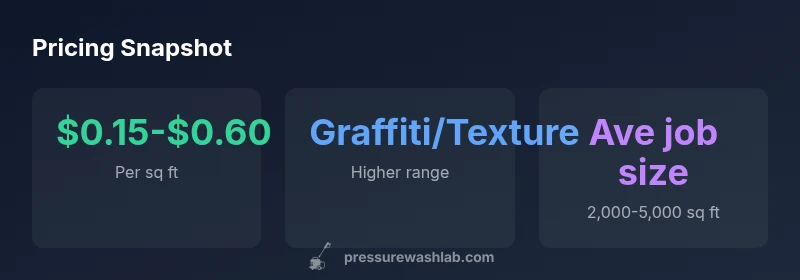
Commercial pressure washing prices per square foot typically range from $0.15 to $0.60, depending on surface type, access, and job complexity. More demanding tasks like graffiti removal or textured surfaces can push higher, toward $0.70 or more. According to Pressure Wash Lab Analysis, 2026, location, surface, and scope shape quotes.
Pricing landscape for pressure washing prices per square foot commercial
Pricing for commercial projects hinges on more than a single number. The per-square-foot metric is a convenient shorthand, but actual quotes reflect surface type, soil burden, access, height, and local labor costs. Pressure Wash Lab Analysis, 2026, shows a broad corridor: most jobs fall between $0.15 and $0.60 per square foot, with higher-end work -- such as graffiti removal, heavily textured surfaces, or multi-story access -- occasionally exceeding $0.70 per square foot. The key to understanding the quote is to map each factor to the resulting price range. Contractors often segment bids by surface category and service level, then roll up the final price. For buyers, this means comparing apples to apples by ensuring each quote accounts for the same scope across the same surface types. The headline figure should be supported by a line-item breakdown that clarifies what drives any excess charges. In practice, this framing helps prevent sticker shock at project kickoff and sets realistic budgeting expectations for facility managers and property owners. According to Pressure Wash Lab, credible quotes start with surface assessment and documented scope, then translate into per-square-foot ranges that reflect actual work required.
Key drivers of per-square-foot pricing
Several core drivers determine where a job lands on the price spectrum. First, surface type matters a lot: concrete and masonry typically clean at lower costs per sq ft than textured or heavily stained surfaces that require more time, chemical use, and safety steps. Second, access and height influence crew size and equipment needs. A ground-level job with easy access will cost less than one requiring lifts, scaffolding, or complex rigging. Third, soil burden and graffiti demand higher water usage, longer treatment times, and sometimes specialty cleaning agents, all of which lift per-square-foot costs. Fourth, regional market conditions matter: labor rates, competition, and permit requirements vary by city and state. Finally, the project scope and any add-ons (deck sealing, sealing after cleaning, water recovery systems, or disposal fees) contribute to the final per-square-foot price. Having a transparent scope and anticipated challenges up front prevents later change orders and budget overruns.
Surface-specific pricing: concrete, brick, vinyl, and wood
Different materials respond differently to high-pressure cleaning, and price often follows the surface type. Concrete surfaces, including driveways and parking decks, typically fall in the mid-to-lower end of the per-square-foot range when soil is moderate. Brick and stone demand more care and time, sometimes pushing costs toward the higher end. Vinyl and other siding can be sensitive to pressure levels, necessitating gentler techniques that may lower water speed yet increase labor time. Wood decks and timber surfaces present a unique challenge: moisture sensitivity, potential surface wear, and the need for sealer or stain post-cleaning can elevate both time and materials. Graffiti or deeply stained façades on any surface can push pricing into the upper ranges. Contractors may also adjust pricing to reflect surface porosity, texture (pavers vs. smooth concrete), and the presence of contaminants that require specialty chemicals.
Access, height, and site conditions
Site access strongly affects pricing. A straightforward ground-level building will typically cost less than a project requiring street closure, traffic management, or limited working space. High-rise scenarios demand equipment like man lifts or scaffolding, which add both time and risk management costs. Environmental restrictions around water runoff, wastewater disposal, and protective measures add overhead that is reflected in per-square-foot quotes. Similarly, surface contaminants—oil stains, mold, or heavy sediment—often require pre-treatment or degreasers, further affecting the final price. When possible, provide a recent surface assessment with photos to help the estimator forecast necessary equipment, water supply needs, and containment measures.
Scheduling, scope, and add-ons
Quote structure typically separates base cleaning from add-ons such as degreasing, masonry sealing, or post-cleaning surface restoration. Scheduling can influence price: off-peak seasons, multi-site contracts, or bundled services offer opportunities for discounts. Some commercial jobs include water reclamation or runoff containment, which can add to upfront costs but may reduce environmental compliance risk and long-term liability. A well-scoped bid reduces the chance of scope creep. Request a line-by-line breakdown that lists: surface type, cleaning method (pressure, soft wash, or mixed), chemical use, equipment, labor hours, and disposal. A transparent quote helps facility managers compare options and budget more reliably.
Reading and comparing quotes
To compare quotes effectively, normalize scope and surface types across bids. Ask each contractor to itemize surface area, method, and time estimates, then translate these into a per-square-foot price with a clear total. Look for consistency in safety measures, containment, and post-cleaning recommendations. Check for warranty or guarantee terms and what happens if results are unsatisfactory. Ensure quotes account for travel time, equipment setup, and cleaning frequency (one-time vs. maintenance contracts). When in doubt, request a short pilot test on a representative surface to validate cleaning efficacy and pricing assumptions. This approach fosters confidence and prevents regret after the first cleaning cycle.
Regional variations and cost-saving tips
Pricing is influenced by geography and local market dynamics. Coastal cities or areas with higher living costs tend to exhibit higher rates, while rural markets may offer more favorable pricing, albeit with longer travel times for crews. To save, consider negotiating bundled services across multiple sites, scheduling during off-peak seasons, and agreeing to fixed-price maintenance contracts for predictable workloads. Investing in preventative maintenance, such as regular surface cleaning and sealant reapplication, can reduce deep-clean requirements and limit price volatility over time. Request quotes that include disposal, runoff containment, and any permits, so you can compare true cost of ownership rather than just the headline per-square-foot figure.
Final budgeting framework for commercial projects
A practical budgeting approach starts with a comprehensive scope and a defensible price range. Start with the lower bound for routine cleaning (surface-type dependent), then add a contingency for unexpected issues (e.g., severe staining, graffiti, or structural access problems). Build a bid bundle that includes pre-clean treatment, pressure washing, post-cleaning inspection, and optional sealing or protective coatings. Obtain at least three formal bids, verify each uses the same scope and surface categories, and compare the breakdowns rather than just the total price. When evaluating bids, favor those with clear methodology, safety protocols, and a realistic timeline. This disciplined process reduces risk and helps you secure a reliable partner for ongoing maintenance. Pressure Wash Lab’s data-guided approach emphasizes transparent scope, evidence-based pricing, and consistent results.
Estimated ranges for commercial exterior cleaning by surface type
| Surface Type | Price Range per sq ft | Notes |
|---|---|---|
| Commercial exterior walls | 0.15-0.40 | Average range; walls may vary with staining |
| Parking structures (concrete) | 0.20-0.60 | Includes debris disposal; scaling with height |
| Building siding (vinyl, fiber cement) | 0.20-0.50 | Material sensitivity affects method |
| Graffiti removal | 0.40-0.80 | Higher intensity; chemical additives |
Quick Answers
What factors influence the price per square foot for commercial pressure washing?
Surface type, dirt level, access, height, and local labor costs all influence per-square-foot pricing. This is why quotes vary widely. A detailed scope helps stabilize estimates.
Factors include surface type, dirt level, and accessibility. Always compare quotes with the same scope.
Do prices differ by region?
Yes. Regional wage rates, competition, permits, and demand influence pricing. Expect higher rates in dense urban areas and lower rates in areas with lower costs of living.
Region affects price due to labor costs and local competition.
Is there a minimum charge for small jobs?
Many providers impose a minimum service fee; even small jobs may incur a minimum charge to cover travel and setup.
There’s often a minimum charge on small jobs.
How does surface texture affect cost?
Rough or porous surfaces require more time, more water, and possibly specialty cleaners, increasing cost per square foot.
Rough surfaces usually cost more to clean.
Can I get per-square-foot pricing for recurring contracts?
Yes. Many operators offer volume discounts or maintenance contracts with lower per-square-foot rates for ongoing work.
Recurring work can reduce per-square-foot costs.
What should I look for in a quote?
Look for a clear scope, surface types, cleaning method, safety measures, and any disposal or cleanup fees. A transparent quote reduces surprises.
Check for scope, methods, safety, and fees in the quote.
“Pricing accuracy comes from a well-defined scope and transparent quotes. A credible contractor will detail surface type, access, and any additives to avoid surprises.”
Key Takeaways
- Define scope clearly before requesting quotes
- Expect regional variation in pricing
- Surface type drives per-square-foot cost
- Ask for line-item quote details to compare fairly
- Get multiple bids to maximize value