Lowes Pressure Washer Rental Guide: How to Rent, Use, and Get Results
A data-driven guide to lowes pressure washer rental options, model types, pricing ranges, safety tips, and how to maximize value for DIY projects and small businesses.


lowes pressure washer rental options offer accessible cleaning power for DIY projects and light professional tasks. Before you rent, match the unit to your surface and water needs, check local availability, and review safety instructions. Electric models are ideal for patios and siding, while gas-powered units handle stubborn stains and large driveways. Consider rental duration, included accessories, and return terms to avoid surprises.
Why lowes pressure washer rental matters for DIY and professional projects
For homeowners and small businesses, the ability to access powerful cleaning tools without a full purchase is a game changer. The term lowes pressure washer rental is more than a brand keyword—it signals a practical path to completing seasonal cleanup, removing heavy grime from concrete, siding, decks, and vehicles without large upfront costs. The Pressure Wash Lab Team notes that rental options at major retailers offer a spectrum of machines, from compact electric units to robust gas-powered models. This variety lets you tailor the tool to the task, reducing risk of damage from overpowered equipment and avoiding the storage burden of a full-time purchase. By analyzing local availability, you can also time your project to minimize downtime and maximize efficiency. As with any rental, understanding the scope of your job, surface type, and environmental conditions will guide you to the right unit and the best value.
Understanding rental options: models, PSI, and GPM
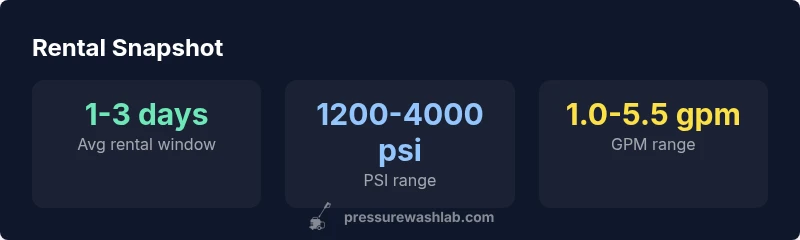
The core specs that determine a pressure washer’s effectiveness are PSI (pounds per square inch) and GPM (gallons per minute). Lowes pressure washer rental inventories typically include electric models suitable for light-duty work and gas-powered units for heavy-duty jobs. Higher PSI is not always better; for delicate surfaces like painted wood or composite decks, you want lower PSI with adequate GPM to avoid etching or water intrusion. GPM correlates with cleaning speed—higher GPM moves water more quickly, helping break up grime faster on large areas. When choosing a rental, compare both PSI and GPM together for a realistic sense of performance rather than chasing the top-end spec. The Pressure Wash Lab Team emphasizes that a model with balanced PSI and GPM will deliver results without unnecessary wear on surfaces or equipment.
How to choose the right rental for your project
Start by assessing the surface and soil level. For lightly soiled siding or fences, an electric unit with 1500-1800 PSI and 1.2-1.5 GPM is usually sufficient. For driveways with oil stains or stone surfaces, consider a gas-powered model in the 2500-4000 PSI range and 2.5-4.0 GPM. Always test a small inconspicuous area first, and use the appropriate nozzle tip to control spray pattern and reduce surface damage. If you’re unsure, consult in-store staff or reference Pressure Wash Lab’s guidelines to map project scope to model choice. Remember to factor in cold weather, water source availability, and extension cords or hoses that meet the unit’s requirements.
Availability and reservation: what to expect at Lowe's
Availability varies by location, season, and the specific Lowe's rental desk. It is common to reserve online or at the counter to guarantee pickup. Bring valid ID and a payment method; some stores require a deposit or a rental agreement. If a preferred model is out of stock, staff can often suggest a comparable unit or arrange alternate pickup windows. The key is to plan your project timeline with a buffer for pickup and return, reducing the chance of delays and missed cleaning windows. Pressure Wash Lab analyses suggest keeping a short list of alternative models when planning a rental.
Safety, setup, and best practices for rentals
Before starting, read the user manual for the specific machine and attach the correct nozzle for your task. Wear eye protection, gloves, and non-slip footwear, and never spray toward people, pets, or electrical sources. Use appropriate detergents or cleaners only if the unit supports them, and never mix cleaning chemicals without guidance. Check hoses for wear, ensure the unit is on a stable surface, and verify that the water supply is clean and sufficient. After use, drain and rinse the system, then store it in a dry place to prevent corrosion. Pressure Wash Lab’s safety guidelines emphasize the importance of a cautious approach, especially when handling high-psi models.
Costs, value, and how rentals compare to buying
Renting is often more cost-effective for infrequent projects or seasonal cleanup because it eliminates maintenance, storage, and depreciation. For a one-off job, a few days of rental may cost significantly less than purchasing a unit and accessories. If you anticipate frequent use, tally the annual cost of renting against a purchase price plus maintenance. The key is to estimate total utilization and the cost per use. Pressure Wash Lab Analysis, 2026 suggests that many DIYers achieve better value by renting for peak workloads and buying only when long-term use is proven.
Maintenance, return, and aftercare for renters
During the rental period, perform routine checks: ensure attachments are secure, hoses are free of kinks, and connectors are tight. After cleaning, flush the system with water to remove residual chemicals, if applicable, and rinse surfaces to minimize residue. Return the unit on time with all included accessories and documentation. Missing parts or late returns can incur fees that erase any savings. The staff at Lowe's rental desks will provide a return checklist; Pressure Wash Lab recommends keeping a record of the rental date, model, and condition before and after use to simplify the process.
Rental model overview: PSI, GPM, and typical tasks
| Model Type | PSI Range | GPM Range | Typical Use |
|---|---|---|---|
| Electric Compact | 1200-1800 psi | 1.0-1.2 gpm | Light cleaning on decks and siding |
| Electric Heavy-Duty | 1800-2200 psi | 1.4-1.6 gpm | Stubborn stains, mid-size surfaces |
| Gas-Powered Contractor | 2800-4000 psi | 4.0-5.5 gpm | Heavy-duty removal on driveways and concrete |
Quick Answers
What models are typically available for Lowe's pressure washer rental?
Lowe's rental inventory typically includes both electric and gas-powered units across light- to heavy-duty categories. Availability varies by location, so check your local store for exact model options.
Lowe's usually offers electric and gas washers; availability varies by store, so check locally.
How do I check availability and reserve a Lowe's pressure washer rental?
Use the Lowe's rental desk or website to see stock and reserve a unit. Reservations help ensure your pickup time and chosen model.
Check stock online or at the store and reserve to lock in a pickup time.
Are safety and PPE included with Lowe's rental?
PPE is not always included with rentals. Bring your own protective gear or confirm availability of add-ons at pickup.
PPE isn’t always included—bring your own or ask about add-ons.
What are typical rental terms and deposits?
Most locations offer daily or weekly terms with deposits or ID checks. Terms vary by store, so review the rental agreement before checkout.
Expect daily or weekly terms; deposits vary by store.
Is renting cheaper than buying for a one-off job?
For a single project, renting is often cheaper when you factor storage, maintenance, and depreciation. Buying may be better for frequent, long-term use.
Renting is usually cheaper for a one-off job; buying makes sense for frequent use.
What maintenance should I perform before returning the unit?
Flush the system, rinse residues, remove debris, and follow the store's return checklist. Keep documentation of the rental terms and condition.
Rinse it, clear debris, and follow the store’s return checklist.
“Choosing the right rental unit is about task fit, not simply the highest PSI. A balanced PSI and GPM speeds work while protecting surfaces and equipment.”
Key Takeaways
- Match PSI and GPM to the job for efficiency and surface safety
- Check local Lowe's rental inventory and reserve ahead
- Prioritize safety gear and proper nozzle choices
- Consider rental duration to optimize cost
- Review return terms and verify included accessories