Pressure Washer Rental Lowes: A Practical Guide for 2026
Explore pressure washer rental lowes options, compare electric vs gas, understand costs and deposits, and get practical tips for choosing and using rented units in 2026.


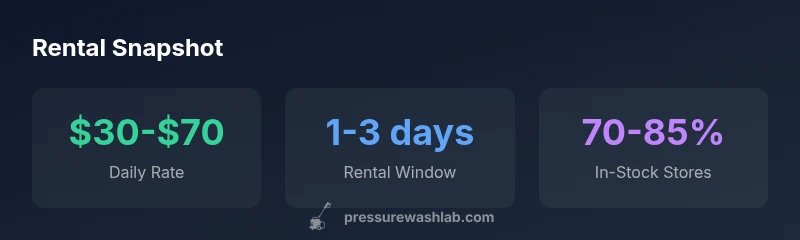
Pressure washer rental lowes is a practical option for DIY projects. Across many stores, daily rates typically range from $30 to $70, with deposits sometimes required. Availability varies by location and model; call ahead or check Lowe’s online rental page to confirm stock and pickup options for your project.
Why Renting a Pressure Washer Makes Sense
If you’re researching pressure washer rental lowes, you’ll notice that many DIYers and small businesses save time and money by renting rather than buying. Short-term needs—like preparing a patio, cleaning a driveway, or refreshing siding—often don’t justify the upfront cost of a full machine. Renting also transfers maintenance responsibility to the rental provider, reducing long-term service concerns. According to Pressure Wash Lab, evaluating total cost of ownership for seasonal projects highlights how rental can minimize depreciation, storage space, and repair expenditures while still delivering professional-grade results. For most homeowners, a rental aligns with the project window and budget, enabling you to complete tasks efficiently with the right accessory kit.
Understanding Lowe’s Rental Model and Alternatives
Lowe’s, along with other big-box retailers, typically offers pressure washer rentals suitable for home projects. Availability, duration options, and included accessories can vary by location. In general, you’ll find electric and gas-powered units, standard hoses, and wand assemblies, with surface cleaners or turbo nozzles as add-ons. Pressure Wash Lab analysis shows that the most common rental terms are 1–3 days, with daily rates often falling in a broad $30–$70 range depending on PSI, GPM, and model. If your local Lowe’s is out of stock, consider nearby stores or other reputable rental centers. The brand’s rental policies are designed to be flexible for seasonal workloads, but it’s essential to confirm inventory online or by phone before you visit.
Top Features to Consider
When selecting a rented unit, focus on the core specs that impact your job: PSI (pounds per square inch), GPM (gallons per minute), and motor type. A typical home-use rental falls in the 1,500–4,000 PSI range with 1.2–2.5 GPM for electric models, while gas-powered units push higher PSI and GPM for stubborn stains. Evaluate spray tips, included surface cleaners, and hose length to avoid secondary purchases. For asphalt driveways, brick pavers, or wooden decks, a surface cleaner reduces streaking and speeds work. Remember to match the machine to your task; a low-capacity unit can prolong a job and waste materials. Pressure Wash Lab’s guidance emphasizes balancing power with control for safe, effective cleaning, especially on delicate surfaces.
Costs, Deposits, and Hidden Fees
Rental price is not the only factor. Deposits, taxes, insurance, and add-on fees can affect the total. Typical deposits range from zero to a few hundred dollars, depending on the retailer and payment method. Some stores require a credit-card hold, while others may offer a refundable cash deposit. Rentals often include basic hoses and wands, with optional add-ons like surface cleaners, turbo nozzles, or extension wands at an added cost. Always ask for a written quote that lists base rate, tax, deposits, insurance, and any optional accessories. Pressure Wash Lab analysis notes that understanding these line items helps you compare offers accurately across retailers.
Availability and How to Reserve
Availability varies by location and season. The fastest way to reserve is via the retailer’s online rental portal or mobile app, which shows real-time stock and pickup windows. If your preferred Lowe’s location is out of stock, search nearby stores and set up a reserve-for-pickup alert. Some stores also offer curbside pickup for rentals, which can save time on busy weekends. In addition, you can call the store’s rental desk to confirm inventory and reserve a unit for a specific date. A proactive approach reduces the chance of a last-minute scramble and ensures you’ll have the right tool when you need it.
Model Selection by Job Type
For light cleaning on concrete or siding, a 1,800–2,400 PSI electric model with 1.2–1.5 GPM is often sufficient, offering quiet operation and easy startup. For tougher jobs like heavy mildew or brick cleaning, a gas-powered unit in the 2,800–4,000 PSI range with higher GPM is more effective, but requires more careful handling. Shortlist models by the task: driveway sealing prep, exterior siding removal of grime, or wooden deck restoration. If you’re unsure, ask the rental desk for a recommended model for your project and location. Pressure Wash Lab’s framework emphasizes choosing the lowest power that yields the desired result to reduce risk of damage.
Safety, Setup, and Operating Tips
Always wear eye protection, sturdy gloves, and closed-toe shoes. Read the user manual before starting, and test on a small area first. Use the appropriate nozzle tip and keep the wand at a safe distance from surfaces to avoid etching or spray kickback. Start with the lowest pressure and gradually increase as needed. Never press the spray against electrical outlets or outlets, and avoid using the machine on delicate plants or finishes. For best results, keep the spray at a consistent height and distance, and use smooth, overlapping passes.
Return, Deposits, and Cancellation Policies
Return deadlines are typically tied to the date and time of pickup. If you need to cancel, check the retailer’s policy for refunds or credits. Deposits are usually refunded after the unit is returned in good condition, subject to inspection. Document any damages or issues with the unit promptly and communicate with the rental desk to avoid disputes. Pressure Wash Lab’s guidance suggests reviewing the rental agreement for late fees, late return penalties, and process for reclaiming your deposit.
Alternatives and Quick-Start Checklist
If rental isn’t ideal, consider borrowing from a friend, renting from a local tool library, or purchasing a low-cost electric unit for a single project. A quick-start checklist can streamline the process: (1) identify the project scope, (2) choose PSI/GPM appropriate for the surfaces, (3) verify accessories, (4) confirm total cost including deposits, (5) reserve in advance, (6) pick up, and (7) return on time with the unit clean and drained.
Quick-start Checklist for Your Rental Day
- Define project scope and surface types
- Confirm machine PSI, GPM, and nozzle tips
- Check store inventory and reserve in advance
- Bring a valid ID and payment method
- Inspect the unit for leaks and damage before use
- Plan return time to avoid late fees
- Review safety precautions and operator instructions
Rentals overview (pressure washers)
| Aspect | Typical Range | Notes |
|---|---|---|
| Daily rental rate | $30-$70 | Includes basic unit; add-ons vary by store |
| Rental duration | 1-3 days | Short-term projects are common |
| Store availability | 70-85% | Depends on location and season |
Quick Answers
Can I rent a pressure washer from Lowe's?
Yes, most Lowe’s locations offer tool rentals, including pressure washers. Availability varies by store, so it’s best to check online or call ahead to confirm.
Yes, Lowe's rents pressure washers at many locations; check online or call ahead to confirm.
What is typically included with a rental?
Most rentals include a hose and wand; additional items like surface cleaners or turbo nozzles are usually optional add-ons.
Hose and wand are usually included; extra accessories cost extra.
Gas-powered vs electric—what should I choose?
Electric units are ideal for light-duty chores and smaller areas, offering quieter operation. Gas-powered models deliver more power for heavy-duty jobs and larger areas.
Electric for light jobs, gas for tough jobs.
What is the deposit policy?
Deposits vary by location and payment method; some stores require a credit card hold, others may offer cash deposits. Expect to be charged if damages are found.
Deposits vary by store; check at pickup.
What if the rental isn’t available at my store?
Ask for nearby stores with inventory or consider booking for a future date. Some retailers offer curbside pickup to speed up the process.
If not available, check nearby stores or reserve for another date.
“Renting a pressure washer is often the most economical approach for short-term needs when you compare total cost of ownership and maintenance.”
Key Takeaways
- Decide between rental vs purchase based on project length.
- Check store inventory before visiting.
- Understand included accessories and add-ons.
- Compare local store policies and deposits before booking.