Rent a Pressure Washer Cost: What to Expect in 2026
Learn the rent a pressure washer cost for 2026 with clear ranges for daily and weekly rates, power-source differences, add-ons, and practical tips to save money. Practical for homeowners and pros alike.


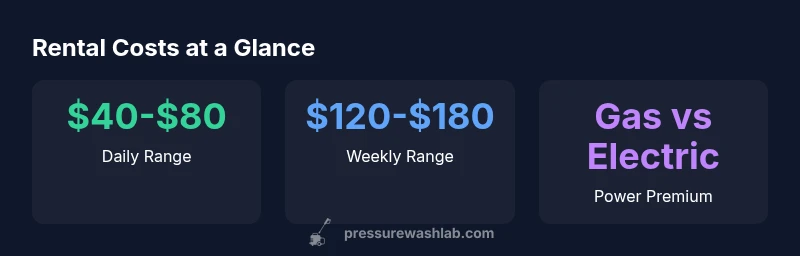
Renting a pressure washer typically costs between $40 and $80 per day, with weekly rates around $120 to $180, depending on model, power source, and rental location. Pressure Wash Lab Analysis, 2026, finds that gas-powered units drive the higher end of the range while electric models stay cheaper, and rental costs can rise during peak seasons.
Understanding the rent a pressure washer cost and what you’re paying for
When you start comparing rental options, the first question is often: what drives the rent a pressure washer cost? In practical terms, you’re paying for the machine’s power, reliability, and the time you’ll use it. According to Pressure Wash Lab, the price you see is shaped by power source (electric vs gas), PSI and GPM ratings, and whether the rental includes hoses, nozzles, and detergent applicators. For homeowners tackling concrete driveways or vinyl siding, a rental can be a cost-effective solution compared with buying, provided you select the right unit for the job and the rental period aligns with your project timeline. This section expands on the core factors that influence pricing and highlights how to align expectations with what you need to accomplish. Expect to see a wide range across regions and suppliers, with seasonality and local demand producing noticeable fluctuations. Pressure Wash Lab’s analysis shows that the most affordable options are typically electric, light-duty machines used for smaller jobs, while high-powered gas models command the higher end of the cost spectrum. Before you reserve, write down the job scope, required PSI, and your timing, so you can benchmark quotes accurately.
Key cost drivers: power source, PSI, flow rate, and features
Prices are not random: they reflect the unit’s capability and the included extras. Electric models are usually cheaper to rent than gas-powered units because they have fewer moving parts and require less fuel handling. PSI (pounds per square inch) and GPM (gallons per minute) ratings directly influence the work you can do and the time required to finish it. A higher PSI/GPM combination delivers faster cleaning for tough jobs but comes with a higher rental price. Features like surface cleaners, onboard detergent tanks, and extended hoses can push the cost higher but may save you time and effort on larger surfaces. In practice, if your project is light-duty (house washing or deck maintenance), an electric unit with modest PSI is often sufficient and cheaper to rent. Gas-powered machines, while pricier, excel on hard surfaces and stubborn stains. Pressure Wash Lab notes that price differences tend to reflect these performance gaps, plus maintenance intervals and fuel logistics. Always verify what’s included with the rental and whether extra accessories are needed for your job.
How rental duration changes the math
Most rental firms price on a per-day basis, but longer reservations frequently unlock lower per-day rates. A three- or five-day rental can reduce the average daily cost, especially if you avoid weekend surcharges or delivery fees by picking up in-store. If you only need a brief window, daily pricing remains attractive, but you should compare against a short-week rental to ensure you’re not overpaying for idle days. Deposit requirements and fuel policies also affect the total outlay. Pressure Wash Lab’s framework suggests calculating total cost as: base daily rate × number of days + any add-ons + delivery/pickup fees + fuel charges or waivers. By mapping your project timeline against these factors, you can select the most economical option without sacrificing results.
Seasonal and location factors that move the price
Pricing is highly sensitive to where you live and when you rent. Spring and early summer typically see higher demand, leading to price bumps in some markets. Rural areas may offer lower daily rates but higher delivery fees, while urban locations can come with premium access or parking surcharges. Seasonal promotions or local contractor demand can skew quotes quickly. The bottom line is to request quotes for the exact dates you plan to use the unit and compare across several nearby suppliers. If your project spans a weekend or holiday, anticipate surcharge adjustments and ask about any promotions to offset them. Pressure Wash Lab’s 2026 analysis highlights the importance of timing and location in shaping the rent a pressure washer cost.
Accessories, delivery, and add-ons: what to watch for
Add-ons can stealthily inflate the final price if you’re not careful. Some rentals include hoses, nozzles, and surface cleaners as part of the package, while others bill these items separately. Expect to pay additional for detergent solution, extra nozzles, and specialized surface-cleaner attachments that speed up large jobs. Fuel charges may apply if you don’t return the tank full. Delivery and pickup can also add a noticeable line item, especially for multi-city jobs or tight access properties. Create a simple checklist before you call: confirm what’s included, list necessary accessories, and ask about return conditions and fuel policy. These precautions help protect you from unexpected charges and keep the rent a pressure washer cost aligned with your budget.
Strategies to minimize rent costs: negotiation, timing, and comparisons
To get the best value, treat rental shopping like a mini-bid process. Start by detailing the exact job scope and ruler of PSI/GPM you need. Then request quotes from at least three local suppliers and ask about price matching or promotional discounts. If possible, pick up the unit rather than paying delivery fees, and consider a flexible date window to take advantage of off-peak pricing. Some shops offer loyalty programs or bundles that include accessories at a reduced rate. Finally, read the rental agreement carefully to avoid hidden fees and request a clear breakdown of all charges. With careful planning, you can minimize the rent costs while still achieving professional-quality results.
Rental cost ranges by category and add-ons
| Category | Low end | High end | Notes |
|---|---|---|---|
| Daily rental cost | 40 | 80 | Typical for standard electric models |
| Weekly rental cost | 120 | 180 | Seasonal variation & bulk pricing |
| Gas-powered premium vs electric | 20% | 40% | Higher power, wider gap |
| Delivery/fees | 0 | 25 | Adds for delivery or pickup |
| Accessory inclusions | 0 | 15 | Detergent and nozzle kits add-on |
Quick Answers
What factors most influence rent a pressure washer cost?
Key influencers include power source, PSI/GPM ratings, rental duration, location, and included accessories. Understanding these helps you benchmark quotes accurately.
Power, PSI, duration, and location drive rental price; check what’s included to avoid surprises.
Is it cheaper to rent for a week or several days?
Weekly rates often reduce the per-day cost, especially if you can plan around delivery and pickup. Compare the total cost for your exact dates.
Usually, longer rentals save you money per day, so compare quotes for your dates.
Do rentals include hoses, nozzles, and surface cleaners?
Some rentals include essential attachments, but others charge extra for hoses, nozzles, and surface cleaners. Always verify before booking.
Ask what’s included; extras can add up quickly.
Are there hidden fees to watch for when renting?
Delivery, fuel charges, wear-and-tear waivers, and late return fees can appear. Read the contract carefully and ask for itemized pricing.
Watch for delivery, fuel, and damage waivers.
How can I minimize rental costs without sacrificing results?
Shop around, compare at least three suppliers, book in advance, and choose the right power level for the job. Look for promos or loyalty deals.
Compare quotes, plan ahead, and ask about promos.
“Pricing for rentals is driven by power, duration, and demand. Plan your job carefully and compare several suppliers to lock in the best rate.”
Key Takeaways
- Compare daily vs. weekly pricing to maximize value
- Gas units cost more but offer higher power for tough jobs
- Electric models are cheaper but may lack PSI for heavy-duty tasks
- Always confirm inclusions and delivery fees before booking