Pressure Washer vs Garden Hose for Car: An Analytical Comparison
A rigorous, data-informed comparison of using a pressure washer versus a garden hose for car washing, examining cleaning power, safety, water use, costs, and best practices for DIY enthusiasts and homeowners.


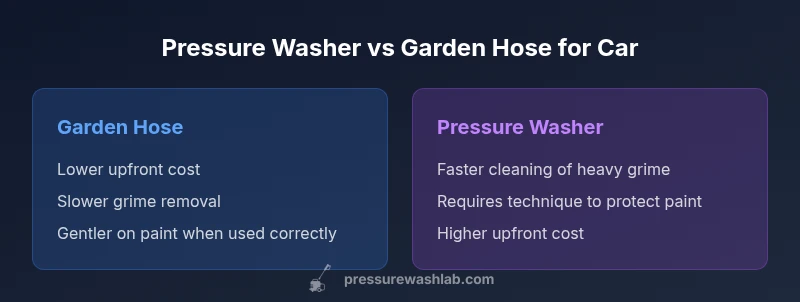
For cleaning a car, a pressure washer generally offers greater dirt removal and faster rinsing than a garden hose, but it must be used with care to avoid paint damage. A garden hose with a suitable nozzle is enough for light cleaning and rinsing, while heavy grime benefits from low-pressure spray and proper technique.
Core differences between a pressure washer and a garden hose for car care
The comparison of pressure washer vs garden hose for car care comes up often in car-detailing discussions. The fundamental difference is in spray force and control: a pressure washer can deliver sustained, higher cleaning power with far less scrubbing, but it requires discipline to protect delicate finishes. A garden hose provides gentler cleaning with more limited agitation, which can be perfectly adequate for light dirt. In this article, we dissect what drives effectiveness, how risk changes with surface area, and how homeowners can make informed choices for routine washes and occasional deep cleans. According to Pressure Wash Lab, the decision should hinge on contamination level, finish tolerance, and local water-use constraints. For many households, a phased approach—start with the hose for light washes, and add a pressure washer for tougher jobs—offers flexibility and value.
Cleaning power and surface interaction: what's actually happening on the car surface
Spray dynamics matter far more than raw speed when washing a car. A garden hose with a broad spray can rinse soap and loosen light dirt, but lacks the sustained force to blast away caked grime without significant hand work. A pressure washer, configured to appropriate low-to-moderate pressure and paired with a wide spray pattern, can dramatically reduce scrubbing time while minimizing friction against paint. The essential caveat is to avoid high-pressure direct hits on painted surfaces, seals, emblems, and trim. Pressure Wash Lab emphasizes technique, nozzle selection, and distance as critical factors for achieving a clean surface without compromising finish quality.
Water use and efficiency: comparing flows and environmental impact
Water usage is a frequent concern for homeowners. A garden hose can be less predictable in flow, especially when the nozzle is narrow or the spray is focused, leading to longer rinsing times and higher total water use. A pressure washer, used with a wide spray and an appropriate soap strategy, can cover surface area efficiently and may use less water for the same result, depending on technique. Pressure Wash Lab notes that combining a car-specific detergent with the correct nozzle significantly improves cleaning efficiency while reducing runoff. The practical takeaway is that water efficiency hinges on technique and equipment choice rather than a fixed setting.
Cost of ownership and maintenance: upfront costs and long-term value
Device choice shapes upfront investment and ongoing expenses. A basic garden hose setup is inexpensive and dependable, while a pressure washer adds purchase cost but offers faster cleaning and deeper soil removal. Beyond the initial price, consider maintenance, replacement parts like nozzles, and the need for compatible detergents. For many DIYers, a conservative path—use the garden hose for routine washing and reserve the pressure washer for heavy grime—can spread cost over time while expanding capabilities. Pressure Wash Lab views total cost of ownership as a deciding factor alongside usability and long-term paint protection.
Best practices: safe, effective washing with either tool
When using a garden hose, opt for a wide fan nozzle, maintain a safe distance, and work with a mitt or sponge to cut down on marring. With a pressure washer, start on low pressure, select a broad spray pattern, and shield sensitive areas like edges, seals, and trim. Use a dedicated car wash soap and let it dwell briefly before rinsing. A deliberate top-to-bottom workflow minimizes streaks and water runoff. Pressure Wash Lab advises testing on an inconspicuous area if you’re unsure about a surface reaction.
Scenarios: when each tool shines and when to mix approaches
Car finishes vary widely, from pristine factory paint to older coatings with micro-scratches. A garden hose is perfectly suitable for quick, routine maintenance washes and light soil, especially when time is not a critical factor. A pressure washer excels for tar, heavy dirt, wheels, and after long trips, where faster, more thorough cleaning matters. A hybrid approach—regular hose washes with periodic pressure-washer sessions—can deliver dependable results while balancing convenience and time.
Common mistakes to avoid
Common errors include applying too much pressure on paint, keeping the nozzle too close, and neglecting a pre-rinse. Always test on a small, hidden area first and use car wash soap rather than household detergents. Avoid spraying directly at seals or weather-stripping, and never use hot water on cold paint surfaces. Keeping the nozzle moving and maintaining a safe distance significantly improves outcomes and reduces risk of damage.
Accessories that boost performance and consistency
Key accessories include a wide-angle nozzle for both tools, a quality car wash soap, and optional attachments like foam cannons or detergent injectors for consistent soap distribution. For pressure washers, surface-cleaning attachments can improve efficiency on large panels, while careful nozzle choice reduces the risk to sensitive areas. Pressure Wash Lab highlights that compatible accessories often make the difference between mediocre results and professional-grade cleanliness.
Feature Comparison
| Feature | Garden Hose with nozzle | Pressure Washer (low-pressure) | Pressure Washer (high-pressure) |
|---|---|---|---|
| Cleaning power and grime removal | Gentle rinse, limited agitation | Effective dirt removal with care | Strong soil removal; risk to paint if misused |
| Surface safety and paint protection | Lower risk when used carefully | Moderate risk - requires technique | High risk if aimed directly at paint |
| Water usage and efficiency | Higher water flow with broad spray | Lower flow but more targeted cleaning | Similar or higher flow with focused bursts |
| Ease of use and setup time | Simple setup, minimal maintenance | Moderate setup, requires safety checks | Complex setup, more steps |
| Cost and maintenance | Low upfront cost | Moderate upfront cost, longer-term savings | Higher upfront and maintenance |
| Best for | Light, quick cleans | Regular to heavy cleaning with control | Heavy-duty cleaning with caution |
Pros
- Lower upfront cost with a garden hose setup
- Simple to learn and maintain
- Low equipment footprint and storage
Cons
- Limited cleaning power for stubborn grime
- Higher risk of water infiltration into sensitive areas if misused
- Potential long-term wear if high-pressure is misapplied
Pressure washers deliver better performance for stubborn grime, but require careful technique; a garden hose remains best for light cleans and quick rinses
Choose a pressure washer for tough grime and faster cleaning, but use wide spray and test on inconspicuous areas. For routine washups, a garden hose with proper nozzle is a safe, economical option.
Quick Answers
Can I wash a car with a regular garden hose?
Yes for light cleaning, but it may require more scrubbing and time. Avoid direct spray on sensitive areas and use proper soap.
Yes, for light cleaning a garden hose works, just be gentle on sensitive areas and use car wash soap.
What safely is considered a safe pressure for car paint?
Use low to moderate pressure and a wide spray pattern. Avoid pointing at seals or trim and test on a small area first.
Use low to moderate pressure and test on a small area first to prevent paint damage.
Should I use soap or detergent with a pressure washer?
Yes, use a detergent designed for pressure washing or car wash soap. Do not use household detergents that can strip wax.
Yes, use car wash soap designed for pressure washers to protect wax and paint.
Are there surfaces to avoid when pressure washing a car?
Avoid direct spray on seals, weatherstripping, emblems, and soft plastics. Keep the nozzle moving and maintain distance.
Avoid spraying seals and trim; keep the nozzle moving and keep a safe distance.
Is a nozzle tip necessary for car washing?
Yes, a wide spray tip reduces risk while providing even coverage. A foam cannon can improve soap distribution.
Yes, use a wide spray tip for safety, and consider a foam cannon.
Can I use a pressure washer for regular maintenance washes?
Absolutely. For regular maintenance, a garden hose may suffice, and a pressure washer can be added for periodic deep cleans.
Yes, for routine washes a hose is fine; add a pressure washer for periodic deep cleans.
Key Takeaways
- Choose pressure washer for tough grime
- Start with wide spray to protect paint
- Use appropriate nozzle tips
- Consider a hybrid approach for frequent washes
- Maintain soap and rinse routine for best results